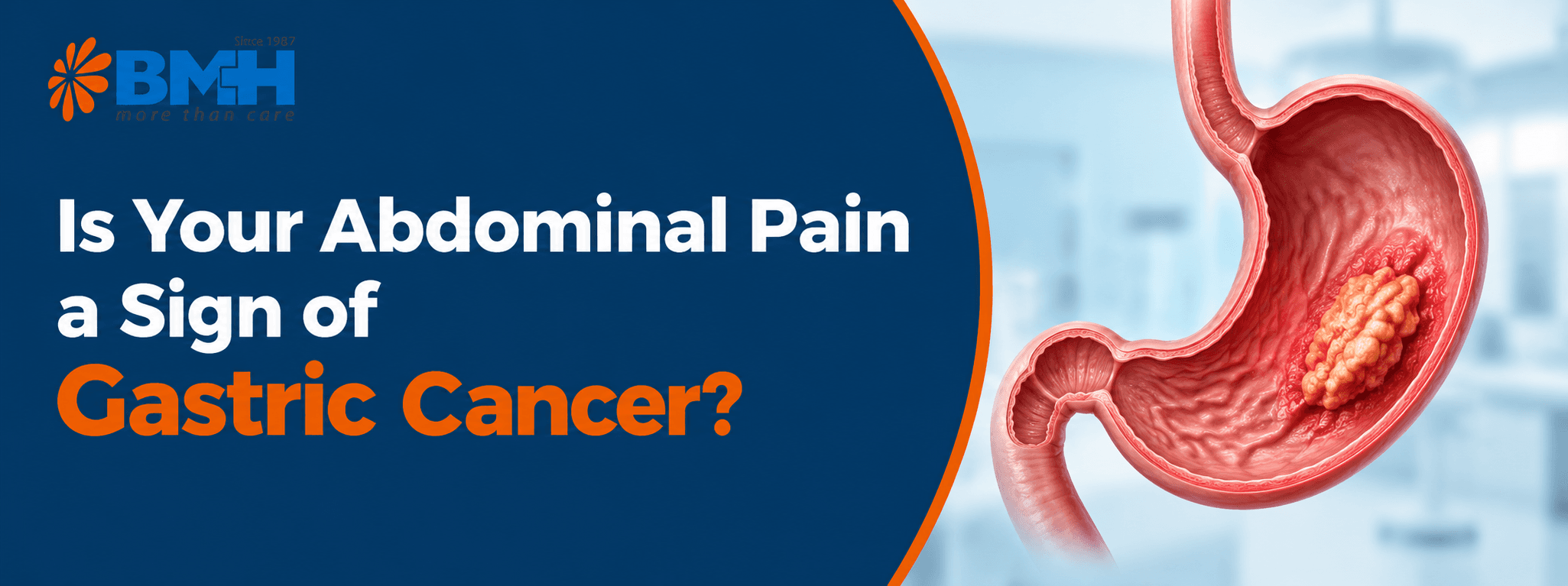

Abdominal pain is common and usually harmless, but persistent or unusual stomach discomfort can understandably worry you. While gastric cancer is rare compared to other causes of belly pain, recognising its early warning signs gives you the best chance for effective treatment.
The difficulty is that early stomach cancer rarely announces itself. The Cleveland Clinic notes that even the common signs, such as stomach pain and weight loss, often appear only once the disease is more advanced. So how do you tell an ordinary stomach ache from one that needs a scope? This guide explains the pain patterns doctors pay attention to, the red flags that should not wait, and the tests that settle the question.
Quick answer: Abdominal pain can be a sign of gastric cancer, but it is rarely the cause. Cancer-related pain is usually a persistent, dull ache or vague discomfort in the upper abdomen, above the navel, often with weight loss, early fullness, repeated vomiting or black stools. Only an upper GI endoscopy with biopsy can confirm or rule it out.
What Does Gastric Cancer Pain Feel Like?
Early gastric cancer often causes no symptoms at all. When it does, the American Cancer Society describes vague discomfort in the abdomen, usually above the navel, along with poor appetite, feeling full after a small meal, heartburn or nausea.
Moreover, constant stomach pain is a common sign of stomach cancer, while ulcer pain tends to come and go and depends on what and when you ate. As the disease advances, the ache can sharpen, and if cancer spreads within the belly, fluid may collect and make the abdomen swell. Pain on the right side of the abdomen may point to spread to the liver.
Gastric Cancer Pain vs Common Stomach Conditions
The table below is a reading aid, not a diagnosis. Patterns overlap, which is exactly why doctors test rather than guess.
| Condition | Typical pain | Link with food | Other clues |
|---|---|---|---|
| Duodenal ulcer | Burning or gnawing, comes and goes | Often eases after eating or antacids | Pain may wake you at night |
| Gastric ulcer | Burning, comes and goes | May worsen after eating | Usually no major weight loss |
| Acid reflux / oesophagitis | Heartburn, burning behind the breastbone | Often relieved by antacids | Sour taste, worse lying down |
| Functional dyspepsia | Upper abdominal discomfort or bloating | Variable | Endoscopy shows no ulcer or cancer |
| Gastric cancer | Constant, dull or vague, above the navel | Not reliably relieved by food or antacids | Weight loss, early fullness, vomiting, anaemia, black stools |
Red Flags: When Abdominal Pain Should Not Wait
See a doctor promptly if stomach pain comes with any of the following:
-
Unintentional weight loss without dieting
-
Feeling full after a few bites, or a poor appetite that persists
-
Repeated vomiting, or vomiting blood
-
Black, tarry stools or visible blood in the stool
-
Difficulty swallowing
-
Unusual tiredness or pallor, which can signal anaemia from slow bleeding
-
Swelling of the abdomen or yellowing of the skin and eyes
Clinicians treat swallowing difficulty, gastrointestinal bleeding, jaundice or an abdominal mass as alarm symptoms that justify specialist review and possible endoscopy.
Who Is at Higher Risk of Gastric Cancer?
Risk factors do not mean you will get the disease, and many people with several never do. The American Cancer Society lists these main ones:
-
Long-term Helicobacter pylori infection. The IARC classes it as carcinogenic to humans (Group 1). Over years it can progress from chronic gastritis to atrophic gastritis, intestinal metaplasia and cancer. Most infected people never develop cancer.
-
Age and sex. Risk rises with age, and most diagnoses are in people in their 60s to 80s. It is more common in men.
-
Family history. A parent, sibling or child with stomach cancer raises risk. Rare inherited syndromes, such as hereditary diffuse gastric cancer, raise it further.
-
Diet. Salt-preserved foods and pickled vegetables raise risk, as do regular processed or charbroiled meats. Plenty of fresh fruit appears protective.
-
Smoking and alcohol. Smoking nearly doubles risk; heavy drinking probably adds to it.
-
Earlier stomach surgery or pernicious anaemia.


How Doctors Confirm or Rule Out Gastric Cancer
Stomach cancer is usually found because a person sees a doctor about symptoms. The usual pathway is:
| Step | What it does | Why it matters |
|---|---|---|
| History, exam and blood tests | Looks at symptoms and risk factors; checks for anaemia and blood in stool | Flags slow bleeding and decides who needs a scope |
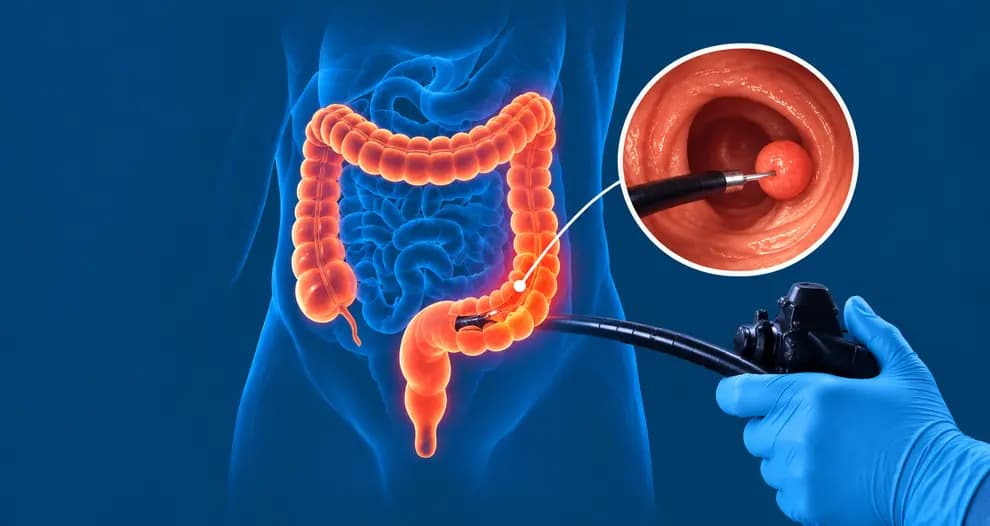
| Upper GI endoscopy (EGD) | A thin camera tube, usually with sedation, views the oesophagus, stomach and duodenum | The test most often done when stomach cancer is suspected |
| Biopsy | Tissue is taken and examined under a microscope | The only way to be sure whether it is cancer |
| Biomarker tests (HER2, PD-L1, MSI/dMMR, CLDN18.2) | Tests the tumour tissue for features that guide drug choice | Decides if targeted therapy or immunotherapy may help |
| CT scan, endoscopic ultrasound, PET-CT | Show depth of growth, lymph nodes and distant spread | Establish the stage, which drives the treatment plan |
| Staging laparoscopy | A keyhole look inside the abdomen before surgery | Confirms the cancer has not spread within the abdomen |
One caution from the same source: some stomach cancers are hard to see on endoscopy, so a normal-looking scope in someone with persistent symptoms may still call for follow-up.
Gastric Cancer Evaluation and Treatment at BMH, Kozhikode
A cancer diagnosis often involves several steps, from confirming the disease and determining its stage to choosing the right treatment. Baby Memorial Hospital (BMH), Kozhikode, offers patients access to multispecialty care and oncology services through the NAVA Cancer Institute, helping coordinate evaluation and treatment planning.
For patients from Malabar, other parts of India and abroad, BMH offers several considerations when choosing where to seek cancer care:
-
Coordinated specialist care: Patients can discuss their diagnosis and treatment options with the relevant oncology specialists and surgical teams.
-
Diagnostic support: Access to imaging facilities, including PET-CT and SPECT-CT, can support cancer staging and treatment planning when clinically indicated.
-
Individualised treatment planning: The recommended approach depends on the cancer type, stage, biopsy findings, overall health and suitability for surgery, chemotherapy or radiation therapy.
-
Cost planning: Patients should request an itemised estimate covering consultations, diagnostic tests, treatment, medicines and hospital stay to understand the expected expenses.
-
Preparation before travelling: Patients who live outside Kerala can organise their existing biopsy reports, scan results and medical records before contacting the hospital to discuss the next steps.
BMH may be particularly relevant for patients who need a specialist evaluation after a cancer diagnosis, have complex findings requiring further assessment, or want another medical opinion before making a major treatment decision.
Conclusion
Abdominal pain is common; gastric cancer is not. What separates the two is the pattern: persistent upper-belly discomfort that does not settle, especially with weight loss, early fullness, vomiting, black stools or anaemia. Do not self-diagnose from a symptom list, and do not keep masking pain with antacids for months. Keep a pain log, ask for an endoscopy if symptoms linger, and remember that early-stage disease has far better outcomes. If you want an expert evaluation or a second opinion, contact BMH to book an appointment or share your reports.
Have a quick question about symptoms, tests or appointments? Chat with the BMH assistant now.
Medical Disclaimer: This article is for general information and does not replace advice from a qualified doctor. Stomach cancer treatment decisions depend on individual tests and specialist review. Do not start, change or stop any medication without consulting your neurologist. In an emergency, such as a seizure lasting more than 5 minutes or repeated seizures without recovery, seek immediate medical care.