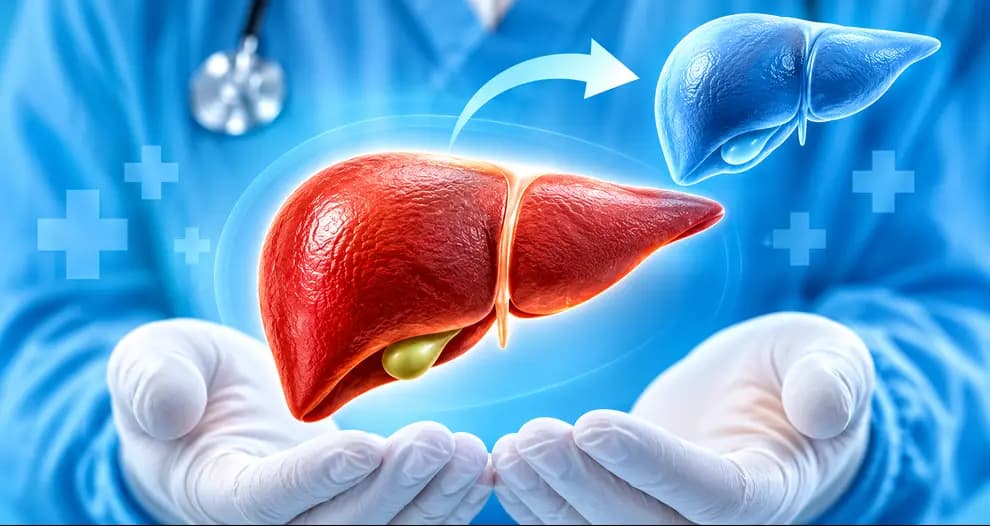

After a liver transplant, your new organ faces a serious challenge: your immune system may recognize it as foreign and attack it. This is called liver transplant rejection, and it can range from mild inflammation to life-threatening organ failure. Knowing the early warning signs, fever, fatigue, jaundice, and changes in urine color, helps you seek urgent care before rejection damages your transplant.
This guide covers the nine warning signs, the silent form of rejection, how rejection differs from infection, and exactly what to do in the first 24 hours after you notice something.
What Is Liver Transplant Rejection?
Rejection happens when your immune system recognises the new liver as foreign and attacks it. The body treats the transplanted organ as a threat and tries to destroy it, which is why every recipient takes immunosuppressant medicines such as tacrolimus, cyclosporine or prednisone to dampen that response. Rejection is not a sign that you did something wrong, and it does not automatically mean the graft is lost. Having acute rejection does not mean you will lose your transplanted liver, but it must be diagnosed and treated quickly.
Acute vs chronic rejection at a glance
| Type | Typical features |
|---|---|
| Hyperacute | Fever, very high liver tests, clotting problems |
| Acute | Loss of appetite, pain, fever, jaundice, clay-coloured stools, dark urine |
| Chronic | Jaundice, bile duct loss (vanishing bile duct syndrome), mildly raised liver tests, fluid in the abdomen |
Why does the body reject a liver transplant?
Your immune system's job is to protect you from harmful invaders like bacteria and viruses. However, it also recognizes that a transplanted liver is 'not self', it carries different genetic markers than your own organs. Your white blood cells may mount an attack to destroy what they perceive as foreign tissue. This process is called immunological rejection.
Rejection risk depends on how closely the donor's tissue matches yours, your immune system's overall strength, and how well you take immunosuppressant medications. These medicines deliberately weaken your immune response so it tolerates the new liver, but they must be balanced carefully, too weak and rejection takes hold, too strong and infections or cancer can develop. Additionally, factors like donor age, how long the organ was preserved before transplant, and your overall health influence rejection likelihood. According to the American Journal of Transplantation, approximately 20-30% of liver transplant recipients experience at least one rejection episode in the first year.
9 Liver Transplant Rejection Symptoms to Watch For
Not every patient has every symptom, and some have none. These are the signs transplant programmes ask recipients to report:
-
Fever above 100°F (38°C). The most common early symptoms include fever, raised liver tests, yellow eyes or skin, and fatigue. Because fever can also mean infection, it always needs a call, never a wait-and-see.
-
Jaundice. Yellowing of the skin or the whites of the eyes. It appears when the damaged liver cannot clear bilirubin.
-
Dark urine. Listed by Stanford Health Care alongside fever and jaundice. Tea- or cola-coloured urine is a signal to call the same day.
-
Pale or clay-coloured stools. Described in acute rejection by the Merck Manual.
-
Unusual fatigue. Tiredness that is out of proportion to your recovery stage, or that suddenly worsens.
-
Abdominal pain, tenderness or swelling. Massey Cancer Center lists abdominal swelling or tenderness among the signs.
-
Itching. Itching is listed by Stanford and is linked to bile flow problems.
-
Loss of appetite. Listed as a feature of acute rejection by the Merck Manual.
-
Headache or irritability. Both appear in Massey's list. These are non-specific, so they matter mainly when combined with the signs above.
Practical tip: keep a thermometer at home and note your temperature and urine colour once a day in the first three months. A simple dated log, or a phone photo of urine or stool colour, helps the team judge changes faster than a verbal description.
Silent rejection: when you feel fine but the blood tests don't
Rejection does not always cause symptoms you can notice. Doctors often detect it first through rising liver enzymes such as ALT, which is why every liver transplant programme schedules regular blood tests. Some abnormal values are acceptable during early recovery and should improve over time. It is the pattern across repeated tests, not a single number, that guides the team.
Chronic rejection can be quieter still. A clinical analysis of chronic rejection notes it lacks typical clinical features, and that some early cases can be reversed with early diagnosis and treatment.
When Can Rejection Happen After a Liver Transplant?
• First three months: the highest-risk window. Acute rejection is more common within the first three months.
• Months to years later: acute rejection can also occur months to years after transplantation, particularly after missed doses or medicine changes.
• Long term: chronic rejection develops gradually, so lifelong follow-up matters even when you feel well.


Rejection or Infection? Why the Symptoms Overlap
Immunosuppressants lower rejection risk but raise infection risk, and a balance has to be maintained between the two. Both rejection and infection can cause fever and raised liver enzymes, so your doctor will test for infection while monitoring for rejection.
| Feature | More typical of rejection | More typical of infection |
|---|---|---|
| Fever | Present, often with jaundice or dark urine | Present, often with cough, diarrhoea or burning urination |
| Liver tests | Rising enzymes and bilirubin | May be normal or only mildly raised |
| Other clues | Pale stools, itching, abdominal tenderness | Localised symptoms in one body system |
| How it is settled | Biopsy plus blood patterns | Cultures, imaging and viral tests |
This table is a guide to why doctors test, not a way to self-diagnose. If you have any of these symptoms, the right step is the same: call your transplant team.
This table is a guide to why doctors test, not a way to self-diagnose. If you have any of these symptoms, the right step is the same: call your transplant team.
What to Do in the First 24 Hours If You Notice a Symptom
-
Call your transplant coordinator or hospital the same day. Patients are advised to call the transplant team if they think they have symptoms of rejection.
-
Do not skip, double or stop immunosuppressants on your own. Take all medicines as prescribed and keep a spare supply.
-
Get a liver function test done. If you live far away, a local lab can run ALT, AST, bilirubin and ALP, and you can send the report to the team.
-
Keep a short summary ready: your transplant date, current medicine doses, recent lab values and when each symptom started.
-
Go to the nearest emergency department for high fever with shaking chills, repeated vomiting, severe abdominal pain, confusion or drowsiness, and tell them you are a liver transplant recipient.
How to Lower Your Risk of Rejection
• Take every immunosuppressant dose on time and never run out of supply. • Attend every follow-up and lab appointment, even when you feel well. • Avoid excessive alcohol, recreational drugs, herbal remedies and supplements unless your team approves them. • Tell your team whenever you are sick, and learn to recognise symptoms of both rejection and infection. • Ask before starting any new medicine, since some interact with transplant drugs.
Liver Transplant Follow-Up at Baby Memorial Hospital
Baby Memorial Hospital (BMH) in Kozhikode, founded in 1987, is a multi-speciality hospital with over 40 departments, 16 operation theatres and 11 ICUs. Donor livers coordinated through Kerala's organ-sharing network have been transplanted at BMH, and BMH has announced a collaboration to support affordable liver transplants for children from economically weaker families.
For rejection monitoring, patients can expect:
• Scheduled liver function tests and review visits after discharge • Hepatology, surgery and critical care under one roof • Guidance on local lab testing for patients from other districts and countries.
To discuss your case or request an opinion, chat with us on Whatsapp or directly contact us.
Conclusion
Liver transplant rejection symptoms range from fever, jaundice, dark urine and pale stools to fatigue, itching and abdominal tenderness, and sometimes there are no symptoms at all. What protects the new liver is a habit, not a single test: take medicines exactly as prescribed, keep every lab appointment and call your transplant team the same day when something changes. Caught early, most acute rejection can be treated. If you or a family member needs transplant follow-up or a second opinion, Chat with the BMH assistant on the WhatsApp to reach the transplant team.
Medical Disclaimer This article is for general information and does not replace medical advice, diagnosis or treatment. Transplant care is individual. If you have symptoms of rejection or infection, contact your transplant team or nearest emergency department immediately.