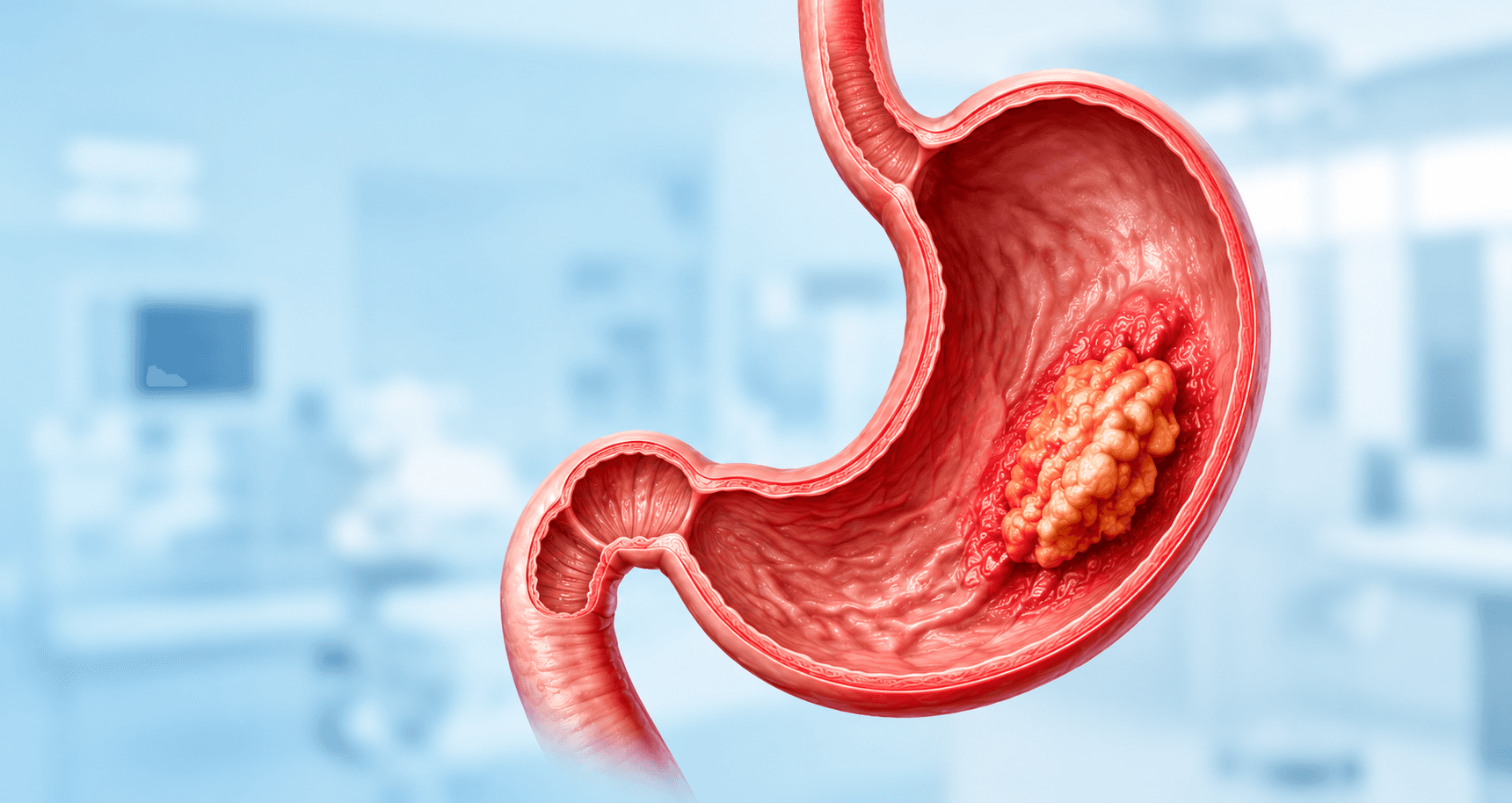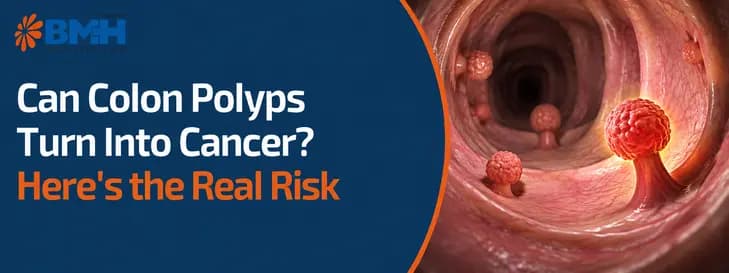

Most colorectal polyps take 10 to 15 years to develop into cancer, though some may progress faster or remain benign indefinitely. This timeline gives you a crucial window, early detection and removal can stop cancer before it starts.
This article breaks down which polyps actually carry cancer risk, how long the process usually takes, who should be screening earlier, and what removal actually involves, with input on how this is managed clinically at Baby Memorial Hospital (BMH), Kozhikode.
What Is a Colon Polyp, Exactly?
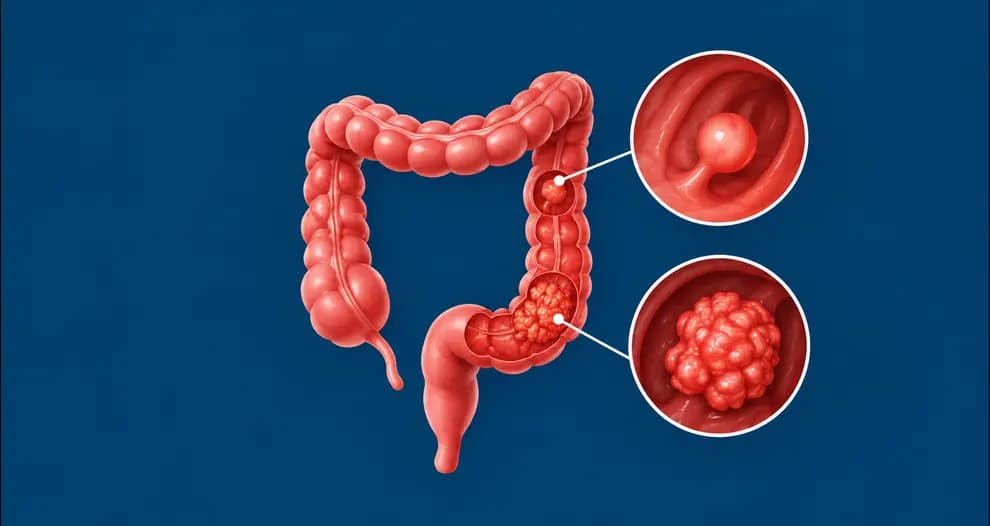
A colon polyp is a small cluster of cells that forms on the inner lining of the colon (large intestine) or rectum. Most are flat or mushroom-shaped, ranging from a few millimetres to several centimetres. They form when cells in the colon lining divide faster than normal, and faster cell division is exactly the kind of environment where genetic mutations, including cancer-causing ones, can take hold.
Colon polyps are far from rare. Most people never know they have one, because polyps typically cause no symptoms until they've grown large, which is precisely why screening, not symptoms, is what catches them early.
Can Colon Polyps Turn Into Cancer? The Direct Answer
Yes, but only certain types of polyps have the potential to become cancerous, and even among those, only a small fraction actually do. Doctors broadly divide polyps into two categories:
-
Neoplastic polyps (adenomas, sessile serrated lesions, traditional serrated adenomas), these can develop into cancer over time.
-
Non-neoplastic polyps (hyperplastic polyps, juvenile polyps, inflammatory pseudopolyps), these generally cannot become cancerous.
The catch is that a polyp's type usually can't be confirmed just by looking at it during a colonoscopy, it needs to be removed and examined under a microscope.
That's why gastroenterologists err on the side of removing most polyps they find rather than "watching and waiting," regardless of how they appear. If a polyp is found to contain cancerous cells or has progressed to colorectal cancer, further treatment may be needed, which can include colorectal cancer surgery depending on the cancer's stage, location, and extent.
Types of Colon Polyps and Their Cancer Risk
Not every polyp carries equal risk. The table below summarises how gastroenterologists typically classify them.
| Polyp Type | Share of Polyps Found | Cancer Potential | Notes |
|---|---|---|---|
| Hyperplastic | Common, mostly in rectum | Very low / none | Usually left alone unless large or in the ascending colon |
| Tubular adenoma | ~80% of adenomas | Low (<5%) | Most common "precancerous" polyp |
| Villous adenoma | ~5–10% of adenomas | High (~50%) | Finger-like projections; most concerning subtype |
| Tubulovillous adenoma | Up to 15% of adenomas | Moderate (~22%) | Mixed structure, mixed risk |
| Serrated (sessile/traditional) | Growing share of detections | Low–High, varies | Can be easy to miss on colonoscopy; linked to up to 30% of colorectal cancers |
| Carcinomatous polyp | ~5% of all adenomas | Already contains cancer cells | Requires prompt further treatment |
Factors That Speed Up or Slow Down Polyp Progression
Your personal risk profile determines whether your polyp develops slowly or quickly. Age over 50 increases overall colorectal cancer risk, as does a family history of colon cancer or polyps. Inflammatory bowel disease (Crohn's disease or ulcerative colitis) accelerates polyp progression significantly. Smoking, heavy alcohol use, obesity, and a diet low in fibre and high in processed meat all raise your risk. Conversely, regular physical activity, a plant-rich diet, and maintaining a healthy weight may help slow progression.
Your genetic background also matters: people with Lynch syndrome (a hereditary condition) face much higher cancer risk and require more frequent screening. The table below summarises key accelerating and protective factors.
| Risk Factor | Impact on Progression |
|---|---|
| Age over 50 | Increases overall risk |
| Family history of colon cancer | Accelerates progression |
| Inflammatory bowel disease | Significantly accelerates |
| Smoking and heavy alcohol use | Speeds up polyp growth |
| Diet high in processed meat | Raises cancer risk |
| Regular exercise and fibre intake | May slow progression |
Also Read: Genetic Testing for Cancer Risk Assessment Explained
How Long Does It Take for a Polyp to Become Cancerous?
For most people, the journey from a normal-looking adenoma to invasive colorectal cancer takes about 7 to 10 years. This is the entire rationale behind the standard 10-year colonoscopy interval for average-risk adults, screening is timed to interrupt the process well before it reaches cancer.
That timeline shortens considerably for people with a genetic predisposition, such as Lynch syndrome or familial adenomatous polyposis (FAP), where progression can happen in a fraction of the usual time. This is why doctors ask about family history before setting a screening schedule rather than applying the same 10-year rule to everyone.


Does Polyp Size Matter?
Size is one of the strongest predictors of risk. According to Healthgrades, polyps larger than 2.5 cm are about five times more likely to be cancerous than those smaller than 1.5 cm. Larger polyps are also more likely to have the riskier villous growth pattern described above, which compounds the concern.
This is exactly why a colonoscopy report noting polyp size isn't a minor detail, it's often the single number your doctor weighs most heavily when deciding how soon you need a follow-up procedure.
Warning Signs You Shouldn't Ignore
Most colon polyps, even ones that could become cancerous, cause no symptoms at all. When symptoms do appear, they can include:
-
Blood in the stool, or rectal bleeding (bright red or dark/tarry)
-
A persistent change in bowel habits, new constipation, diarrhoea, or narrower stools
-
Unexplained abdominal pain or cramping
-
Iron-deficiency anaemia with no other obvious cause
-
Unintended weight loss
By the time symptoms show up, a polyp has often already progressed further than it would have been caught on a routine screening, which is the core argument for scheduling a colonoscopy on age or risk, not on symptoms alone.
How Are Colon Polyps Found and Removed?
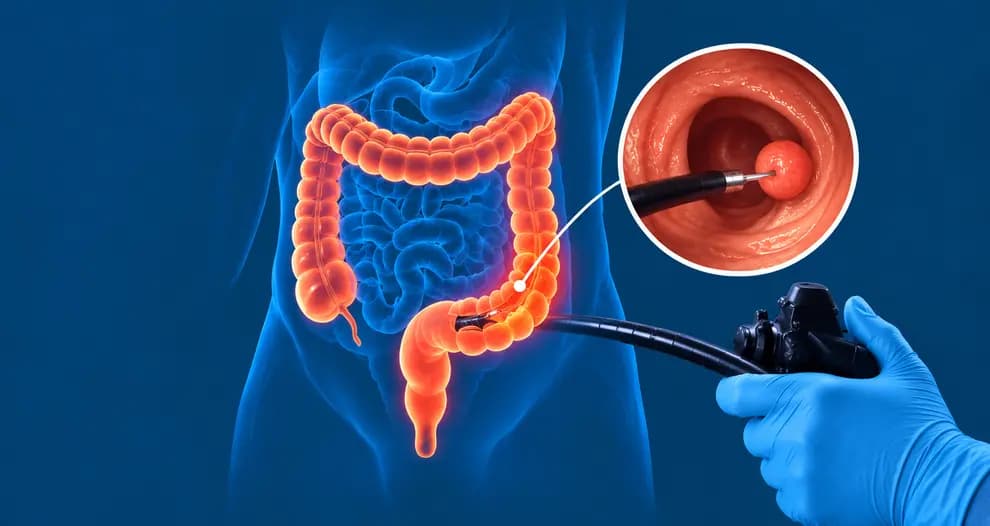
A colonoscopy is still the only screening method that can find and remove a polyp in the same session. During the procedure:
-
A thin, flexible scope with a camera examines the entire length of the colon.
-
Any polyp found is typically removed on the spot using a wire loop (polypectomy), or, for larger/flatter polyps, techniques like endoscopic mucosal resection (EMR) or endoscopic submucosal dissection (ESD).
-
The removed tissue is sent to a pathology lab, where it's examined under a microscope to confirm the polyp type and whether any cancerous cells are present.
-
Based on the pathology result, the doctor recommends a follow-up interval, anywhere from 1 year (high-risk findings) to 10 years (low-risk, average patients).
This combination of same-day detection and removal is what makes colonoscopy fundamentally different from stool-based screening tests, which can flag a risk but can't treat it.
Cancer and Gastro Care at Baby Memorial Hospital: What Patients Should Know
If you are in Kozhikode or the wider Malabar region and a scan has detected a colon polyp, having access to coordinated specialist care can make the next steps easier. Baby Memorial Hospital (BMH) is a 600-bed multi-speciality tertiary hospital in Kozhikode, with more than 40 medical and surgical departments, 16 operation theatres, and 13 ICUs.
For patients with colon polyps, this integrated setup can help coordinate care across:
-
Gastroenterology: Colonoscopy, polyp assessment, removal, and follow-up.
-
Pathology: Examination of removed tissue to determine whether the polyp is benign, precancerous, or cancerous.
-
Oncology: Specialist evaluation if biopsy results indicate cancer or a higher-risk finding.
-
Surgery: Surgical management when a polyp cannot be safely removed endoscopically or requires further treatment.
Having these services within the same hospital can reduce the need to visit multiple facilities and make communication between specialists more straightforward.
This can be particularly useful for patients travelling from other parts of Kerala, across India, or from the Gulf.
However, the right next step depends on the size, type, and pathology of the polyp, along with your symptoms and medical history.
A gastroenterologist can review your findings and recommend whether surveillance, repeat colonoscopy, endoscopic removal, or further treatment is appropriate.
Conclusion
Most colon polyps are not a cause for alarm, but they're not something to dismiss either. The type, size, and shape of a polyp determine its real cancer risk far more than the mere fact that it exists.
Adenomas, particularly larger or villous ones, deserve close follow-up; hyperplastic polyps generally don't. The single most effective step anyone can take is straightforward: get screened at the recommended age (earlier with risk factors), and don't skip the follow-up colonoscopy your doctor suggests after a polyp is removed.
Given how slow this process usually is, 7 to 10 years on average, a well-timed colonoscopy is, quite literally, one of the few cancers you can catch before it exists.
You can chat with our care assistant for quick answers, or reach out to Baby Memorial Hospital's gastroenterology team directly to discuss screening or a follow-up plan.
Medical Disclaimer: This article is for general informational purposes only and does not constitute medical advice, diagnosis, or treatment. Colon polyp risk varies by individual factors including age, family history, and existing conditions. Please consult a qualified gastroenterologist or oncologist for guidance specific to your health situation and before making any medical decisions.