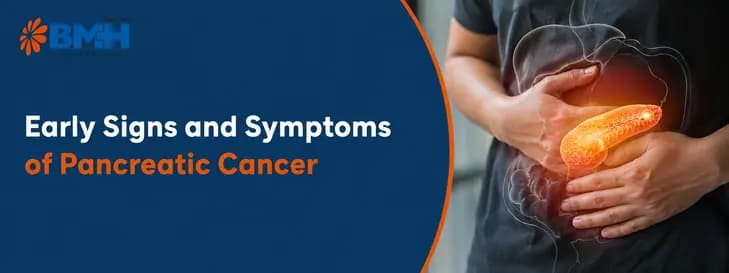

Pancreatic cancer has earned a grim nickname among oncologists: the “silent” cancer. Largely because the earliest symptoms are vague, intermittent, and easy to mistake for everyday indigestion, stress, or simply “getting older.” By the time more obvious signs appear, the combined five-year survival rate for pancreatic cancer sits at around 12%, and drops to roughly 3% once the disease has reached stage IV.
This guide breaks down the early warning signs of pancreatic cancer in real clinical detail, what they feel like, why they happen, which combinations deserve urgent attention, and how specialists actually confirm a diagnosis. Recognising these signs will not replace a doctor's opinion, but it can shorten the distance between “something feels off” and getting the right scan.
What Is Pancreatic Cancer, and Why Do Early Signs Matter?
The pancreas is a roughly six-inch gland tucked behind the stomach, doing two jobs at once: producing enzymes that break down food (its exocrine role) and hormones such as insulin that regulate blood sugar (its endocrine role). Around 90–95% of pancreatic cancers begin in the exocrine cells lining the ducts, these are called pancreatic ductal adenocarcinomas, the type most people mean when they say “pancreatic cancer.”
Because the pancreas sits deep in the abdomen, shielded by the stomach, liver, and intestines, a doctor cannot feel it during a routine physical exam, and there is currently no recommended screening test for the general population the way there is for breast or cervical cancer.
Early tumours often cause no symptoms at all, or symptoms so mild they are dismissed as diet-related. This combination, a hidden organ plus vague early signs, is the main reason pancreatic cancer is usually caught late, and exactly why learning to recognise the subtler signals matters so much.
Where the Tumour Sits Changes Which Symptoms Show Up First
One detail rarely explained clearly to patients: your symptoms depend heavily on where in the pancreas the tumour starts.
-
Head of the pancreas (roughly 60–70% of tumours): This section sits closest to the common bile duct. Even a small tumour here can press on the duct and block bile flow, so jaundice, dark urine, and pale stools tend to appear relatively early, which is one reason head-of-pancreas tumours are sometimes caught sooner.
-
Body and tail of the pancreas: Tumours here don't interfere with the bile duct, so they tend to stay silent longer. Symptoms, usually back pain, weight loss, and new diabetes, often appear only once the tumour has grown large enough to press on nearby nerves or has already spread.
Understanding this distinction matters because it explains why two people with the same diagnosis can have completely different first symptoms, and why a normal-looking abdomen or the absence of jaundice does not rule anything out on its own.
Early Signs and Symptoms of Pancreatic Cancer
No single symptom below confirms pancreatic cancer, most have far more common, benign explanations. What matters clinically is a persistent pattern, or more than one of these appearing together without an obvious cause.
| Symptom | What It Feels Like | Why It Happens |
|---|---|---|
| Painless jaundice | Yellowing of skin/eyes, dark urine, pale stools, itchy skin | Tumour in the pancreatic head blocks the bile duct |
| Unexplained weight loss | Losing weight without dieting or increased activity | Reduced digestive enzymes and appetite-signalling changes |
| Loss of appetite / early fullness | Feeling full after a few bites, low interest in food | Tumour presses on the stomach; altered digestion |
| Upper abdominal pain radiating to back | Dull, boring ache, worse after eating or lying flat | Tumour pressing on nerves surrounding the pancreas |
| New-onset or worsening diabetes | Sudden high blood sugar; existing diabetes hard to control | Tumour disrupts insulin-producing pancreatic cells |
| Persistent fatigue | Tiredness unrelated to activity or poor sleep | Systemic effect of cancer, sometimes with mild anaemia |
| Digestive changes | Pale, oily, foul-smelling, floating stools; bloating | Low pancreatic enzyme output impairs fat digestion |
| Unexplained blood clot (DVT) | Leg swelling, pain, warmth; sometimes breathlessness | Pancreatic cancer can raise the body's clotting tendency |
Jaundice and Skin Changes
Jaundice, yellowing of the skin and the whites of the eyes, is one of the most recognisable early signs, particularly for tumours in the pancreatic head. It happens because the tumour blocks the bile duct, so bile builds up in the bloodstream instead of draining into the intestine. This is usually accompanied by dark urine, pale or clay-coloured stools, and generalised itching from bile salts collecting under the skin. Most people with pancreatic cancer, and nearly everyone with the related ampullary cancer, will experience jaundice as one of their first noticeable symptoms.
New-Onset or Worsening Diabetes
The pancreas produces insulin, so a tumour can directly disrupt blood sugar control, either by damaging insulin-producing islet cells or by triggering insulin resistance through chemical signals the tumour releases. Some patients are diagnosed with diabetes only months before their pancreatic cancer diagnosis. Sudden, unexplained diabetes after age 50, especially without obesity or a family history of diabetes, is a pattern doctors are increasingly trained to treat as a potential early clue rather than a routine metabolic finding.
Pain Patterns Worth Noting
The characteristic pain is a deep, boring ache in the upper abdomen that radiates through to the mid-back. It often worsens after eating or when lying flat, and some patients find partial relief by leaning forward. This differs from typical gastritis or acid-reflux pain, which is usually sharper, tied closely to meals, and responds to antacids, pancreatic-related pain tends to be more constant and less responsive to standard remedies.
Digestive and Appetite Changes
Reduced pancreatic enzyme output makes it harder to digest fat, which can produce pale, oily, foul-smelling stools that float (steatorrhea), along with bloating. Many patients also notice early satiety, feeling full after just a few bites and unintentional weight loss even when their appetite seems only mildly affected.
Fatigue and Unusual Blood Clots
Persistent tiredness unrelated to exertion or poor sleep is common but nonspecific. Less well known is the link between pancreatic cancer and unexplained blood clots, such as deep vein thrombosis in the leg, a phenomenon described in medical literature as Trousseau syndrome. On its own, a blood clot is far more likely to have another cause, but in combination with digestive symptoms, it is worth mentioning to a doctor.


Who Is at Higher Risk?
- Age over 60, with risk rising steadily thereafter
- Smoking, associated with roughly double the risk compared with non-smokers
- Chronic pancreatitis, particularly long-standing cases
- Long-standing type 2 diabetes, or diabetes appearing suddenly later in life
- Obesity and low physical activity
- Heavy, sustained alcohol use
- Family history of pancreatic cancer, or inherited mutations such as BRCA1/BRCA2, PALB2, or Lynch syndrome
When to See a Doctor: Red-Flag Symptom Combinations
No single symptom on its own is a diagnosis. But the following combinations, if they persist, warrant a prompt gastroenterology or oncology evaluation rather than a wait-and-see approach:
-
Yellowing of the skin or eyes, together with dark urine and pale stools.
-
Unexplained weight loss of more than about 5% of body weight without dieting.
-
A new diabetes diagnosis after age 50 with no family history or obesity.
-
Persistent upper abdominal or back pain lasting more than two weeks.
-
Ongoing fatigue, loss of appetite, and digestive changes appearing together
If you recognise more than one of these in yourself or a family member, the priority is an evaluation, not self-diagnosis, most of these combinations still turn out to have a benign cause, but ruling out pancreatic cancer early is far easier than treating it late.
Also Read: When to See an Oncologist: Signs, Symptoms, and Screening
How Doctors Diagnose Pancreatic Cancer Early
-
Contrast-enhanced CT or MRI: The usual first imaging step to look for a mass and check whether nearby blood vessels are involved.
-
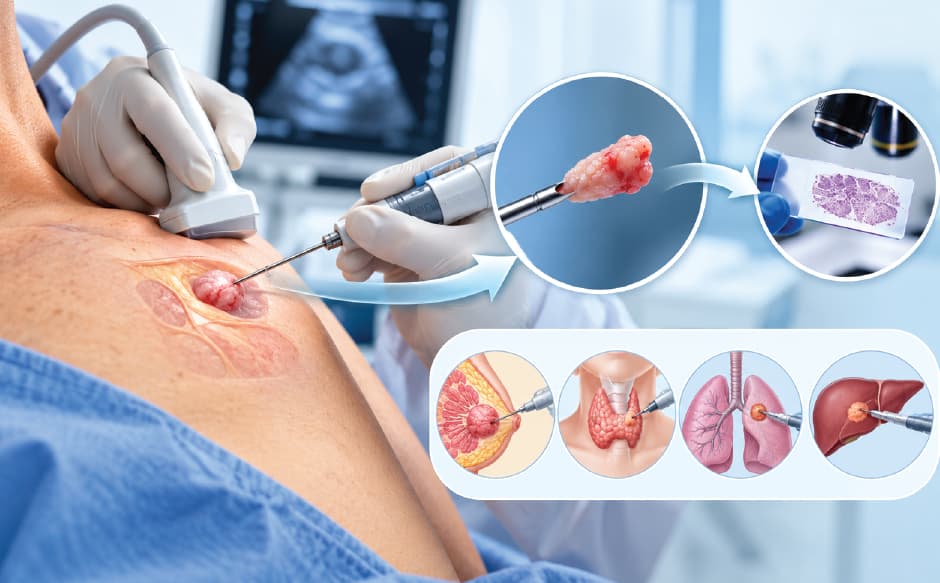
Endoscopic ultrasound (EUS) with biopsy: Considered the most sensitive test for small tumours, since the ultrasound probe sits right next to the pancreas via the stomach wall and allows tissue sampling in the same procedure.
-
CA 19-9 blood test: A tumour marker used to support diagnosis and monitor treatment response, not a stand-alone screening test, since it can be elevated by non-cancerous conditions too.
-
ERCP (endoscopic retrograde cholangiopancreatography): Used when the bile duct is blocked, both to confirm the cause and to relieve jaundice with a stent if needed.
-
Genetic counselling and testing: Recommended for patients with a strong family history, to guide both their own risk and screening decisions for close relatives.
For people at genuinely high risk, strong family history or a known genetic mutation, specialists often recommend structured surveillance, such as annual EUS or MRI starting around age 50 (or earlier, based on family history), rather than waiting for symptoms.
Why Patients Across India and Abroad Choose NAVA Cancer Institute at BMH for Pancreatic Cancer Care
If you're researching where to go after reading through symptoms like these, Baby Memorial Hospital (BMH), Kozhikode, may be worth considering, particularly for patients looking for coordinated pancreatic and cancer care in North Kerala.
BMH has been serving the Malabar region since 1987 and has grown into a 490-bed multispecialty hospital, with 100 ICU beds and 16 operation theatres. For pancreatic cancer, one advantage is that pancreatic conditions are already managed through its Liver & Digestive Sciences institute, alongside the oncology services.
What Makes BMH Relevant for Pancreatic Cancer Care?
-
Pancreas-specific expertise: The Liver & Digestive Sciences institute manages complex pancreatic conditions, including pancreatic necrosectomy for severe pancreatitis and pancreatic endocrine tumour resection.
-
Multidisciplinary cancer care: NAVA Cancer Institute brings together medical oncology, surgical oncology, radiation oncology, nuclear medicine, and haemato-oncology under one roof.
-
Multidisciplinary tumour board: Complex cancer cases can be reviewed by specialists from different disciplines to support coordinated treatment planning.
-
Advanced diagnostic and treatment infrastructure: Patients can access cancer imaging, staging, surgery, systemic therapy, and radiation services within the same hospital ecosystem.
-
Support for patients travelling from outside Kerala: BMH provides international patient services, including assistance with travel arrangements, accommodation, and language interpretation.
-
Potential cost advantage: Cancer treatment in India is generally more affordable than comparable care in countries such as the US, UK, and Gulf region, making India an important destination for patients seeking second opinions and treatment.
For pancreatic cancer, the benefit is not simply having an oncology department. Coordination between gastroenterologists, pancreatic surgeons, radiologists, pathologists, medical oncologists, and radiation oncologists can be particularly important when diagnosis, staging, and treatment decisions need to happen efficiently.
Ultimately, the right treatment centre depends on the patient's diagnosis, tumour stage, overall health, and treatment plan. However, a hospital where the relevant pancreatic and oncology specialists work together on a regular basis can be a practical place to begin that discussion.
Conclusion
Pancreatic cancer is hard to catch early, but it is not undetectable. Painless jaundice, unexplained weight loss, new or worsening diabetes, persistent upper-abdominal pain radiating to the back, and unusual fatigue or digestive changes are the signals worth tracking, especially in combination and especially if they last more than two to three weeks.
None of these symptoms guarantee cancer, and most people who experience one or two of them will not have pancreatic cancer at all. But because early-stage disease offers meaningfully better treatment options than advanced disease, the right response to a persistent, unexplained symptom pattern is a timely evaluation, not a wait-and-see approach.
If you or a family member are noticing any of the signs covered in this guide, discussing them with a gastroenterologist or oncologist promptly is the single most useful step you can take.
You can chat with our health assistant for guidance on next steps, or book a consultation directly with the specialists at NAVA Cancer Institute, Baby Memorial Hospital, Kozhikode.
Medical Disclaimer: This article is intended for general informational purposes only and does not constitute medical advice, diagnosis, or treatment. It is not a substitute for professional medical consultation. Always seek the advice of a qualified physician or healthcare provider with any questions regarding a medical condition or symptoms. If you are experiencing a medical emergency, contact your nearest emergency department immediately.