
A cancer diagnosis is overwhelming enough, but the confusion often deepens when treatment discussions begin. “Doctor, should I go for chemotherapy or immunotherapy?” is a question many patients ask when faced with multiple treatment options.
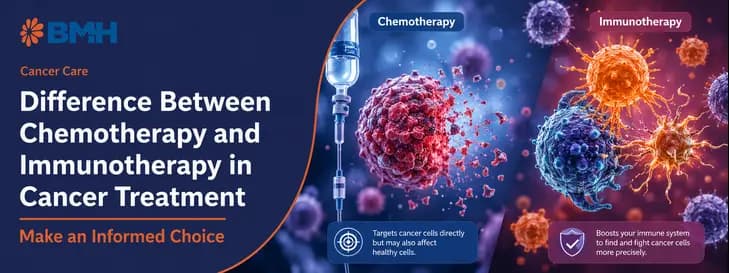
While both are systemic cancer treatments that travel throughout the body to fight cancer, they work in very different ways. Chemotherapy attacks rapidly dividing cancer cells directly, whereas immunotherapy empowers the body's immune system to identify and destroy cancer cells.
In this article, we break down how each therapy works, their side effects, costs, treated cancers, and how specialists at Baby Memorial Hospital’s NAVA Cancer Institute personalise treatment for every patient.
What Is Chemotherapy? How Does It Work?
Chemotherapy is a type of cancer treatment that uses powerful drugs to destroy cancer cells throughout the body. It is considered a systemic therapy, meaning the medicines travel through the bloodstream to reach cancer cells wherever they may be located. Unlike targeted therapies that focus on specific genetic changes within a tumour, chemotherapy primarily targets rapidly dividing cells.
Chemotherapy works by interfering with the cancer cell's ability to grow and multiply. Different drugs achieve this by damaging DNA, preventing cells from replicating their genetic material, or disrupting critical stages of the cell cycle.
However, because chemotherapy cannot always distinguish between cancer cells and healthy fast-growing cells, it may also affect tissues such as hair follicles, the digestive tract lining, and bone marrow.
Types of Chemotherapy Drugs
- Alkylating agents (e.g., cyclophosphamide, cisplatin): Damage DNA by creating cross-links that prevent cancer cells from dividing.
- Antimetabolites (e.g., 5-fluorouracil, methotrexate): Mimic substances cells need for growth, disrupting DNA and RNA production.
- Taxanes (e.g., paclitaxel, docetaxel): Interfere with microtubules, preventing cells from completing division.
- Anthracyclines (e.g., doxorubicin): Insert into DNA and block enzymes required for replication and repair.
How Is Chemotherapy Administered?
Depending on the cancer type and treatment goals, chemotherapy may be delivered through:
- Intravenous (IV) infusions, the most common method
- Oral tablets or capsules taken at home
- Intra-arterial therapy, delivered directly into the artery supplying the tumour
- Intrathecal chemotherapy, injected into the cerebrospinal fluid for certain brain and spinal cancers
- Direct administration into body cavities, such as intravesical therapy for bladder cancer.
Chemotherapy is usually given in cycles, often involving treatment periods followed by rest periods. For example, a patient may receive treatment over a few days and then have one to three weeks of recovery time. These breaks allow healthy cells to repair and regenerate before the next cycle begins.
Also Read: How Much Does a Chemo Treatment Cost in India?
What Is Immunotherapy? How Does It Work?
Immunotherapy is an advanced cancer treatment that helps the body's own immune system recognise, target, and destroy cancer cells. Under normal circumstances, the immune system constantly identifies and eliminates abnormal cells. However, cancer cells can develop sophisticated ways to evade detection. One common strategy is displaying proteins such as PD-L1, which bind to immune cell receptors like PD-1, effectively sending an "off" signal that prevents the immune system from attacking the tumour.
Immunotherapy works by disrupting these immune-evasion mechanisms and restoring the body's natural ability to fight cancer. Unlike chemotherapy, which directly destroys rapidly dividing cells, immunotherapy enhances immune responses, allowing them to identify cancer cells more effectively and maintain long-term surveillance against recurrence.
Types of Immunotherapy
- Checkpoint inhibitors: These drugs block immune checkpoints such as PD-1, PD-L1, and CTLA-4, removing the brakes on immune cells and enabling T-cells to attack cancer more effectively. Common examples include Keytruda (pembrolizumab) and Opdivo (nivolumab).
- CAR T-cell therapy: A highly personalised treatment in which a patient's T-cells are collected, genetically engineered to recognise specific cancer antigens, multiplied in the laboratory, and then reinfused to target tumour cells.
- Monoclonal antibodies: Laboratory-produced proteins that attach to specific markers on cancer cells, helping the immune system identify and eliminate them.
- Cancer vaccines: Designed to stimulate immune memory against tumour-specific proteins, enabling the body to mount a stronger response against cancer cells.
- Cytokine therapy: Uses immune signalling proteins such as interferons and interleukins to enhance immune system activity and support anti-cancer responses.
How Do Doctors Determine If Immunotherapy Will Work?
Not all patients respond equally to immunotherapy. Before recommending treatment, oncologists often perform specialised biomarker testing to assess the likelihood of benefit.
Important biomarkers include PD-L1 expression, which measures the presence of immune checkpoint proteins on tumour cells; MSI-H (microsatellite instability-high) status, which indicates defects in DNA repair mechanisms; and TMB (tumour mutational burden), which reflects the number of genetic mutations within a tumour.
Higher levels of these biomarkers may increase the chances of a positive response, helping oncologists personalise treatment decisions and select the most appropriate immunotherapy strategy.
As you can see, although both treatments aim to control or eliminate cancer, they differ significantly in how they work, who they benefit, and the side effects they cause.
Chemotherapy vs Immunotherapy: At-a-Glance Comparison
The table below compares chemotherapy and immunotherapy across the factors patients most commonly discuss with their oncologist before starting treatment:


| Factor | Chemotherapy | Immunotherapy |
|---|---|---|
| Mechanism | Kills rapidly dividing cells (cancer + healthy) | Trains the immune system to identify and attack cancer cells |
| Target | All fast-dividing cells | Cancer-specific antigens (selective) |
| Onset of Effect | Faster, tumors can shrink within weeks | Slower, immune activation takes weeks to months |
| Durability | Effect lasts only during treatment | Immune memory can persist long after treatment ends |
| Common Side Effects | Hair loss, nausea, fatigue, mouth sores, low blood counts | Fatigue, rash, immune-related inflammation, flu-like symptoms |
| Administration Route | IV infusion, oral tablets, intra-arterial, intrathecal | IV infusion, subcutaneous injection, topical (skin cancers) |
| Biomarkers Required | Not always (except targeted chemo) | Often required: PD-L1, MSI-H, TMB status |
| Best For | Rapidly growing tumours, pre-surgical shrinkage, haematologic cancers | Melanoma, lung cancer, bladder cancer, resistant tumours |
| Cost (India) | Generally lower; varies by regimen | Higher; approx. INR 1–5 lakh+ per cycle depending on drug |
Also Read: Targeted Therapy vs Chemotherapy: How to Choose the Right Treatment
Because these treatments work through entirely different mechanisms, the side effects they produce can also vary considerably.
Side Effects: Chemotherapy vs Immunotherapy
While chemotherapy-related side effects are largely caused by damage to healthy fast-dividing cells, immunotherapy side effects result from an overactive immune response that may mistakenly attack normal tissues.
The comparison below highlights the most common and clinically important side effects associated with each treatment approach:
Chemotherapy Side Effects
Because chemotherapy targets all rapidly dividing cells, not just cancer cells, its side effects are often widespread and tend to appear during or shortly after treatment. The severity varies depending on the drugs used, dosage, treatment duration, and the patient's overall health.
Common chemotherapy side effects include:
- Hair loss (alopecia): One of the most visible side effects, caused by damage to rapidly growing hair follicle cells.
- Nausea, vomiting, and appetite loss: Certain chemotherapy drugs can irritate the digestive tract and trigger nausea centres in the brain.
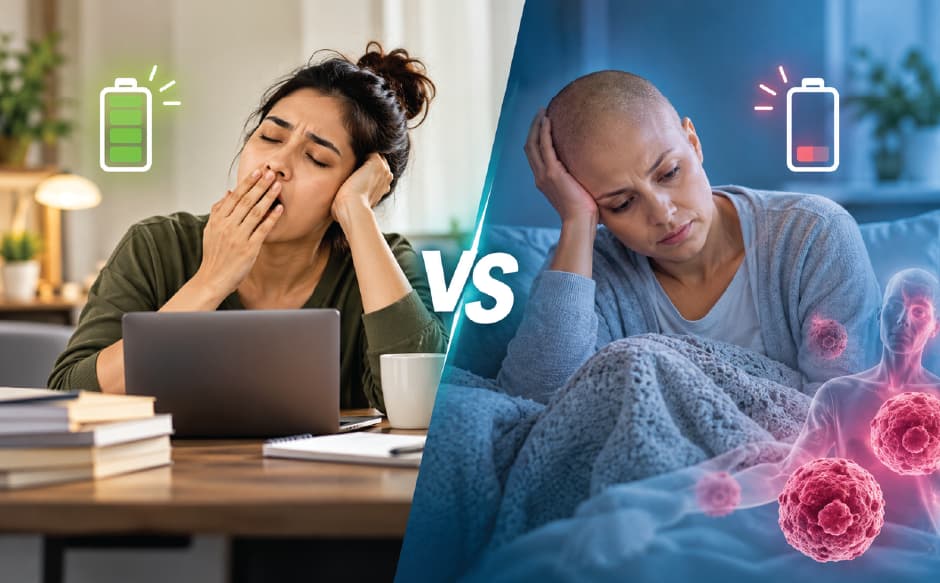
- Fatigue and anaemia: Bone marrow suppression can reduce red blood cell production, leading to persistent tiredness and weakness.
- Mouth sores (mucositis): Damage to the lining of the mouth and digestive tract can cause painful ulcers and difficulty eating.
- Peripheral neuropathy: Some drugs may damage nerves, causing numbness, tingling, burning sensations, or weakness in the hands and feet.
- Increased infection risk (neutropenia): Reduced white blood cell counts can make patients more vulnerable to bacterial, viral, and fungal infections.
The good news is that most chemotherapy-related side effects improve or disappear once treatment is completed. However, certain complications, particularly peripheral neuropathy, may persist for months or even become permanent in some patients.
Immunotherapy Side Effects
Unlike chemotherapy, immunotherapy does not directly damage healthy tissues. Instead, its side effects occur when the activated immune system mistakenly attacks normal organs and tissues. These are known as immune-related adverse events (irAEs) and can range from mild to severe.
Common immunotherapy side effects include:
- Fatigue and flu-like symptoms: Patients may experience tiredness, fever, muscle aches, or general malaise.
- Skin rash and itching: Among the earliest and most frequently reported immune-related reactions.
- Immune-related colitis: Inflammation of the colon that can cause diarrhoea, abdominal pain, and dehydration.
- Pneumonitis: Inflammation of lung tissue that may lead to coughing, breathlessness, and, in severe cases, respiratory complications.
- Endocrine disorders: The immune system may affect hormone-producing glands, causing conditions such as thyroiditis, hypothyroidism, hyperthyroidism, or adrenal insufficiency.
- Infusion-related reactions: Some patients may develop fever, chills, redness, or discomfort during or shortly after treatment administration.
A key difference is that immunotherapy side effects may not appear immediately. They can develop weeks or even months after treatment begins—and occasionally after treatment has ended. For this reason, patients receiving immunotherapy require close monitoring by experienced oncology teams throughout their treatment journey.
Also Read: Recommended Cancer Screening Tests for Every Adults
Before deciding which treatment may be appropriate, it's important to understand that chemotherapy and immunotherapy are often used for different cancer types, stages, and treatment goals.
Which Cancers Are Treated with Chemotherapy vs Immunotherapy?
There is no single "better" treatment for cancer. The right option depends on factors such as the type of cancer, its stage, molecular characteristics, and the patient's overall health. In some cases, chemotherapy or immunotherapy may be used alone, while in others they may be combined to improve outcomes.
Chemotherapy Is Commonly Used For:
Chemotherapy remains a cornerstone of cancer treatment and is particularly effective in:
- Haematologic cancers such as leukaemia, lymphoma, and multiple myeloma, which are often highly responsive to chemotherapy.
- Neoadjuvant treatment, where chemotherapy is given before surgery to shrink tumours in cancers such as breast, colon, and cervical cancer.
- Adjuvant treatment, where it helps eliminate microscopic cancer cells that may remain after surgery.
- Palliative care, where chemotherapy can slow disease progression, reduce symptoms, and improve quality of life in advanced-stage cancers.
Immunotherapy Is Commonly Used For:
Immunotherapy has transformed treatment outcomes for several cancers that were once difficult to manage.
- Melanoma (skin cancer), where checkpoint inhibitors have produced long-lasting responses in many patients.
- Non-small cell lung cancer (NSCLC), especially in patients with high PD-L1 expression.
- Bladder, kidney, and head and neck cancers, where immunotherapy is now a standard treatment option in many settings.
- Chemotherapy-resistant cancers, where traditional treatments have become less effective.
- Selected first-line treatment settings, where immunotherapy may be used before chemotherapy based on biomarker testing.
A critical clinical consideration is that immunotherapy does not work for every patient. Treatment success often depends on factors such as tumour immunogenicity, biomarker status, and the presence of immune cells within the tumour microenvironment.
A common misconception is that patients must choose between chemotherapy and immunotherapy. In reality, many modern cancer treatment plans successfully combine both approaches.
Can Chemotherapy and Immunotherapy Be Combined?
Yes, and for several cancers, combination therapy has become a standard treatment strategy. Rather than competing with one another, chemotherapy and immunotherapy can work synergistically to improve treatment outcomes.
When chemotherapy destroys cancer cells, it releases tumour antigens and other cellular signals into the body.
This process, known as immunogenic cell death, can make tumours more visible to the immune system, helping immunotherapy drugs recognise and attack cancer cells more effectively. As a result, checkpoint inhibitors may produce stronger and more durable responses when used alongside chemotherapy.
Key considerations include:
- Treatment plans are typically developed by multidisciplinary tumour boards at specialist cancer centres.
- Therapy may be given concurrently (at the same time) or sequentially (one after the other), depending on the cancer type and patient profile.
- Ongoing clinical trials are evaluating advanced combination strategies involving chemotherapy, immunotherapy, and targeted therapy together.
The decision to combine treatments is highly personalised and based on tumour biology, biomarker testing, disease stage, and the patient's overall health status.
Choosing the right cancer treatment is important, but choosing the right cancer centre can be just as critical to achieving the best possible outcomes.
Cancer Treatment at Baby Memorial Hospital (NAVA Cancer Institute), Kozhikode
For patients in Kozhikode, Kannur, Malappuram, Wayanad, and across Kerala, a cancer diagnosis often raises an immediate question: where should treatment begin? The NAVA Cancer Institute at Baby Memorial Hospital (BMH) is one of the region's leading comprehensive cancer centres, providing advanced, evidence-based care for both common and complex cancers under one roof.
What distinguishes NAVA Cancer Institute is its multidisciplinary approach. Rather than treatment decisions being made by a single specialist, every complex case is discussed by a dedicated tumour board comprising medical oncologists, surgical oncologists, radiation oncologists, pathologists, and radiologists. This collaborative review helps ensure that each patient receives the most appropriate treatment plan, whether that involves chemotherapy, immunotherapy, targeted therapy, surgery, radiation, or a combination of modalities.
Why Patients Choose NAVA Cancer Institute
- Tumour board-driven treatment planning, ensuring expert consensus before treatment protocols are finalised.
- Comprehensive oncology services, including chemotherapy, immunotherapy, radiation oncology, surgical oncology, haematology, and bone marrow transplantation.
- Advanced biomarker and molecular testing, including PD-L1, MSI, TMB, and genomic profiling to support personalised treatment decisions.
- Accessible and affordable cancer care, with support through Ayushman Bharat and other patient assistance programmes.
- Dedicated international patient services for patients travelling from the Gulf region, the UK, and other countries.
- Experienced oncology specialists trained at leading national and international institutions.
For those travelling from outside Kozhikode or from overseas, dedicated coordinators assist with appointments, treatment scheduling, accommodation guidance, and communication support in Malayalam, English, and Arabic.
Our oncology team is here to help 24/7. Chat with us on Whatsapp today!
Also Read: Second Opinion for Cancer in India: How to Get One Remotely at BMH
Medical Disclaimer This article is intended for informational and educational purposes only and does not constitute medical advice. The information provided should not be used as a substitute for professional medical consultation, diagnosis, or treatment. Every patient’s situation is unique. Please consult a qualified oncologist or medical professional for personalised guidance regarding your cancer diagnosis and treatment options. Baby Memorial Hospital and NAVA Cancer Institute are not responsible for decisions made based solely on the content of this article.