
Most women assume that bleeding after menopause, or a slightly heavier period than usual, is “just hormones.” For the vast majority, that assumption holds true. But for a growing number of women, it's the first, and sometimes the only, early warning sign of endometrial cancer.
The reassuring part of this picture is that endometrial cancer is one of the few cancers that tends to announce itself early, if you know what to look for, and if you act on it instead of waiting it out. This guide walks through the specific early signs of endometrial cancer, which ones are genuine red flags versus common look-alikes, who is at higher risk, and what an evaluation actually involves.
What Is Endometrial Cancer?
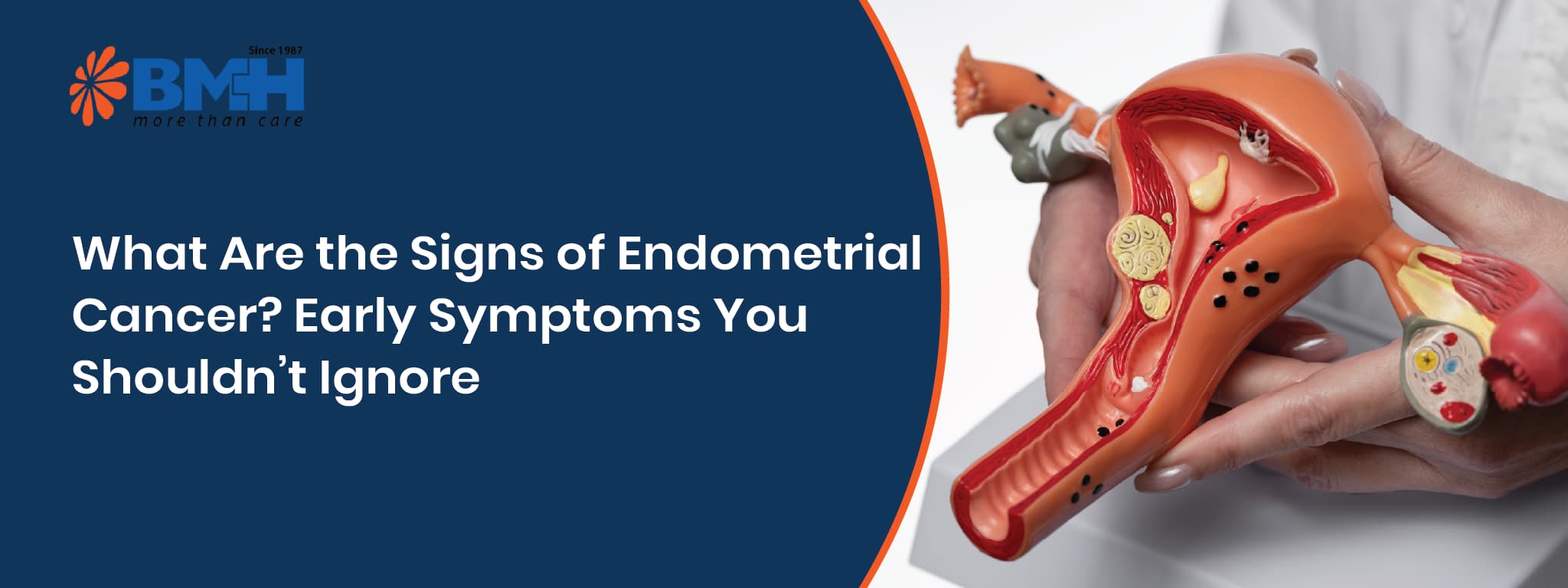
Endometrial cancer begins in the endometrium, the inner lining of the uterus that thickens and sheds during a menstrual cycle. It's the most common cancer of the female reproductive organs in many Western countries, and while its incidence in India is still comparatively lower, it's climbing steadily enough that oncologists now flag it as a condition to watch.
The disease is largely driven by excess or “unopposed” estrogen, estrogen not balanced by progesterone, which is why obesity, PCOS, and estrogen-only **hormone therapy show up repeatedly as risk factors in the research.
The Early Warning Signs of Endometrial Cancer
Endometrial cancer can cause noticeable changes early on, particularly abnormal bleeding. Recognising these symptoms and knowing when they need medical evaluation can help with earlier diagnosis.
1. Abnormal Vaginal Bleeding: The Sign That Matters Most
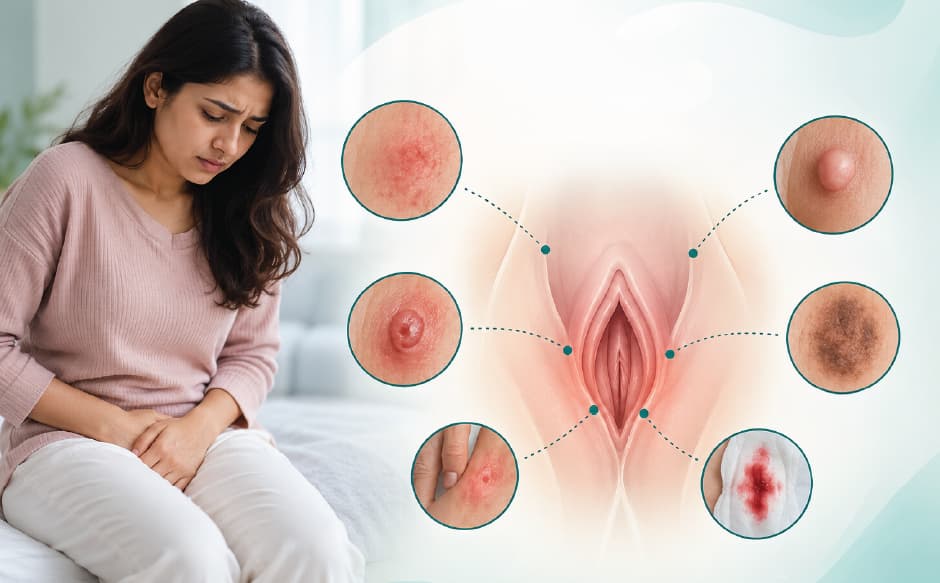
Across nearly every major cancer centre's data, one symptom stands far above the rest: abnormal vaginal bleeding. This isn't limited to bleeding after menopause, it also includes bleeding between periods, periods that run heavier or longer than your usual pattern, or any spotting once you've already gone 12 months without a period.
2. Unusual Vaginal Discharge
Discharge that's watery, blood-tinged, or unusually foul-smelling, even without visible blood, can be an early sign, and it's often the symptom women are most likely to dismiss or feel embarrassed to mention. One long-time survivor profiled by MD Anderson Cancer Center described nearly three months of unpleasant, non-bloody discharge before her stage 4 diagnosis, a reminder that painless, non-bloody discharge isn't automatically “nothing.”
3. Pelvic Pain or a Feeling of Fullness
Pain low in the abdomen, pelvic pressure, or a sensation of fullness can appear as a tumor grows, though this symptom tends to surface somewhat later than bleeding does.
4. Pain During Urination or Intercourse
Dysuria (painful urination) and dyspareunia (painful intercourse) are less common but recognised signs, particularly once the disease has begun affecting surrounding tissue.
5. Unintentional Weight Loss and Persistent Fatigue
Losing weight without trying, or fatigue that doesn't match your usual routine, tends to show up in more advanced presentations of the disease, which is exactly why the earlier signs above deserve attention long before these appear.
Also Read: Can Young Women Get Endometrial Cancer? Here’s Why It Happens
Why Abnormal Vaginal Bleeding Is Often the First Sign
Abnormal vaginal bleeding is the hallmark early symptom of endometrial cancer, appearing in the vast majority of diagnosed cases. This bleeding may feel different from your regular periods, heavier, longer, or more frequent than usual. If you have already gone through menopause, any vaginal bleeding is abnormal and should be evaluated by a gynecologist immediately.
The bleeding occurs because cancer cells in the uterine lining disrupt normal blood vessel function and hormonal balance. You might notice spotting between periods, soaking through pads or tampons more quickly than normal, or bleeding during or after sexual intercourse. Some women experience watery or blood-tinged discharge rather than frank bleeding. Do not assume bleeding after menopause is inevitable or harmless; post-menopausal bleeding is never considered normal and always warrants investigation. Keeping a simple log of when bleeding occurs, how heavy it is, and how long it lasts helps your doctor assess the pattern and urgency.


Who Is Most at Risk? Key Risk Factors for Endometrial Cancer
Endometrial cancer risk is influenced by factors that increase long-term estrogen exposure, affect ovulation, or are linked to inherited cancer syndromes. The main risk factors fall into two groups: hormonal and metabolic factors and reproductive and genetic factors.
Hormonal and Metabolic Risk Factors
These factors can increase estrogen exposure or are associated with metabolic changes that may promote abnormal growth of the endometrium.
| Risk Factor | How It May Increase Risk |
|---|---|
| Obesity | Fat tissue can increase estrogen levels, leading to prolonged stimulation of the endometrium. |
| PCOS / chronic anovulation | Irregular or absent ovulation can reduce progesterone exposure, leaving estrogen relatively unopposed. |
| Diabetes and hypertension | Often occur alongside obesity and metabolic syndrome, which are associated with higher endometrial cancer risk. |
| Estrogen-only HRT | Using estrogen without progesterone when the uterus is intact can increase endometrial stimulation. |
Reproductive and Genetic Risk Factors
Reproductive history can affect lifetime hormone exposure, while certain inherited conditions can substantially increase the risk of developing endometrial cancer.
| Risk Factor | How It May Increase Risk |
|---|---|
| Nulliparity | Never carrying a pregnancy is associated with greater lifetime exposure to menstrual cycles and hormonal stimulation. |
| Early menarche or late menopause | Extends the number of years the endometrium is exposed to estrogen. |
| Lynch syndrome / Cowden syndrome | These inherited conditions are associated with a significantly higher lifetime risk of endometrial cancer. |
| Family history | A close relative with endometrial, ovarian, or colorectal cancer may indicate increased inherited or familial risk. |
Also Read: Is Endometrial Cancer Hereditary? Genetics, Risk Factors and Warning Signs
When to See a Doctor: The Diagnostic Pathway
If you notice bleeding after menopause, bleeding between periods, or persistent abnormal discharge, the standard workup generally follows this sequence:
-
Clinical pelvic examination
-
Transvaginal ultrasound (TVS), measures endometrial thickness; a thicker-than-expected lining in a postmenopausal woman prompts biopsy.
-
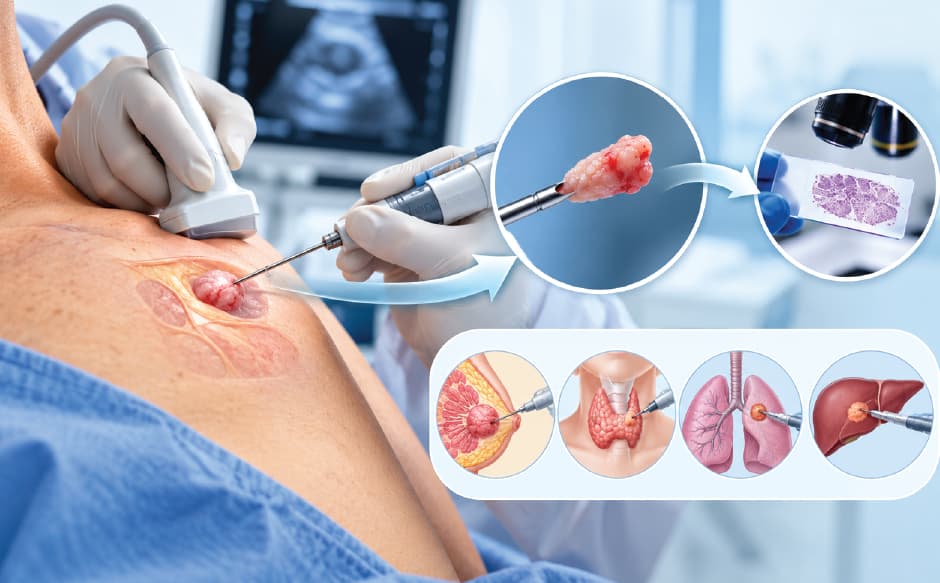
Endometrial biopsy, a thin catheter samples uterine tissue, usually as an outpatient procedure.
-
Hysteroscopy with dilation and curettage (D&C), used when the biopsy is inconclusive or bleeding persists.
| Test | What It Checks | Invasiveness |
|---|---|---|
| Transvaginal ultrasound | Endometrial thickness and structural changes | Non-invasive |
| Endometrial biopsy | Tissue sample for pathology | Minimally invasive, outpatient |
| Hysteroscopy + D&C | Direct visualisation plus full tissue sampling | Minor surgical procedure |
Why Patients Choose NAVA Cancer Institute at Baby Memorial Hospital
A positive endometrial cancer biopsy requires coordinated evaluation across pathology, imaging, surgery, radiation and medical oncology. At NAVA Cancer Institute, Baby Memorial Hospital (BMH), Kozhikode, cases are reviewed through a multidisciplinary tumor board to develop an individualized treatment plan.
Key treatment capabilities include:
-
Robotic-assisted surgery: BMH offers Da Vinci robotic-assisted hysterectomy for selected patients, particularly in early-stage disease. Compared with open surgery, minimally invasive approaches may involve smaller incisions, less blood loss and shorter recovery.
-
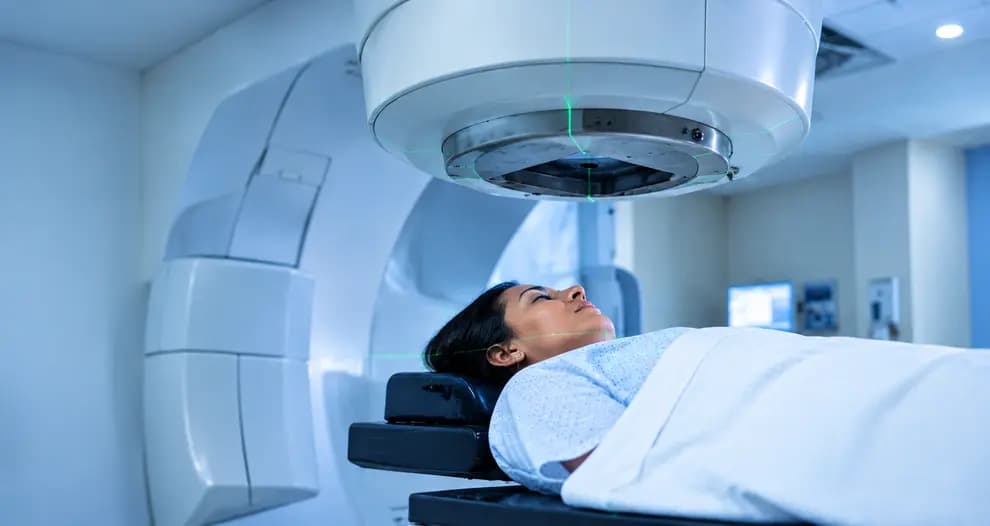
Brachytherapy and radiation: Vaginal-vault brachytherapy may be recommended after surgery for selected patients to reduce recurrence risk. BMH uses the GammaMedplus iX HDR brachytherapy system and TrueBeam for image-guided radiotherapy.
-
Specialist oncology care: Surgical oncology, radiation oncology, medical oncology, pathology and radiology teams work together rather than managing treatment separately.
-
Imaging and staging: On-campus PET-CT and dual 1.5T MRI facilities support staging and treatment follow-up.
For patients seeking clarity after a diagnosis, a multidisciplinary second opinion for cancer can help confirm the stage, assess treatment options and determine whether surgery, radiation, systemic therapy or a combination is appropriate.
Conclusion
Endometrial cancer rarely stays silent for long. Abnormal bleeding, especially after menopause, remains its loudest and most reliable early signal, followed by unusual discharge, pelvic discomfort, and, in later stages, weight loss and fatigue.
The encouraging part of this picture is that when caught early, endometrial cancer has one of the better prognoses among gynecologic cancers, precisely because it tends to show symptoms before it spreads.
The step that actually changes outcomes isn't awareness alone, it's getting any abnormal bleeding checked within days, not months, by a team equipped to properly investigate it.
Whether that starts with your regular gynecologist or a dedicated gynecologic-oncology unit, the goal is the same: don't let “probably nothing” be the last word before a scan settles it.
Chat with our medical assistant on WhatsApp for guidance on what to do next, or book a consultation or second opinion.
Medical Disclaimer: This article is for general informational purposes only and is not a substitute for professional medical advice, diagnosis, or treatment. Always seek the guidance of a qualified physician or healthcare provider with any questions you may have regarding a medical condition. Never disregard professional medical advice or delay seeking it because of something you have read here.