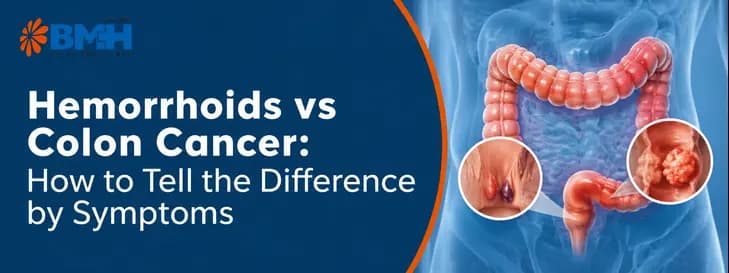

You see blood on the tissue and decide it is hemorrhoids. Most of the time, that guess is right. But in a University of Colorado Cancer Center study of 173 young-onset colorectal cancer patients, an average of 294 days passed between first noticing rectal bleeding and being diagnosed. The researchers suspected the bleeding was often blamed on hemorrhoids first. That gap is what this guide is built to close. You will see how hemorrhoids and colon cancer differ, which symptoms should never be explained away, which tests settle the question, and how a proper evaluation works at Baby Memorial Hospital (BMH), Kozhikode.
Quick answer: Hemorrhoids are swollen veins in the lower rectum and anus. Colon cancer is abnormal cell growth in the colon or rectum. Both can cause bright red blood, so you cannot reliably tell them apart without being examined. Hemorrhoid symptoms tend to come and go and ease with fiber and home care. Cancer symptoms tend to persist or worsen, and may bring bowel changes, weight loss, tiredness or anemia.
Hemorrhoids vs Colon Cancer at a Glance
| Feature | Hemorrhoids | Colon (colorectal) cancer |
|---|---|---|
| What it is | Swollen veins in the lower rectum or anus | Abnormal cell growth in the colon or rectum |
| Blood | Usually bright red, seen on tissue or in the toilet | Bright red, or dark brown to black; stool often looks normal |
| Pain and itch | Internal: usually painless. | External: pain, itching, a lump near the anus Itching or anal lumps are not typical; cramping is possible |
| Pattern | Comes and goes; flares with constipation, straining, long sitting | Persistent or slowly worsening |
| Bowel habit | Usually unchanged | Diarrhea, constipation or thinner stools for more than a few days |
| Whole-body signs | None | Fatigue, weakness, unintended weight loss, anemia |
| Home care | Improves with fiber, fluids, sitz baths, creams | Does not settle |
What Are Hemorrhoids?
Hemorrhoids are swollen veins inside the rectum (internal) or under the skin around the anus (external). Internal hemorrhoids tend to be painless, while external ones can hurt. Flare-ups often follow constipation, straining, heavy lifting, long periods of sitting or pregnancy. They are common, usually not serious, and treated with lifestyle changes, over-the-counter medicines and, rarely, procedures.
What Is Colon Cancer, and What Does It Feel Like?
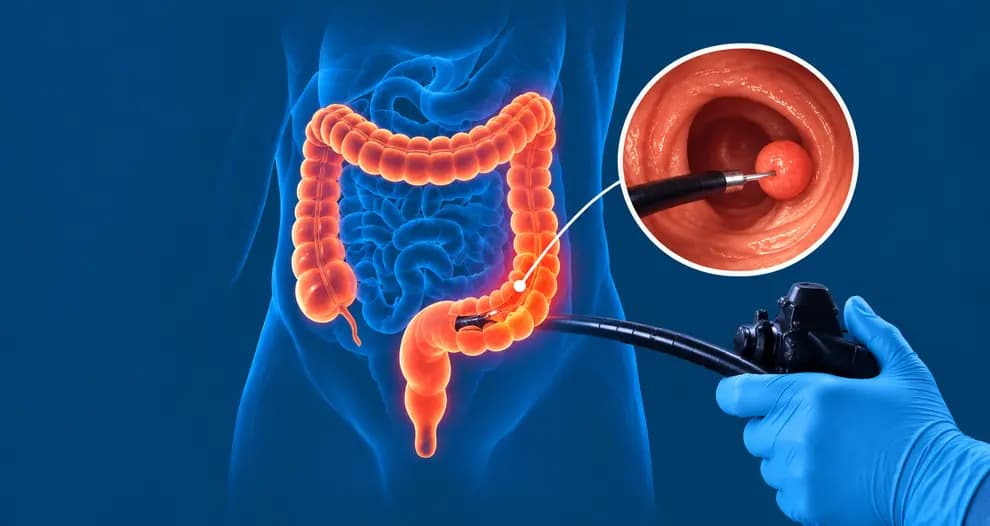
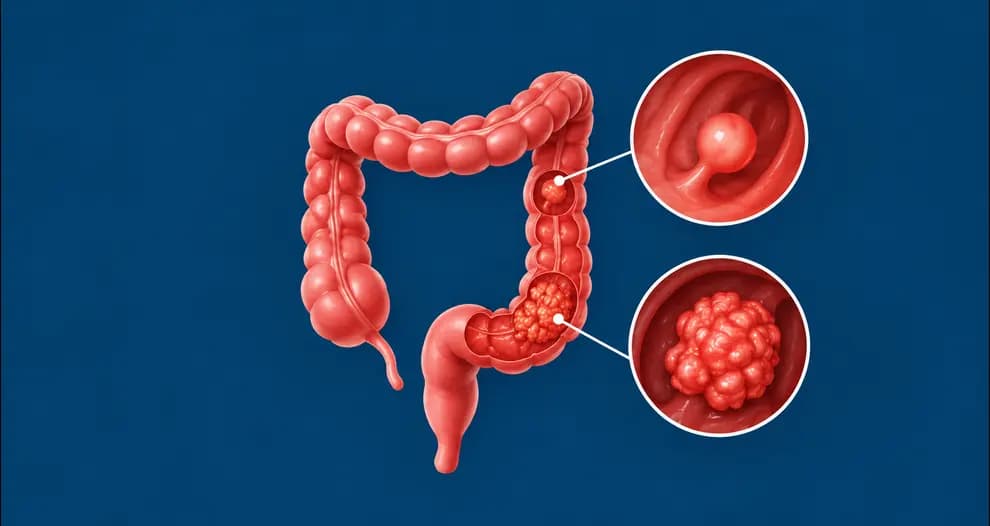
Colon cancer starts in the large intestine; together with rectal cancer it is called colorectal cancer. Early on it may cause nothing at all. When symptoms appear, a change in bowel habits lasting more than a few days, a feeling that the bowel is not empty, rectal bleeding, dark stools, cramping, weakness, fatigue and unintended weight loss. One detail surprises people: slow, hidden bleeding can drain red blood cells over time. Sometimes the first sign is not visible blood but a blood test showing anemia.
Seven Signs That Point Away From Hemorrhoids
1. Bleeding that continues despite proper home care. Symptoms that persist despite standard hemorrhoid care need a closer look. 2. Dark or mixed blood. Cancer bleeding can be dark or bright red, and bright red blood alone does not clear you. 3.A bowel-habit change that lasts. New diarrhea, constipation or narrowing of the stool for more than a few days. 4.The "not finished" feeling. An urge to pass stool that a bowel movement does not relieve. 5.Pencil-thin stools. A recognized red-flag sign of a narrowed passage. 6.Fatigue, weakness, weight loss or pallor. Hemorrhoids do not cause these; cancer-related blood loss can. 7.Blood without anal itching, swelling or a lump. Itching and pain around the anus are hemorrhoid symptoms, not rectal cancer symptoms.
Age and family history change the odds.


When to See a Doctor
Book an examination if you notice:
- New, repeated or heavier-than-usual rectal bleeding
- Blood together with a change in bowel habits
- Symptoms that have not improved with home care
- Unexplained weight loss, fatigue or paleness
- Age 45 or above with no screening done, or a family history of colorectal cancer
The American Cancer Society advises seeing a doctor right away so the cause can be found, even though hemorrhoids are the likelier explanation.
How BMH Approaches Rectal Bleeding and Colorectal Cancer Care
Baby Memorial Hospital (BMH), established in 1987 on Indira Gandhi Road in Kozhikode, is a multispecialty hospital offering a range of specialised medical services. Its NAVA Cancer Institute provides dedicated cancer care, supported by multidisciplinary expertise and advanced diagnostic and treatment facilities. BMH also offers 24/7 emergency services and conducts cancer screening, detection and prevention initiatives.
For a patient with rectal bleeding, this matters in a practical way. The evaluation described above, from examination to colonoscopy and biopsy, can sit in the same institution as the teams who stage and treat cancer if it is found. You are not restarting the journey in a new city after a worrying report.
If the answer turns out to be hemorrhoids, that is also a result worth having. You leave with a confirmed cause, a treatment plan and peace of mind instead of months of guessing.
At BMH, the team can assess your symptoms, review your medical history and recommend the tests needed to confirm a diagnosis. With a dedicated oncology institute, patients can access diagnostic evaluation, staging and treatment planning, with medical and surgical oncology services coordinated as needed.
BMH is also described as providing specialised yet affordable care and is listed as empanelled under Ayushman Bharat PM-JAY, subject to eligibility and scheme rules. Patients travelling from other states or abroad can enquire about report reviews before travelling through the international patient desk.
Established in 1987, BMH serves Kozhikode and the wider Malabar region. Rather than relying on claims about which hospital is the best, discuss your diagnosis, treatment options, expected costs and follow-up needs with the care team to decide whether BMH is right for you.
Conclusion
Hemorrhoids and colon cancer share one loud symptom, rectal bleeding, but they behave differently over time. Hemorrhoids come and go and respond to home care. Cancer persists, worsens and may bring bowel changes, weight loss or anemia. Because the overlap is real and a hemorrhoid diagnosis can hide a second problem, the safest rule is simple: if bleeding is new, repeated or not settling, get examined rather than self-diagnosed. Early evaluation costs a visit; delay can cost a stage. If you or a family member has rectal bleeding, contact BMH to book a consultation, or send your questions through our chat assistant.
If you are experiencing hemorrhoid symptoms, bleeding, pain, swelling, or itching, schedule a consultation with our specialists at our hospital in Kozhikode. Our colorectal team provide expert evaluation, accurate diagnosis, and personalized treatment plans. Contact us today for a same-day or next-day appointment and take control of your symptoms.