- English
- عربي / Arabic
- മലയാളം / Malayalam

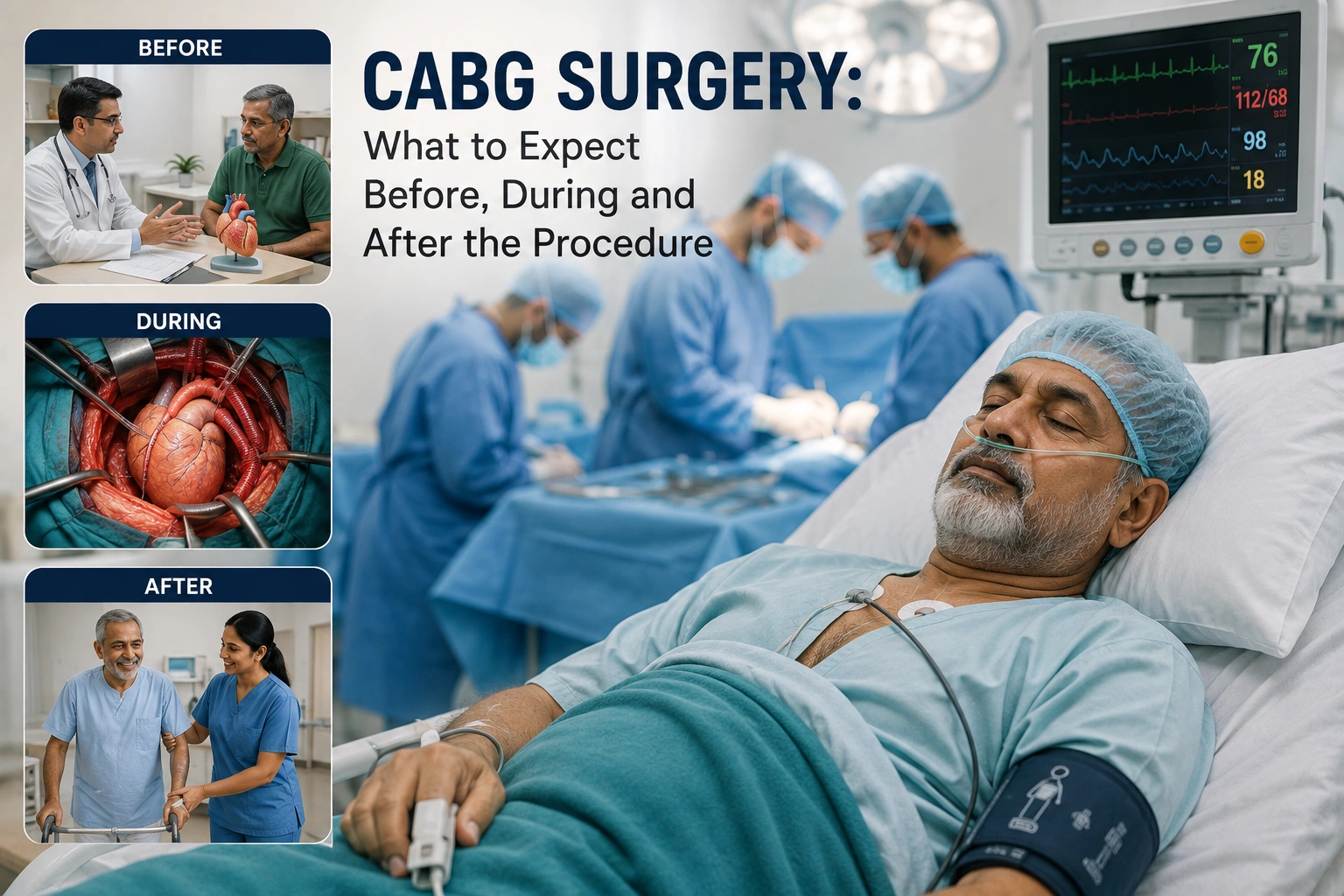
Hearing that you need heart bypass surgery can feel overwhelming. For many people, the first questions are simple. Will I be awake? How long will recovery take? When can I get back to normal life?
These are natural concerns.
Coronary artery bypass grafting (CABG) is one of the most commonly performed heart operations. It is recommended when the arteries supplying blood to the heart become severely narrowed or blocked, reducing the amount of nutrient and oxygen-rich blood reaching the heart muscle.
Understanding what happens before, during, and after surgery can make the journey feel more predictable and help you prepare for recovery with greater confidence.
Think of your heart as a city that never sleeps.
It needs a constant supply of nutrient and oxygen-rich blood to keep working.
That blood reaches the heart through the coronary arteries.
Over time, these arteries can become narrowed by fatty deposits, making it harder for blood to flow freely. At first, you may notice chest discomfort while walking or climbing stairs. As the blockage becomes more severe, even everyday activities may leave you breathless or uncomfortable.
This is where coronary artery bypass grafting helps.
Instead of removing the blockage, the surgeon creates a new route for blood to travel around it. The blood "bypasses" the blocked section, allowing the heart muscle to receive the oxygen it needs.
Not everyone with coronary artery disease needs surgery.
Many people are successfully treated with medicines, lifestyle changes, or angioplasty.
CABG is usually considered when:
The decision is made after reviewing angiography results, heart function, symptoms, and your overall health.
Benefits. Improves blood flow to the heart; reduces chest pain; improves quality of life; lowers the risk of future heart-related complications in selected patients; helps many people return to daily activities with fewer symptoms.
Risks. Like any major operation, CABG carries risks such as bleeding, infection, irregular heart rhythm, stroke, kidney complications, or heart attack. The overall risk varies depending on age, overall health, and the condition of the heart.
Your cardiac team discusses these risks in detail before surgery so that you can make an informed decision.
Once surgery has been planned, several tests are carried out to ensure you are ready.
These may include:
Your medical team will also review your medications. Some medicines may need to be stopped temporarily before the operation.
You will be asked not to eat or drink for several hours before surgery.
This preparation is not just routine.
It helps reduce risks during the procedure and supports a smoother recovery afterward.
The operation is performed under general anaesthesia, so you remain asleep throughout the procedure.
A cardiothoracic surgeon carefully takes a healthy blood vessel from another part of the body, often the chest, leg, or arm.
This healthy vessel is then attached above and below the blocked coronary artery.
The result is a new pathway through which blood can flow.
Depending on the number of blocked arteries, one, two, three, or even more bypass grafts may be created during the same operation.
The surgery usually takes several hours.
Throughout the procedure, your heart function, blood pressure, oxygen levels, and other vital signs are monitored continuously.
Most patients wake up in the intensive care unit (ICU).
Seeing monitors, tubes, and medical equipment around you can feel unexpected.
But each one has a purpose.
The breathing tube is usually removed once you are awake enough to breathe comfortably on your own.
Nurses monitor your heart rhythm, blood pressure, oxygen levels, and drainage closely during this period.
Pain is expected after surgery.
It is also carefully managed.
Your healthcare team will encourage gentle movement, breathing exercises, and sitting up as early as it is safe to do so because these small steps reduce the risk of complications.
Every person's CABG surgery recovery is slightly different.
Some recover faster.
Others need more time.
Most patients spend several days in the hospital before going home.
Once home, recovery continues gradually over the following weeks.
You may notice:
These improvements happen gradually.
Your body has been through major surgery and needs time to heal.
Walking a little farther each day often becomes an important part of recovery.
Recovery is not only about healing the surgical wound.
It is also about strengthening your heart.
Many patients benefit from a structured cardiac rehabilitation programme that includes:
These programmes help patients regain confidence while reducing the risk of future heart problems.
A bypass graft improves blood flow.
It does not cure coronary artery disease.
Looking after your heart remains important.
Your doctor may recommend:
These changes help protect both your natural arteries and the bypass grafts.
Arrange medical review if you develop:
Early assessment allows complications to be identified and treated promptly.
Coronary artery bypass grafting restores blood flow to the heart by creating a new pathway around blocked coronary arteries. While the idea of heart bypass surgery can feel daunting, understanding each stage—from preparation to CABG surgery recovery—helps reduce uncertainty and allows you to focus on healing.
If you have been advised to undergo bypass surgery, discussing your questions with an experienced cardiothoracic surgeon Kozhikode and the wider cardiac care team can help you understand the procedure, recovery, and the long-term steps needed to protect your heart health.
Coronary artery bypass grafting is a heart operation that creates a new route for blood to flow around blocked coronary arteries, improving blood supply to the heart muscle.
The procedure usually takes several hours, depending on the number of bypass grafts required and the complexity of the surgery.
You will be under general anaesthesia during the operation. After surgery, some pain and soreness are expected, but medications are provided to keep you comfortable.
Most patients stay in the hospital for several days. Full recovery usually takes several weeks to a few months, depending on overall health and progress during rehabilitation.
Many patients benefit from cardiac rehabilitation, which combines supervised exercise, education, and lifestyle guidance to support recovery.
The bypass grafts improve blood flow, but coronary artery disease can still progress if risk factors such as smoking, high cholesterol, diabetes, or high blood pressure are not well controlled.
Contact your doctor if you develop fever, increasing wound redness, severe chest pain, worsening shortness of breath, irregular heartbeat, or any symptoms that concern you.