- English
- عربي / Arabic
- മലയാളം / Malayalam

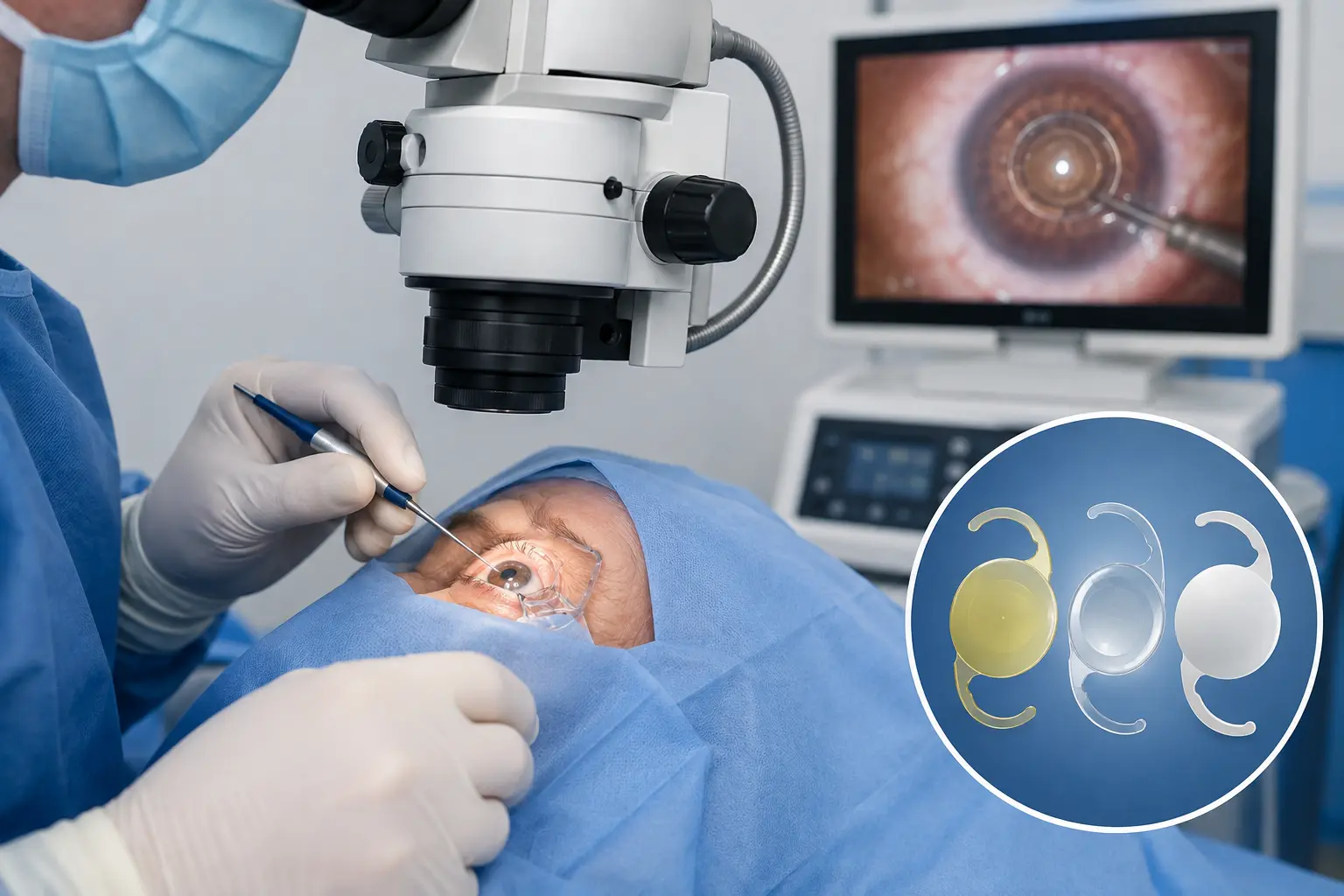
Cloudy vision, difficulty reading, glare from headlights at night or colors that no longer look as bright are common signs of cataracts. While stronger glasses may help in the early stages, they cannot reverse the condition. Once vision begins affecting everyday activities, cataract surgery is the only effective treatment.
Advances in eye care have made cataract surgery safer, more precise and quicker than ever before. Modern techniques such as phacoemulsification and advanced artificial lenses allow many patients to regain clear vision with a short recovery period.
Many people believe cataracts should become "fully mature" before surgery. This is no longer true.
Today, ophthalmologists recommend surgery when cataracts begin interfering with daily life, such as:
Delaying surgery unnecessarily may make the cataract harder to remove and can further reduce vision.
The most widely used technique today is phacoemulsification, a minimally invasive procedure performed through a very small incision.
During the surgery, the cloudy natural lens is broken into tiny fragments using ultrasound energy and gently removed. An artificial intraocular lens is then placed in the same position as the original lens.
Because the incision is very small, stitches are rarely needed, allowing faster healing and less discomfort after surgery.
The procedure is usually completed within 15 to 30 minutes.
A key part of lens replacement surgery is selecting the artificial intraocular lens (IOL) that will replace the cataract.
Several types of lenses are available, and the choice depends on your eye health, lifestyle and visual needs.
A monofocal lens provides clear vision at one distance, usually for distance vision. Most patients still require reading glasses for close work.
Multifocal lenses are designed to improve both distance and near vision, reducing dependence on spectacles for suitable candidates.
Patients with significant astigmatism may benefit from toric lenses, which correct both the cataract and corneal astigmatism at the same time.
Your ophthalmologist will recommend the most suitable lens after a detailed eye examination and discussion of your daily visual requirements.
Cataract surgery is generally performed as a day-care procedure.
After the eye is numbed with anaesthetic eye drops or a small injection, the surgeon performs phacoemulsification, removes the cloudy lens and implants the artificial lens.
Patients remain awake throughout the procedure but should not experience pain. They usually return home a few hours after surgery.
Vision often starts improving within a day or two, although complete healing usually takes several weeks.
To support recovery, patients should:
Most patients resume light daily activities within 24 to 48 hours, but the exact timeline varies from person to person.
This depends on the type of lens implanted.
Patients with monofocal lenses usually continue using reading glasses. Those receiving multifocal or toric lenses may reduce their dependence on spectacles, although some people still require glasses for certain activities.
Before lens replacement surgery, your surgeon will explain the expected visual outcome based on your eye condition.
Modern cataract surgery has an excellent safety record, but like every surgical procedure, it carries a small risk of complications.
Possible risks include:
These complications are uncommon, and regular postoperative follow-up helps identify and manage them promptly.
Vision changes are not always caused by cataracts alone. Conditions such as glaucoma, diabetic eye disease or retinal disorders can also reduce vision.
An experienced ophthalmologist at BMH Hospitals perform a comprehensive eye examination to determine whether cataracts are responsible for the symptoms and whether surgery is the most appropriate treatment.
Early evaluation also allows surgery to be planned before the cataract becomes more advanced.
Modern cataract surgery has transformed the treatment of age-related vision loss. With advanced techniques like phacoemulsification and personalised options for lens replacement surgery, patients can achieve clearer vision, faster recovery and an improved quality of life.
At Baby Memorial Hospital, our experienced ophthalmologist team provides comprehensive cataract evaluation, advanced surgical care and personalised intraocular lens selection to help every patient achieve the best possible visual outcome.
Phacoemulsification is a modern cataract surgery technique that uses ultrasound energy to break the cloudy lens into tiny fragments before removing it through a small incision.
No. Cataract surgery is performed under local anaesthesia, and most patients experience little or no pain during the procedure.
Many patients notice better vision within one or two days, while complete healing generally occurs over the following few weeks.
Lens replacement surgery involves replacing the cloudy natural lens with an artificial intraocular lens to restore clearer vision.
If blurred vision, glare, poor night vision or difficulty performing daily activities is affecting your quality of life, an experienced ophthalmologist Kozhikode can determine whether cataract surgery is the right treatment.