- English
- عربي / Arabic
- മലയാളം / Malayalam

Most people don’t remember the exact day their back pain started. It’s usually something like… You lifted something heavy and that muscle stretch just gave you an anonymous pain. Or maybe you sat too long one day. Or maybe nothing specific, it just began.At first, it feels manageable. You stretch a little. Apply some gel. Ignore it.
But then one day, the pain travels. From your lower back… down to your leg. And that’s when you realise, this is not the usual back pain. That’s often how lumbar disc herniation begins for many people.
What actually is lumbar disc herniation?
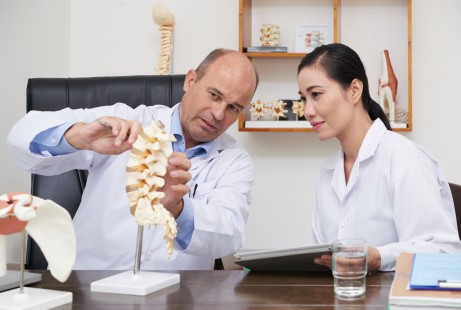
Let’s keep it simple. Your spine has discs between bones. These discs act like cushions. Now imagine one of those cushions getting pushed out of place. That’s what happens in a disc herniation. And when that disc presses on nearby nerves, you start feeling pain, not just in the back, but along the nerve path.
That’s why the pain often travels to the leg. Some people describe it like:
It’s not just discomfort anymore.
Why does this happen?
There’s no single reason. But certain patterns show up again and again. Long sitting hours, especially with poor posture. Lifting heavy objects the wrong way. Sudden jerks or injuries. Age-related wear and tear. And sometimes, it just builds slowly over time. You don’t notice it until it crosses a limit.
The moment people realise something is wrong
Back pain is common. But nerve pain feels different. You might notice:
A lot of people say this line, “It started in my back… but now it’s in my leg more.” That’s a classic sign.
First approach is always non-surgical
This is important. Most cases of lumbar disc herniation don’t go straight to surgery. Doctors usually start with conservative treatment. Because in many patients, symptoms improve over time.
Non-surgical options that actually help
This is where patience is needed. Treatment may include: Medicines to reduce pain and inflammation. Rest, but not complete bed rest. Controlled movement is important. And most importantly physiotherapy. Proper disc herniation physiotherapy Kerala or anywhere else focuses on:
At first, exercises may feel difficult. But over time, they help reduce symptoms.
A small example most people relate to
Think about this. When your phone charger wire bends repeatedly at one point, it starts malfunctioning. Same way, your spine handles pressure daily. If one area keeps taking stress, bad posture, long sitting, wrong lifting, it starts reacting. The body gives warning signs. But we usually ignore them… until the pain forces attention.
When does surgery become an option?
This is where confusion starts. People either delay too much… or panic too early. Surgery is usually considered when:
And in some cases, when nerve compression is severe, early surgery may be advised.
What kind of surgery is done?
One common procedure is microdiscectomy. It sounds complex, but the idea is simple. The surgeon removes the part of the disc that is pressing on the nerve. It’s done through a small incision. That’s why recovery is usually quicker compared to traditional open surgery.
The microdiscectomy recovery phase is usually smoother than people expect. You may start walking within a short time. Pain relief is often noticeable early. But still, recovery doesn’t mean you go back to old habits immediately. You need:
Because surgery fixes the current problem. But your habits decide whether it comes back or not.
Why choosing the right specialist matters
Spine issues are not always straightforward. The same symptom can have different causes. That’s why consulting a trusted spine surgeon Kozhikode BMH or experienced specialist helps. Not just for surgery, but for correct diagnosis. Because the right diagnosis decides the entire treatment path.
One thing people often realise late
Many patients say this after recovery , “I thought it was just back pain… I didn’t know it was something more.” That’s the biggest mistake. Ignoring early symptoms. And the second mistake, trying random treatments without understanding the cause.
Final thought
Lumbar disc herniation is common. But how you handle it makes all the difference. Some people recover with simple care. Some need structured treatment. And a few may need surgery. The key is not to panic… and not to ignore. Pay attention to your body. Because sometimes, that pain in your leg is not just a pain, it’s your spine asking for attention.