- English
- عربي / Arabic
- മലയാളം / Malayalam

Persistent acidity, difficulty swallowing, unexplained stomach pain or repeated vomiting are symptoms that should not be ignored. While medications may provide temporary relief, they cannot always identify the underlying cause. In such situations, your doctor may recommend an upper GI endoscopy to examine the food pipe, stomach and upper part of the small intestine directly.
An upper GI endoscopy is one of the most accurate ways to diagnose many digestive disorders. It not only helps identify the cause of symptoms but also allows doctors to collect tissue samples or perform certain treatments during the same procedure if needed.
An upper GI endoscopy, also known as a gastroscopy procedure or stomach endoscopy, is a minimally invasive procedure used to examine the upper digestive tract.
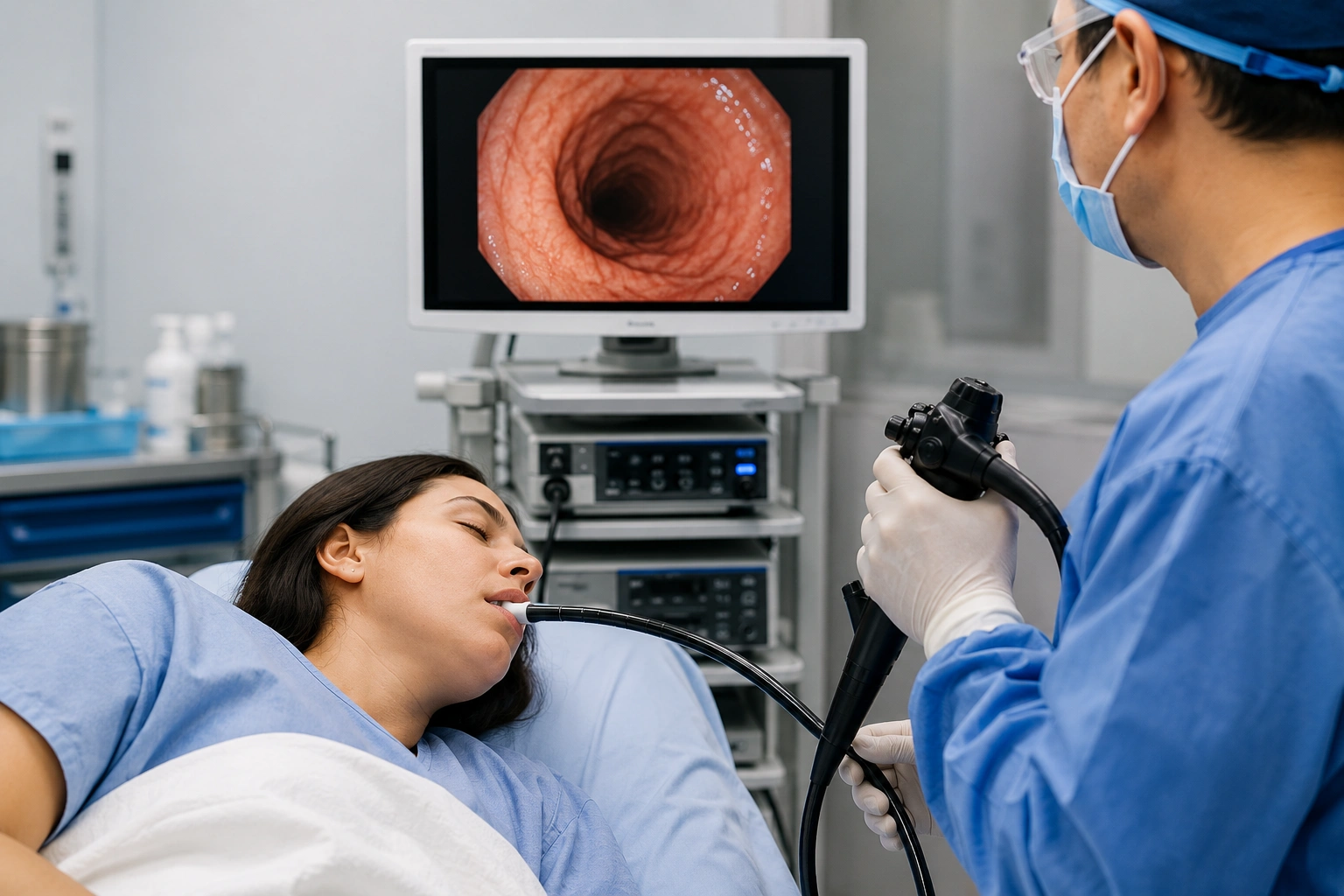
During the procedure, a thin, flexible tube with a small camera at its tip is gently passed through the mouth into the oesophagus, stomach and the first part of the small intestine (duodenum). The camera transmits high-definition images to a monitor, allowing the doctor to look for inflammation, ulcers, bleeding, growths or other abnormalities.
Unlike scans or X-rays, endoscopy provides a direct view of the digestive tract, making it a valuable diagnostic tool.
Your doctor may advise an upper GI endoscopy if you have symptoms that require a closer evaluation.
Common reasons include:
The procedure may also be recommended to investigate abnormal findings seen on imaging studies or blood tests.
Yes.
Although an upper GI endoscopy is mainly performed to diagnose digestive conditions, it can also be used to treat certain problems during the same procedure.
Depending on the findings, the doctor may:
This reduces the need for additional procedures in many patients.
Preparation is simple but important.
Patients are usually asked to avoid eating or drinking for several hours before the gastroscopy procedure so that the stomach remains empty during the examination.
The doctor should also be informed about:
Following these instructions helps improve both the safety and accuracy of the examination.
The procedure is usually performed as a day-care procedure.
Before the examination begins, a local anaesthetic spray may be applied to numb the throat, and many patients also receive mild sedation to help them remain comfortable and relaxed.
The endoscope is then gently passed through the mouth into the upper digestive tract. The camera allows the doctor to carefully examine the lining of the oesophagus, stomach and duodenum. If required, small tissue samples can be collected without causing significant pain.
The examination itself usually takes about 15 to 30 minutes, although additional procedures may slightly increase the duration.
This is one of the most common concerns among patients.
Most people do not experience pain during a stomach endoscopy. Some may feel temporary pressure, mild throat discomfort or a sensation of fullness as the endoscope passes through the digestive tract.
If sedation is used, many patients remember very little of the procedure afterward.
A mild sore throat or bloating may occur for a short time after the examination but usually settles within a day.
After the examination, patients are observed until the effects of sedation wear off.
If sedation has been given, someone should accompany the patient home, and driving should be avoided for the rest of the day.
The doctor explains the initial findings immediately after the procedure. If a biopsy has been taken, the final diagnosis may require a few more days once the laboratory report is available.
Most patients can return to their normal activities by the following day unless advised otherwise.
An upper GI endoscopy is generally considered a very safe procedure when performed by experienced specialists.
However, like any medical procedure, it carries a small risk of complications, which may include:
Serious complications are uncommon, and the benefits of identifying important digestive conditions usually outweigh these risks.
Many digestive disorders produce similar symptoms in their early stages. Conditions such as gastritis, peptic ulcers, Barrett's oesophagus and even early stomach cancers may initially present with simple indigestion or acidity.
An upper GI endoscopy helps doctors identify these conditions early, allowing treatment to begin before complications develop.
Consulting an experienced medical gastroenterologist Kerala when symptoms persist can lead to an accurate diagnosis and timely treatment.
An upper GI endoscopy is a safe, reliable and highly effective procedure for diagnosing a wide range of upper digestive tract conditions. It provides direct visualisation of the oesophagus, stomach and duodenum, helping doctors identify the cause of symptoms and, when necessary, perform treatment during the same procedure.
At Baby Memorial Hospital, our experienced medical gastroenterologist Kerala team performs advanced gastroscopy procedure and stomach endoscopy services using modern endoscopic technology, ensuring accurate diagnosis and patient-centred care.
An upper GI endoscopy is a procedure that uses a flexible camera to examine the oesophagus, stomach and the first part of the small intestine.
No. Most patients experience only mild discomfort, and many receive sedation to remain relaxed throughout the gastroscopy procedure.
A biopsy helps doctors diagnose conditions such as infections, inflammation, ulcers or cancer. Taking a biopsy is painless because the digestive lining does not contain pain-sensitive nerve endings.
The examination usually takes 15 to 30 minutes, although the total hospital visit may be longer because of preparation and recovery from sedation.
If you have persistent acidity, difficulty swallowing, ongoing stomach pain, unexplained weight loss or bleeding from the digestive tract, consulting an experienced medical gastroenterologist Kerala can help determine whether an upper GI endoscopy is required.