- English
- عربي / Arabic
- മലയാളം / Malayalam

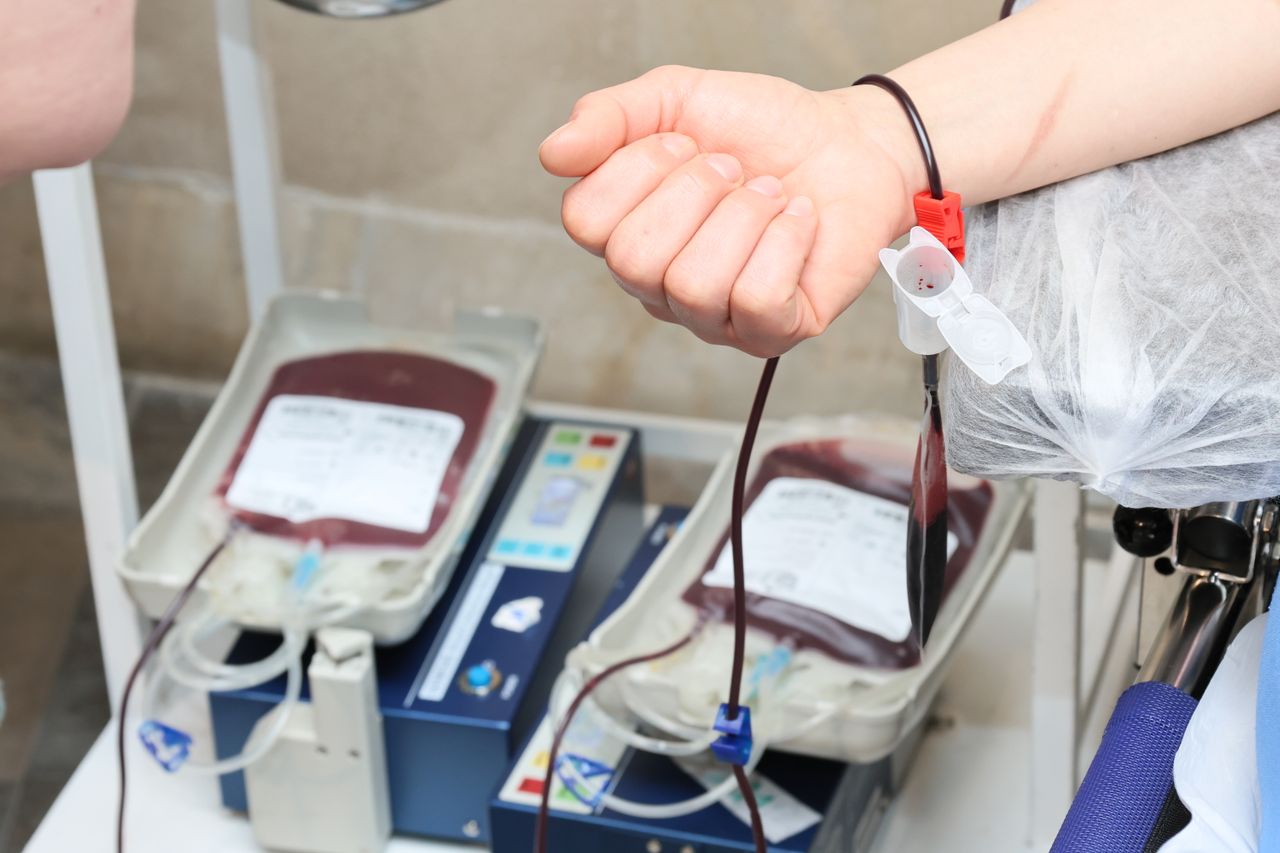
A blood transfusion is the transfer of donated blood or blood components from a donor to a patient through a vein. It is commonly used to treat significant blood loss, severe anaemia, certain blood disorders.
Many people become anxious when they hear they may need a transfusion.
That is understandable.
Questions about safety, blood matching, possible reactions, and long-term effects are common. What follows explains when transfusions are recommended, how they are performed, what safety measures are in place, and what patients can expect during the process.
Blood performs several important functions.
A transfusion may be recommended when one or more of these components falls below safe levels.
Common reasons include:
The decision is based on symptoms, blood test results, and the patient's overall condition.
Doctors weigh the benefits and risks carefully before recommending one.
Many people imagine a transfusion as receiving whole blood.
In reality, most modern transfusions involve specific blood components.
These may include:
Giving only the component that is needed allows treatment to be more precise and effective.
This approach is a central part of modern transfusion medicine.
One of the most important steps happens before the transfusion begins.
Blood samples are collected and tested.
The laboratory identifies the patient's blood group and checks compatibility with donor blood. Additional screening helps reduce the risk of injections.
Several verification steps occur before the transfusion starts.
These checks are designed to ensure the correct blood reaches the correct patient.
Modern blood matching procedures have made transfusions significantly safer than in the past.
A nurse reviews your medical history, allergies, and previous transfusions.
Vital signs are recorded.
An intravenous line is placed if one is not already present.
The healthcare team confirms the blood product, patient identity, and laboratory compatibility results.
These steps may seem repetitive.
They are intentional.
Safety relies on careful verification at multiple stages.
The blood product is connected to the intravenous line and allowed to flow slowly into the bloodstream.
The first portion is often monitored particularly closely.
Nurses observe for:
Most patients experience no significant problems during the transfusion.
Depending on the type of blood product, the process may take several hours.
Patients usually rest comfortably during this time.
Many patients feel no different while the transfusion is taking place.
The response depends on the reason the transfusion was needed and the patient's overall health.
Modern blood bank services play a major role in transfusion safety.
Blood donations are collected, tested, processed, stored, and matched according to strict standards.
Multiple screening procedures help reduce the risk of infection transmission.
The blood bank also helps ensure that specialised blood products are available when required for emergency care, surgery, cancer treatment, and other medical conditions.
A blood transfusion replaces blood components that the body cannot safely maintain on its own. It may be used to treat severe anaemia, blood loss, bleeding disorders, and several other medical conditions.
Modern transfusion medicine, supported by advanced laboratory testing, haematology care, and carefully regulated blood bank services, has made transfusion therapy safer and more effective than ever before. Understanding why a transfusion is recommended and what safety measures are involved helps patients approach treatment with greater confidence.
A blood transfusion is a procedure in which blood or blood components are given through a vein to replace what the body is lacking.
Yes. Modern transfusions are generally very safe because donated blood undergoes extensive testing and compatibility checks before use.
Common reasons include severe anaemia, major blood loss, surgery, trauma, certain cancers, and blood disorders.
The duration varies depending on the blood product being given, but many transfusions take a few hours to complete.
Mild reactions can occur, but healthcare teams monitor patients closely and are trained to manage any complications promptly.
Inform the healthcare team immediately if you experience fever, chills, itching, rash, breathing difficulty, chest discomfort, or any unusual symptoms.
Not necessarily. A transfusion can improve blood levels quickly, but the underlying cause of anaemia may still require investigation and treatment.