
Chest pain makes most people think of the heart.
That is understandable.
But the heart is only one possible source.
Pain can come from the muscles between the ribs. Acid from the stomach can move upwards and create a burning feeling behind the breastbone. The lungs can cause pain too. Anxiety sometimes creates a very real sense of pressure or tightness in the chest.
And yes, sometimes it is the heart.
The difficult part is that these chest pain causes can feel surprisingly similar.
So when someone searches for a chest pain doctor near me, the first question should not always be, “Which specialist should I book?”
Sometimes the better question is:
Can this wait?
First, know when chest pain is an emergency
Some chest pain needs a doctor.
Some needs an emergency department.
If you suddenly develop pressure, squeezing, heaviness or significant discomfort in the chest, particularly when it lasts more than a few minutes or keeps returning, it needs prompt assessment.
Pay even more attention when the pain comes with sweating, nausea, breathlessness, faintness or unusual weakness.
Pain may also move into the arm, shoulder, back, neck or jaw.
Do not spend too much time trying to decide whether it “feels like a heart attack.”
Heart attacks do not feel exactly the same in everyone.
Women, older adults and people with diabetes may sometimes have less typical symptoms. Breathlessness, nausea, unusual tiredness or discomfort rather than severe chest pain can occur.
When a heart attack is possible, seek emergency heart care.
This is not the time to wait for an outpatient appointment with a cardiologist near me.
What happens when you reach emergency care?
The first job is to answer an important question quickly.
Is the heart in danger?
An ECG is usually one of the first tests. It records the electrical activity of the heart and can show changes associated with some heart attacks and rhythm problems.
Blood tests may measure troponin, a protein released when heart muscle is injured.
Your blood pressure, pulse and oxygen level are checked. Depending on the symptoms, doctors may also use a chest X-ray, echocardiogram or other imaging.
Sometimes the first tests do not give the whole answer.
That is why observation and repeat ECGs or blood tests may be needed in selected patients.
Chest pain is not judged from one symptom alone.
The pattern matters.
The tests matter.
And so does your medical history.
When a cardiologist is the right specialist
Not every cardiac problem arrives as an emergency.
Some pain appears only during activity.
You walk uphill and notice pressure in the chest.
You stop.
It settles.
Then it happens again a few days later.
That pattern deserves medical attention.
Reduced blood flow through narrowed coronary arteries can cause angina, particularly during physical exertion when the heart needs more oxygen.
A heart doctor, or cardiologist, evaluates symptoms that may be related to the heart and decides what testing is appropriate.
Depending on your symptoms and risk factors, that may include an ECG, echocardiogram, exercise testing, CT coronary imaging or coronary angiography.
Not everybody with chest pain needs all of these.
The investigation should follow the problem.
The way the pain behaves gives useful clues
Doctors ask a lot of questions about chest pain.
There is a reason.
Where exactly is it?
Pressure or burning?
Sharp or dull?
Did it begin while walking, after eating or while resting?
Does taking a deep breath make it worse?
Can you reproduce the pain by pressing on the chest?
How long does it last?
The answers do not provide a diagnosis on their own, but they help narrow the possibilities.
For instance, pain consistently brought on by exertion may raise concern about the heart.
A burning feeling after a heavy meal may suggest acid reflux.
Sharp pain that worsens when breathing can occur with problems involving the lungs or the lining around them.
Pain that becomes worse when you move your upper body or press a particular spot may come from muscles or the chest wall.
There is overlap, though.
Quite a lot of it.
So do not rely on one feature to rule the heart in or out.
When the stomach feels like the heart
Acid reflux can be convincing.
The burning may sit right behind the breastbone.
It may move upwards towards the throat. Some people notice a sour taste in the mouth. Symptoms can become worse after meals, when bending over or after lying down.
A gastroenterologist may become involved when symptoms and assessment point towards the digestive system.
But there is an important caution here.
Do not label new chest pain as “gas” simply because you have had acidity before.
Heart-related discomfort can sometimes feel like indigestion.
If the pain is new, severe or associated with breathlessness, sweating or other warning signs, the heart needs to be considered first.
Sometimes the chest wall itself hurts
Lift something heavy.
Start a new workout.
Cough for several days.
Then the chest begins hurting.
Muscles, ribs and the joints connecting the ribs to the breastbone can all cause chest pain.
One example is costochondritis, where the cartilage around the rib and breastbone becomes inflamed.
Chest-wall pain may become worse with movement or when you press over the affected area.
A general physician or appropriate musculoskeletal specialist can often assess these problems.
But again, there is no need to diagnose this yourself before seeking care.
Especially if this is your first episode of unexplained chest pain.
The lungs can cause chest pain too
Chest pain plus breathing difficulty deserves attention.
Pneumonia, inflammation around the lungs and other respiratory problems can produce pain. A pulmonologist may be the appropriate specialist once a lung-related cause is suspected.
There are also more urgent possibilities.
A pulmonary embolism happens when a blood clot blocks an artery in the lung. Symptoms can include sudden breathlessness, chest pain, a fast heartbeat or coughing up blood.
Risk can be higher after prolonged immobility, some surgeries and in people with certain medical conditions.
This needs emergency assessment.
So does sudden chest pain with severe breathing difficulty from other serious lung conditions.
Chest pain is not always cardiac.
But non-cardiac does not automatically mean harmless.
What about chest tightness during anxiety?
Anxiety can produce powerful physical symptoms.
A racing heart.
Fast breathing.
Sweating.
Tingling.
And tightness or pain in the chest.
Panic attacks can feel frighteningly similar to medical emergencies.
But anxiety should not be used as the explanation before important physical causes have been considered, particularly when the symptoms are new.
Once the heart and other medical problems have been appropriately assessed, recurring anxiety-related symptoms can be managed with the right support.
The order matters.
Check first.
Then label it.
What if chest pain keeps returning but tests were normal before?
Do not assume an old result answers a new symptom.
Maybe you had a normal ECG six months ago.
That is useful information.
It does not guarantee that every future episode of chest pain is harmless.
If the pattern has changed, tell your doctor.
Pain is occurring more often.
It now happens with less activity.
It lasts longer.
Breathlessness has appeared.
These changes can influence what the chest pain specialist recommends next.
The same applies if you have risk factors such as diabetes, high blood pressure, high cholesterol, smoking or a strong family history of heart disease.
Risk changes how doctors interpret symptoms.
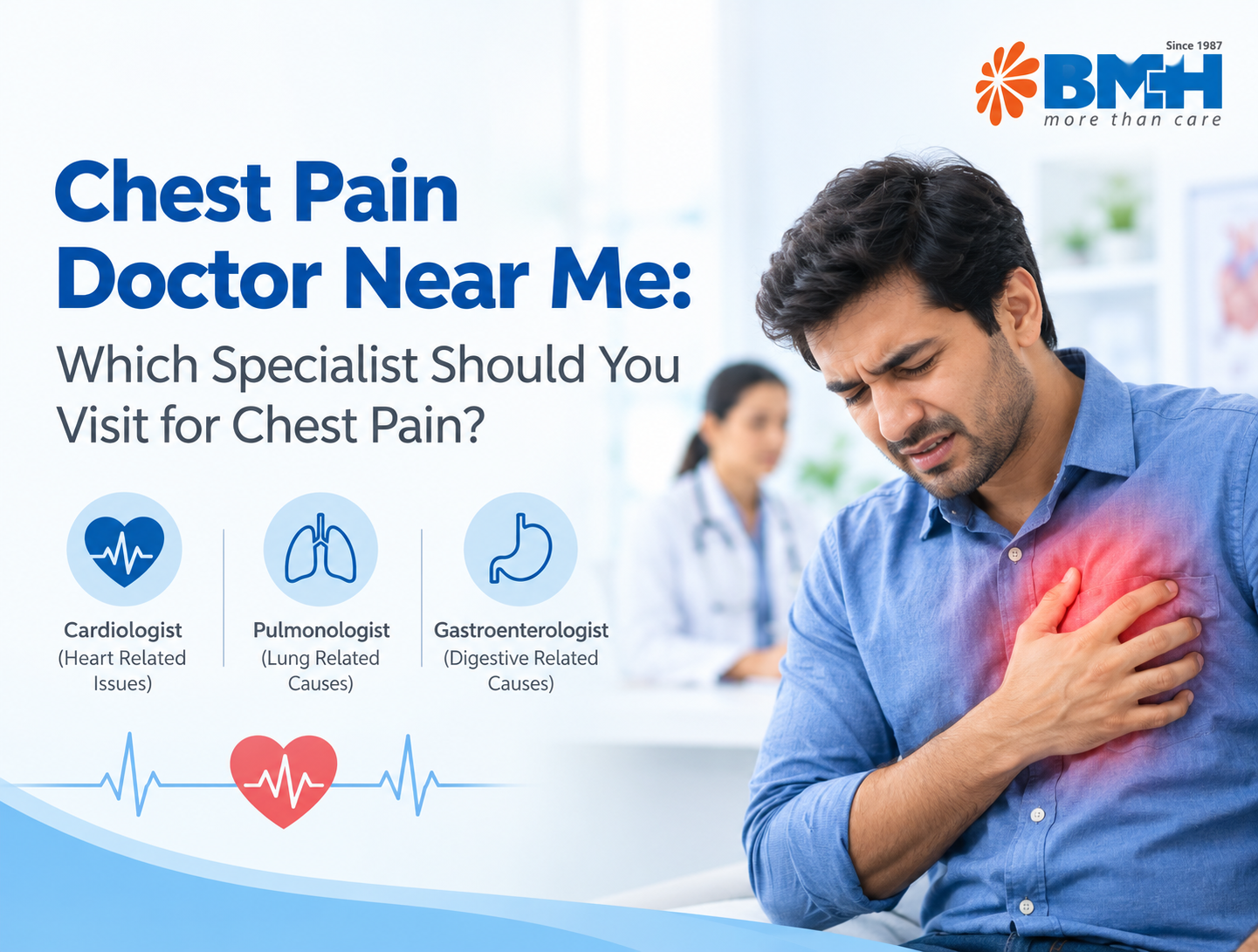
Which doctor should you actually visit?
If the chest pain is sudden, severe or accompanied by warning signs, go to emergency care.
If the discomfort is recurring, related to exertion, or there is concern about heart disease, a cardiologist is usually the appropriate specialist.
When symptoms point towards reflux or another digestive problem, a gastroenterologist may be involved.
Respiratory symptoms may need a pulmonologist.
Chest-wall or muscular pain may be assessed by a physician or musculoskeletal specialist.
But you do not always need to choose correctly before the first appointment.
If the cause is unclear and the symptoms are not an emergency, a general physician can examine you, arrange initial tests and direct you to the right specialist.
That is often a perfectly good starting point.
Chest pain care at Baby Memorial Hospital
Chest pain can move quickly from a symptom to an emergency.
That is why access to more than one speciality matters.
At Baby Memorial Hospital, patients with suspected cardiac chest pain can be assessed through emergency and cardiology services, with diagnostic and interventional cardiac care available when required.
A patient may need only an ECG and medical evaluation.
Another may need an echocardiogram or further coronary testing.
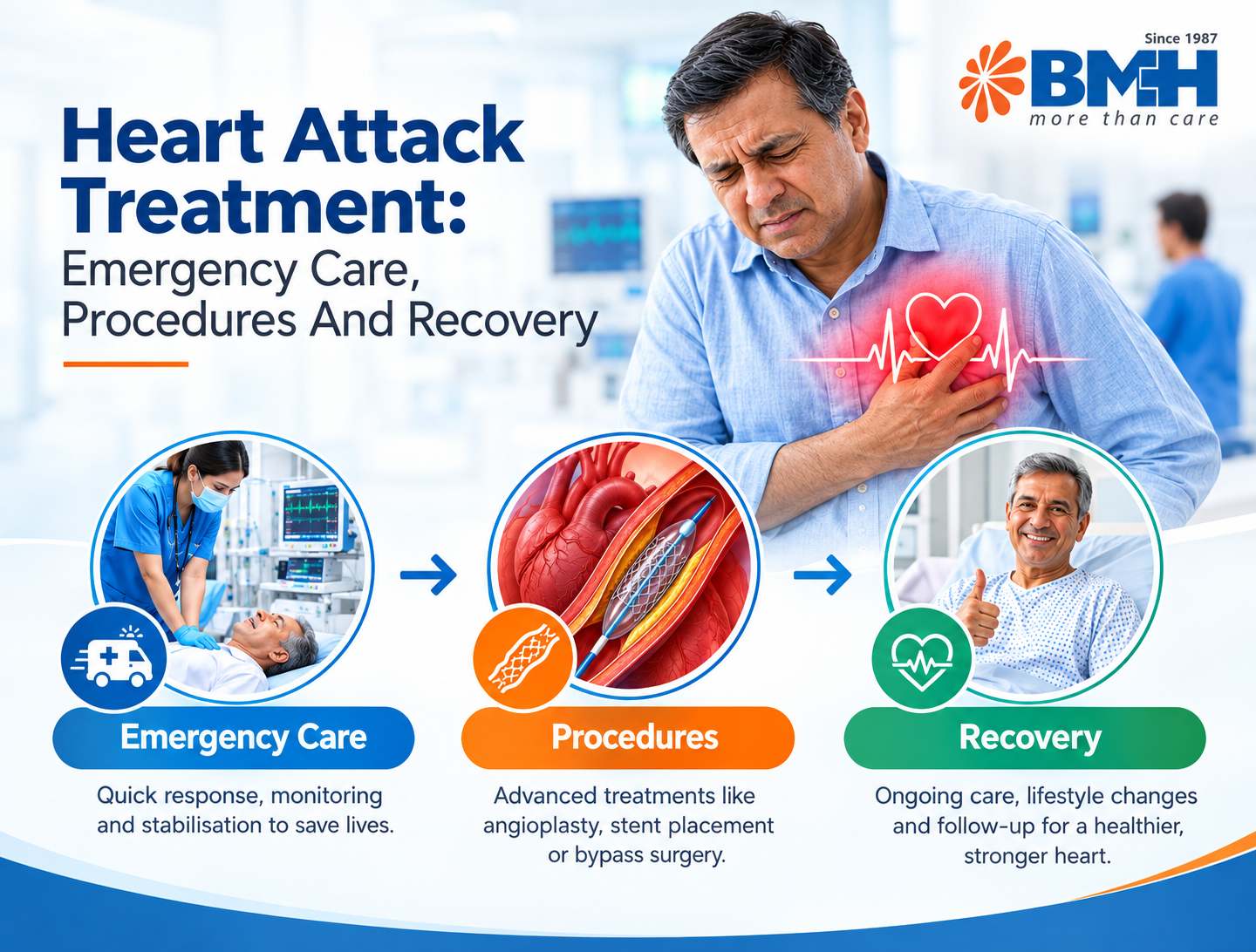
Someone having an acute heart attack may require urgent coronary angiography and angioplasty to restore blood flow through a blocked artery.
And when chest pain turns out not to be cardiac, access to gastroenterology, pulmonology and other specialities helps move the investigation in the right direction.
The aim is not to send every chest pain patient for a heart procedure.
It is to identify the dangerous causes quickly.
Then work out the rest.
A brief reminder
Searching for a chest pain doctor near me makes sense when discomfort keeps returning or needs further evaluation.
But do not make the search itself the priority when symptoms look urgent.
Sudden chest pressure or heaviness.
Breathlessness.
Sweating or faintness.
Pain spreading towards the arm, jaw, shoulder or back.
A significant new chest pain that simply does not settle.
Those symptoms need prompt medical assessment.
For recurring or less urgent symptoms, a cardiologist near me, general physician or another appropriate specialist can investigate the cause.
The important part is not guessing correctly at home.
Chest pain has too many possible explanations for that.
When it feels different, persistent or worrying, get it checked.
FAQs
1. Which doctor should I see for chest pain?
A cardiologist is appropriate when chest pain may be related to the heart. If the cause is unclear and symptoms are not urgent, a general physician can perform the initial assessment and refer you to the right specialist.
2. How do I know whether chest pain is a heart attack?
You cannot reliably confirm this from symptoms alone. Pressure, heaviness or chest discomfort accompanied by breathlessness, sweating, nausea, weakness or pain spreading to the arm, jaw or back requires urgent assessment.
3. Can gas or acidity cause chest pain?
Yes. Acid reflux can cause burning discomfort behind the breastbone. However, heart problems can sometimes feel similar to indigestion, so new or severe chest pain should not automatically be blamed on acidity.
4. What tests might a cardiologist recommend for chest pain?
Depending on the situation, testing may include an ECG, blood tests, echocardiography, exercise testing, CT coronary imaging or coronary angiography. Not every patient needs every test.
5. Can anxiety cause real chest pain?
Yes. Anxiety and panic attacks can cause chest tightness, rapid heartbeat and breathlessness. New chest pain should still be medically assessed before assuming anxiety is the cause.
6. When should I seek emergency heart care for chest pain?
Seek urgent care for sudden or severe chest pain, particularly when accompanied by breathlessness, sweating, faintness, nausea or discomfort spreading to the arm, jaw, shoulder or back.
7. Can I have heart-related chest pain even if a previous ECG was normal?
Yes. A previous normal ECG does not rule out a new heart problem. New, worsening or changing chest pain should be assessed based on what is happening now.