
- English
- عربي / Arabic
- മലയാളം / Malayalam

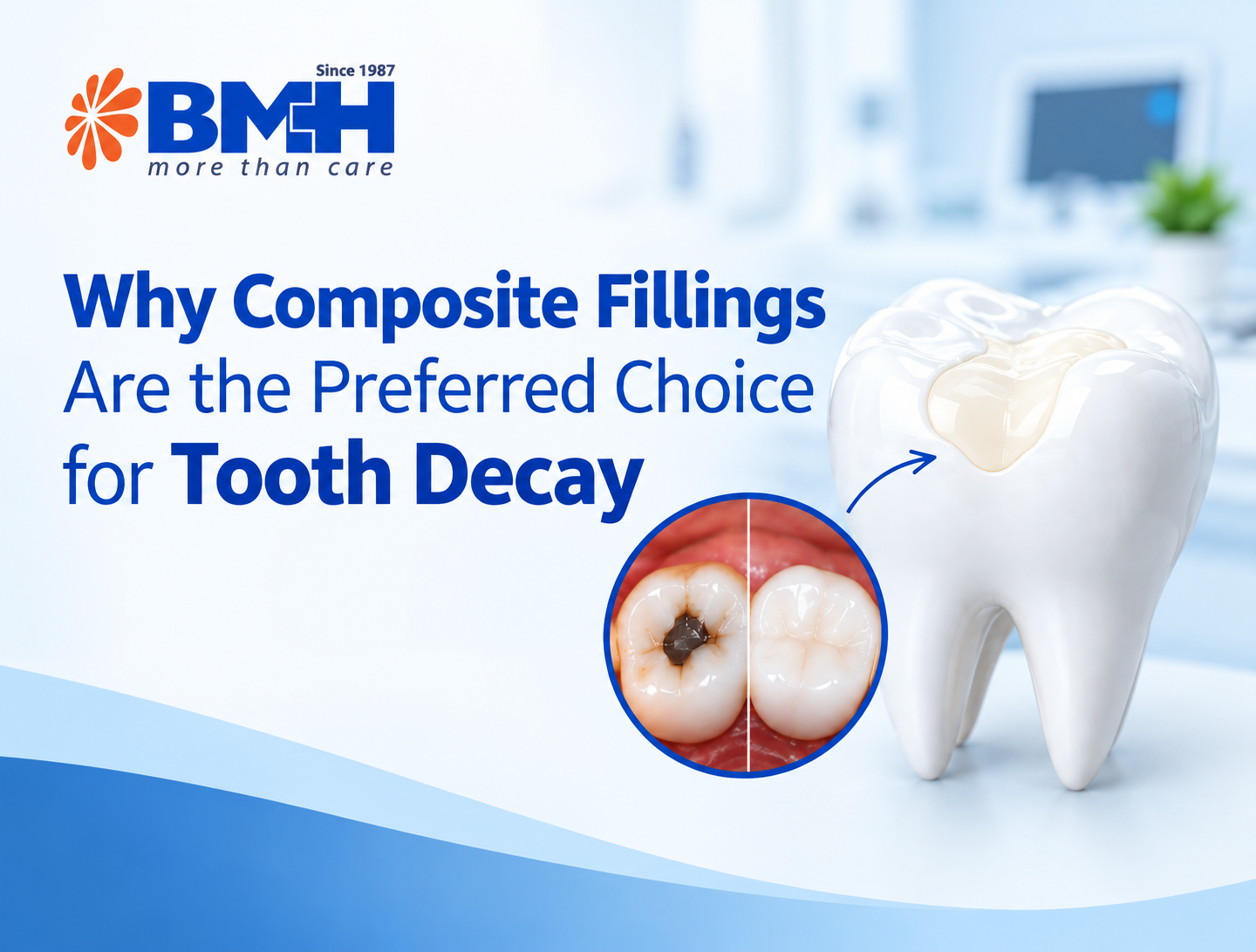
A dental filling repairs a tooth that has been damaged by decay. Once a cavity forms, the affected portion of the tooth is removed and the space is filled to restore strength, shape, and function.
Several filling materials are available.
Today, composite filling materials are among the most commonly used options for tooth cavity treatment. They are designed to match the natural colour of the tooth while providing reliable restoration for many everyday dental situations.
What follows explains why composite fillings are widely used, how they compare with older materials, what happens during the procedure, and what patients can expect afterward.
A cavity does not heal on its own.
Once tooth decay creates a hole in the enamel, bacteria can continue moving deeper into the tooth.
Initially, the damage may be small.
Over time, it can reach the inner layers of the tooth and eventually affect the nerve.
Early treatment is usually simpler.
A filling removes the decayed portion and seals the area before larger problems develop.
This helps preserve the natural tooth and avoid more extensive treatment later.
A composite filling is a tooth-coloured restorative material made from a combination of resin and fine particles.
Unlike older silver-coloured fillings, composite material can closely match the surrounding tooth.
The result is a restoration that blends naturally with the smile.
Because of this appearance, composite fillings have become a popular choice in both routine dentistry and cosmetic dentistry.
The goal is not only to repair the tooth.
It is also to maintain a natural appearance.
One of the biggest advantages is aesthetics.
The filling can be matched to the shade of the natural tooth, making it difficult to notice once treatment is complete.
There are practical advantages too.
Composite materials bond directly to the tooth structure. This bonding helps support the remaining tooth and may allow dentists to preserve more healthy tooth tissue during treatment.
For many patients, the combination of function and appearance makes composite fillings an attractive option.
Silver amalgam fillings have been used successfully for many years and remain effective in certain situations.
Composite fillings offer several differences.
Appearance is the most obvious one.
They blend with natural teeth rather than standing out as metallic restorations.
Composite fillings also bond to the tooth, whereas amalgam fillings rely more on mechanical retention.
The most suitable option depends on:
Your dentist helps determine which material is most appropriate for your situation.
Benefits. Natural appearance; direct bonding to tooth structure; preservation of healthy tooth tissue; immediate restoration of function; suitable for many front and back teeth.
Limitations. Composite fillings may not be ideal for every cavity size; they can take slightly longer to place than some alternatives; very large restorations may require different treatment approaches.
The best material depends on the individual tooth and the amount of damage present.
The treatment is usually straightforward.
First, the dentist examines the cavity and may take X-rays if needed.
The affected area is then cleaned and the decayed tooth structure is removed.
Local anaesthesia may be used to keep the procedure comfortable.
Once the cavity has been prepared, the composite material is placed in layers. A special curing light hardens each layer before the next is added.
The filling is then shaped and polished so it fits comfortably with the bite.
Most appointments are completed in a single visit.
Many patients return to normal activities immediately after treatment.
Some temporary sensitivity is possible, particularly to cold foods and drinks.
This usually improves as the tooth settles.
Mild discomfort when biting may occasionally occur if the filling needs a small adjustment.
If something feels unusual after treatment, it is worth contacting the dental clinic so the bite can be checked.
No filling lasts forever.
The lifespan depends on several factors, including:
Many composite fillings remain functional for years when properly maintained.
Regular dental examinations help identify wear or damage before larger problems develop.
The same habits that protect natural teeth help protect fillings.
These include:
Good oral care helps reduce the risk of new cavities developing around existing restorations.
Is composite filling suitable for my cavity?
How large is the area of decay?
Will I need local anaesthesia?
How long will the filling last?
What symptoms should I expect after treatment?
Are there any foods I should avoid initially?
How often should the filling be checked?
A composite filling repairs a tooth affected by decay while maintaining a natural appearance. Its ability to blend with surrounding teeth has made it one of the most widely used options for modern tooth cavity treatment.
Advances in dental filling materials have improved both function and aesthetics, allowing patients to restore damaged teeth without significantly changing the appearance of their smile. For many people, composite fillings provide an effective balance between durability, appearance, and preservation of natural tooth structure.
A composite filling is a tooth-coloured material used to repair cavities and restore damaged teeth while matching the natural appearance of the tooth.
Composite fillings offer a more natural appearance and bond directly to the tooth. The best option depends on the size and location of the cavity.
Most fillings are placed comfortably using local anaesthesia when needed. Patients typically feel pressure rather than pain during treatment.
Many composite fillings last for several years, although longevity depends on oral hygiene, cavity size, and chewing habits.
Yes. Their tooth-coloured appearance makes them especially suitable for visible teeth.
In most cases, patients can return to normal eating shortly after treatment, although temporary sensitivity may occur.
Yes. New decay can develop around a filling if oral hygiene is poor, which is why regular dental check-ups remain important.