- English
- عربي / Arabic
- മലയാളം / Malayalam

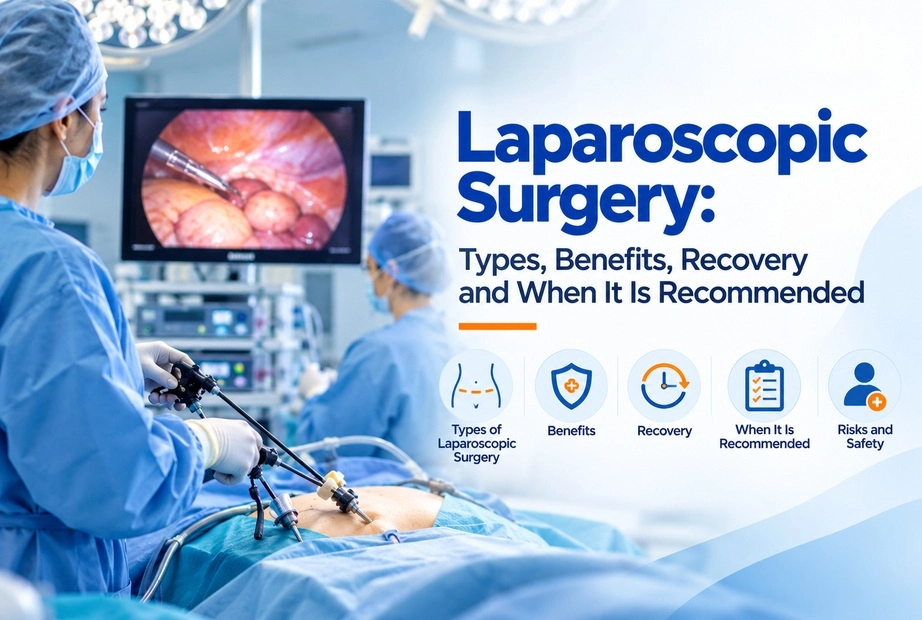
Laparoscopic surgery allows a surgeon to work inside the abdomen or pelvis through small cuts using a camera and slender instruments. It is used for several common operations, including gallbladder removal, hernia repair, and selected gynaecological procedures. For suitable patients, it can reduce wound discomfort and shorten the early recovery period compared with an open operation. The choice still depends on the condition being treated, the planned operation, and your overall health.
Knowing what happens before and after the procedure helps you prepare for more than the day of surgery.
A laparoscopic procedure may be used to investigate an unexplained problem, treat a known condition, or do both during the same operation. Imaging often provides useful information beforehand, but it cannot answer every question. In selected cases, looking directly inside the abdomen helps establish a diagnosis or obtain a tissue sample.
Read Also: Laparoscopic Gallbladder Removal: When Surgery Is the Right Choice
For treatment, the surgeon considers whether the necessary work can be completed safely through small access points. Previous operations, scar tissue, infection, and the size or position of the problem can influence the decision. Ask what the operation is intended to achieve and whether medicines, observation, or another approach remain reasonable options.
Gallbladder removal is often performed laparoscopically when gallstones cause symptoms or complications. The operation removes the gallbladder rather than simply taking out individual stones. Appendicectomy may also use this approach, depending on the circumstances and surgical assessment.
Hernia repair can be performed through small incisions in suitable patients, often using mesh to strengthen the weak area. The best route depends on the hernia's location, previous repairs, and other factors. Open repair remains appropriate for many people.
Gynaecological laparoscopy may investigate or treat conditions such as endometriosis and selected ovarian cysts. Some bowel, kidney, and weight-loss operations can also use laparoscopic techniques. These procedures differ substantially in complexity, even when the skin incisions look similar.
Read Also: Hernia Repair Surgery: Types, Procedure and What Recovery Looks Like
Laparoscopic surgery benefits may include smaller wounds, less postoperative pain, and an earlier return to some activities. Hospital stays can be shorter for suitable operations. A smaller incision may also reduce certain wound-related problems compared with a larger abdominal incision.
However, minimally invasive surgery can still involve major work inside the body. Removing part of the bowel needs more recovery than a brief diagnostic examination. Small scars should not be used to judge how quickly you can lift, exercise, or return to a physical job.
The expected benefit is specific to your operation. Ask the surgeon to describe the likely recovery for someone with your health and home responsibilities.
Possible complications include bleeding, infection, blood clots, and reactions related to anaesthesia. Nearby organs, blood vessels, the bowel, or urinary structures can be injured. Some complications become apparent only after the procedure, so discharge advice matters.
Gas is usually used to create working space in the abdomen. It can contribute to temporary bloating or shoulder-tip discomfort afterwards. Your personal risk also depends on existing heart or lung disease, diabetes, body weight, and the complexity of the surgery.
If the surgeon needs a larger incision to complete the operation safely, the procedure may be converted to open surgery. This is a safety decision, and it may change your hospital stay and recovery plan.
Bring a complete medicine list to your preoperative assessment, including blood thinners, diabetes medicines, supplements, and weight-management medicines. Some require adjustments, but you should follow the team's specific instructions rather than stop them yourself.
The anaesthetist reviews previous anaesthetic problems, allergies, breathing conditions, and other health concerns. Blood tests or additional investigations are selected according to your circumstances. Let the team know if you develop a fever, cough, or another illness before the planned date.
Arrange transport home and practical help if you are likely to need it. Planning meals, childcare, and time away from work reduces the pressure to resume heavy tasks too early.
Follow the fasting instructions provided by the hospital. The team checks your identity, the planned operation, allergies, and consent. You can still ask questions if any part of the plan is unclear.
Laparoscopy is usually performed under general anaesthesia, so you are asleep and do not feel the operation. The surgeon makes small incisions, introduces the camera and instruments, and performs the planned work while viewing images on a screen. The exact number and position of cuts depend on the procedure.
At the end, the instruments are removed and the wounds are closed. A drain is needed only in some operations. The recovery team monitors you as the anaesthetic wears off.
You may feel sleepy, nauseated, or sore around the wounds. Tell the nurse if pain or nausea makes it difficult to breathe comfortably or move. Medicines can be adjusted to help. Shoulder discomfort from the gas often settles as recovery progresses.
The team explains when you can drink, eat, stand, and walk. Gentle movement and any prescribed clot-prevention measures help reduce complications. After a straightforward operation, discharge may be on the same day or after a short stay. More extensive surgery requires longer observation.
Before leaving, check that you understand wound care, medicines, follow-up, and whom to contact outside normal clinic hours.
Laparoscopic surgery recovery varies from days to several weeks or longer, depending on the internal procedure. Start with the activity level advised at discharge and increase gradually. Being able to walk around the house does not necessarily mean the tissues are ready for lifting or strenuous exercise.
Keep wounds clean according to the instructions. Eat and drink as advised, particularly if the operation involved the digestive system. If constipation develops, ask about a suitable plan rather than straining. Some pain medicines can contribute to this problem.
Driving should wait until you meet the team's advice, are free from sedating medicine, and can control the vehicle safely. Discuss your actual work duties when asking about a return date.
Read Also: Everything You Need to Know About Colonoscopy: Preparation, Procedure & Results
Symptoms that should prompt a call
Contact the surgical team promptly for increasing abdominal pain, fever, repeated vomiting, worsening wound redness, or pus. Seek urgent care for severe pain, fainting, difficulty breathing, chest pain, or an increasingly swollen abdomen with inability to pass stool or gas. New calf swelling also needs assessment.
Do not assume that every new symptom is expected after an operation. A clear description of when it started, whether it is worsening, and your temperature can help the team advise you.
If tissue was removed for testing, ask when the result will be discussed and whether it could change the next stage of care. Keep this appointment even when the wounds have healed. Recovery of the incision and completion of the treatment plan are separate milestones.
At Baby Memorial Hospital, laparoscopic surgery is used for a range of abdominal conditions when a minimally invasive approach is suitable. The surgical team evaluates the diagnosis, imaging, previous surgeries and overall health before deciding the appropriate approach. Care also includes anaesthesia, postoperative monitoring, pain management and follow-up through recovery.
Ask what your particular operation involves, whether conversion to open surgery may be necessary, and what to expect during recovery at home.
Laparoscopy is commonly used for procedures such as gallbladder removal, appendicectomy, selected hernia repairs and certain gynaecological, bowel and urological operations.
For suitable patients and procedures, laparoscopy can reduce wound discomfort and support faster early recovery. However, the safest approach depends on the condition, complexity of surgery and individual health.
Recovery can range from a few days to several weeks or longer. It depends more on what was done inside the body than on the size of the incisions.
Yes. If the surgeon encounters difficult access, unexpected findings or another safety concern, a larger incision may be needed to complete the operation safely.
Contact the surgical team for increasing abdominal pain, fever, repeated vomiting, worsening wound redness or discharge. Severe breathlessness, chest pain, fainting or severe abdominal symptoms require urgent medical attention.