- English
- عربي / Arabic
- മലയാളം / Malayalam

Gallstones do not always require surgery. Many people have gallstones without ever developing symptoms. However, when gallstones begin causing repeated pain, inflammation or complications, removing the gallbladder is often the most effective treatment rather than repeatedly managing each episode with medication and to prevent complications
Today, laparoscopic cholecystectomy is the standard procedure for gallbladder removal. Performed through small incisions using a camera and specialised instruments, it offers a safe, minimally invasive approach with less postoperative pain and a quicker recovery for most patients.
The gallbladder stores bile, a digestive fluid produced by the liver. Problems usually arise when gallstones block the flow of bile, leading to pain or inflammation.
Gallbladder removal may be recommended if you have:
The decision to operate is based on symptoms and complications rather than the presence of gallstones alone.
Medicines may temporarily relieve pain during a gallstone attack, but they do not remove the stones causing the problem.
As long as the gallstones remain, symptoms can return unexpectedly and complications may develop over time.
For patients with recurrent symptoms, gallstone surgery addresses the underlying cause instead of providing temporary relief. Removing the gallbladder prevents future attacks and significantly reduces the risk of complications related to gallstones.
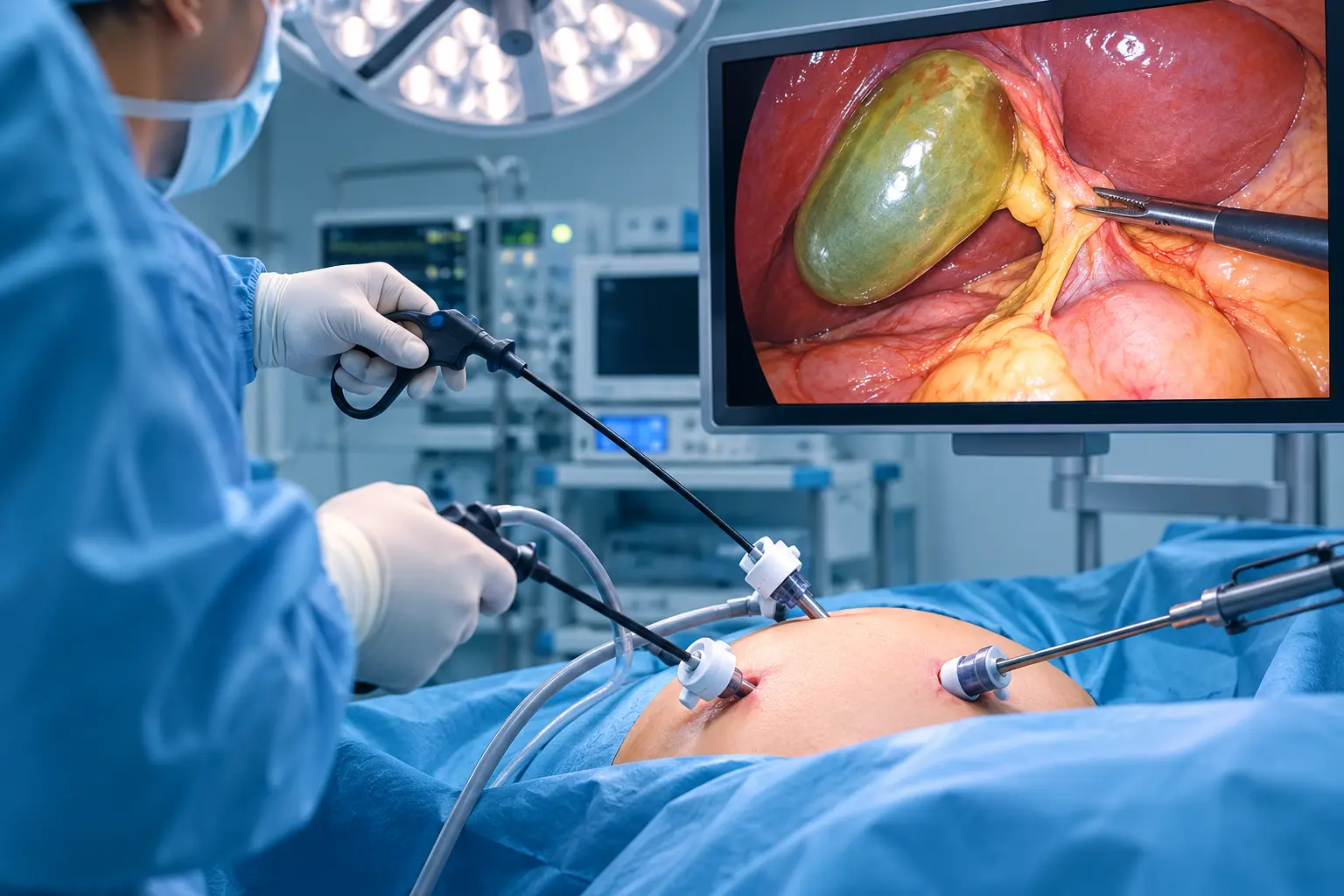
Laparoscopic cholecystectomy is a minimally invasive procedure used to remove the gallbladder.
During surgery, the surgeon makes a few small incisions in the abdomen and inserts a tiny camera along with specialised surgical instruments. The camera provides a magnified view of the surgical area, allowing the gallbladder to be removed safely without making a large abdominal incision.
Because the procedure is minimally invasive, most patients experience a smoother recovery compared with traditional open surgery.
For suitable patients, laparoscopic cholecystectomy offers several advantages.
These include:
However, the priority always remains safe surgery. In certain situations, such as severe inflammation or difficult anatomy, the surgeon may recommend converting to an open procedure if it offers greater safety.
The procedure is performed under general anaesthesia.
After creating small incisions, the abdomen is gently inflated with carbon dioxide gas to provide adequate working space. Using the camera for guidance, the surgeon carefully separates the gallbladder from the liver, clips the cystic duct and blood vessels, and removes the gallbladder through one of the small incisions.
The surgery usually takes about one to two hours, although the duration may vary depending on the complexity of the case.
Recovery after gallbladder removal is usually straightforward.
Most patients begin walking within a few hours after surgery and are discharged either the same day or the following day, depending on their recovery.
During the first week, mild abdominal discomfort, shoulder pain caused by the gas used during surgery and temporary tiredness are common and usually improve gradually.
Most people can return to light daily activities within a few days, while strenuous physical activity should be avoided until advised by the surgeon.
Yes.
The gallbladder stores bile, but the liver continues producing bile even after it is removed. Instead of being stored, bile flows directly into the small intestine.
Most patients digest food normally after recovery. Some may experience temporary loose stools or mild digestive changes during the initial weeks, but these usually settle with time.
Doctors may recommend eating smaller, low-fat meals during the early recovery period until digestion adjusts.
Like every surgical procedure, laparoscopic cholecystectomy carries some risks.
Possible complications include:
Although these complications are uncommon, they are discussed before surgery so patients understand both the benefits and potential risks.
Repeated gallstone attacks should not be ignored.
Delaying treatment may increase the risk of serious complications such as acute cholecystitis, bile duct obstruction, pancreatitis or infection.
Consulting an experienced laparoscopic surgeon early allows the condition to be evaluated and treated before these complications develop.
When gallstones begin causing repeated pain or complications, laparoscopic cholecystectomy provides a safe and effective long-term solution.
By removing the gallbladder through minimally invasive techniques, the procedure relieves symptoms, prevents future gallstone attacks and supports a faster recovery. At Baby Memorial Hospital, our experienced experienced laparoscopic surgeon and team offers advanced gallstone surgery and personalised care, helping patients return to their normal lives with confidence.
No. Surgery is usually recommended only when gallstones cause symptoms or complications. Many people with silent gallstones never require treatment.
Laparoscopic cholecystectomy is a minimally invasive procedure that removes the gallbladder through small incisions using a camera and specialised surgical instruments.
Yes. Most people live completely normal lives after gallbladder removal because the liver continues producing bile for digestion.
Most patients return to light daily activities within a few days, while complete recovery usually takes a few weeks depending on individual healing.
If you experience repeated upper abdominal pain, nausea after fatty meals, fever or have been diagnosed with symptomatic gallstones, consulting an experienced laparoscopic surgeon can help determine whether gallstone surgery is the right treatment.