- English
- عربي / Arabic
- മലയാളം / Malayalam

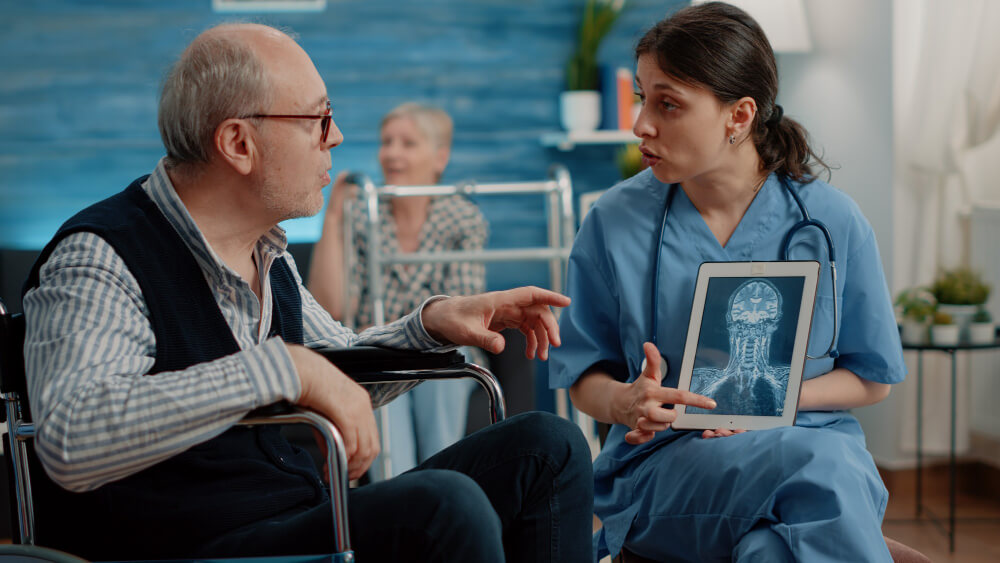
Neuro rehabilitation is a structured programme that helps people regain function after a stroke, brain injury, or other neurological condition. The goal is not simply exercise. The goal is helping the brain and body relearn skills that may have been affected by the injury.
Recovery looks different for every person.
Some patients need help improving movement. Others may need support with speech, balance, memory, swallowing, or daily activities. What follows explains why neuro rehabilitation is recommended, what therapies are involved, and what patients and families can expect during recovery.
A stroke or brain injury can interrupt the normal communication between the brain and the body.
The result depends on which part of the brain is affected.
Some people develop weakness on one side of the body. Others have difficulty walking, speaking, swallowing, remembering information, or performing routine tasks.
The brain, however, has an important ability.
It can adapt.
Through repetition, practice, and guided therapy, healthy areas of the brain can sometimes take over some of the lost functions. Neuro rehabilitation is designed to support that process.
The earlier rehabilitation begins, the greater the opportunity to maximise recovery.
Every patient enters rehabilitation with different challenges.
Some common areas include:
Not every patient experiences all of these problems.
The rehabilitation plan is tailored to the individual's needs and recovery goals.
Neuro rehabilitation supports recovery.
It cannot guarantee a complete return to previous function.
The focus is on achieving the best possible outcome for each individual.
Rehabilitation usually begins with a detailed assessment.
The team evaluates:
This assessment helps identify priorities.
For one patient, walking may be the main goal.
For another, safe swallowing or improved hand function may be more important.
The plan is then built around those needs.
Neurological physiotherapy is often one of the central parts of rehabilitation.
The focus is movement.
Exercises are designed to improve strength, balance, flexibility, coordination, and walking ability. Therapists may also work on transfers, such as moving safely from a bed to a chair.
The sessions are structured.
Repetition is important.
The brain learns through practice, and repeated movement helps reinforce those pathways.
Progress may seem slow at first, but small improvements often build over time.
Not all stroke or brain injury effects involve movement.
Some people struggle to find words, understand conversations, or communicate clearly.
Speech therapists help patients improve communication and swallowing function when needed.
Cognitive rehabilitation focuses on areas such as:
These skills are important for independence and everyday life.
Recovery is not measured only by muscle strength.
Daily function matters too.
Occupational therapists help patients relearn practical activities such as dressing, bathing, eating, writing, cooking, and using household items safely.
Sometimes equipment or home modifications are recommended to improve independence and reduce fall risk.
The aim is helping people participate as fully as possible in daily life.
One of the most common questions is, "How long will recovery take?"
There is no single answer.
Some improvements happen within weeks.
Others continue for months.
In some cases, progress continues even longer.
Recovery is often fastest during the early stages, but meaningful gains can still occur later with ongoing therapy and practice.
The pace varies from person to person.
Comparing one patient's recovery to another is rarely helpful.
Rehabilitation does not happen only during therapy sessions.
Family members often play an important role.
They help encourage exercises, support daily activities, and create a safe environment for recovery.
Understanding the rehabilitation plan helps families participate more effectively and recognise progress that may otherwise seem small.
Those small gains often matter greatly over time.
Neuro rehabilitation is an important part of recovery after stroke, brain injury, and other neurological conditions. Through structured therapy, patients work on improving movement, communication, balance, memory, and daily function.
Modern rehabilitation programmes combine stroke recovery therapy, brain injury rehab, and neurological physiotherapy to help patients achieve the highest level of independence possible. Recovery may take time, but consistent therapy, realistic goals, and ongoing support can make a meaningful difference in long-term outcomes.
Neuro rehabilitation is a specialised programme that helps people recover physical, cognitive, and communication skills after neurological conditions such as stroke or brain injury.
Rehabilitation often begins as soon as the patient is medically stable, sometimes even during the hospital stay.
Neurological physiotherapy focuses on improving movement, balance, strength, coordination, and walking ability after a neurological injury.
Yes. Brain injury rehab can help improve movement, memory, attention, communication, and daily function depending on the type and severity of injury.
Recovery varies greatly between individuals. Some patients improve within weeks, while others continue rehabilitation for months or longer.
Not always. The goal is to maximise recovery and independence, but the extent of improvement depends on the severity and location of the neurological injury.
Yes. Many exercises and therapy strategies continue at home under the guidance of the rehabilitation team, helping support ongoing recovery.