- English
- عربي / Arabic
- മലയാളം / Malayalam

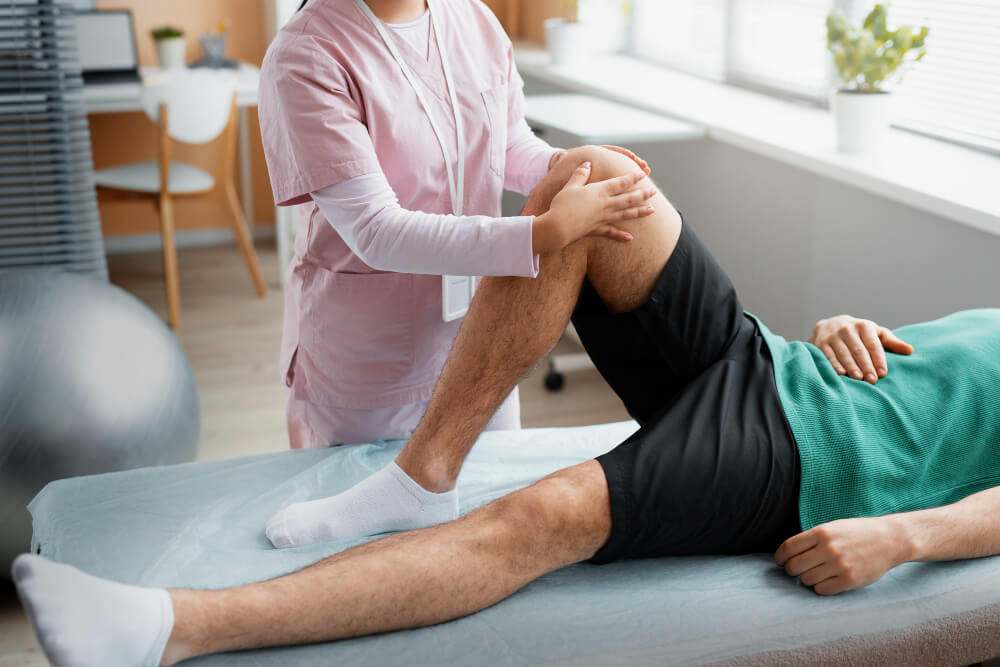
A joint replacement can reduce pain and improve movement, but the operation is only one part of recovery. The weeks that follow are equally important. This is where orthopaedic rehabilitation plays a major role.
Whether the surgery involves the knee, hip, or another major joint, rehabilitation helps patients regain strength, improve mobility, and return to daily activities safely. What follows explains why rehabilitation matters, what happens during different stages of recovery, and what patients can expect after joint replacement surgery.
Joint replacement surgery corrects the damaged joint.
The muscles around that joint still need to recover.
Before surgery, many patients reduce activity because of pain. Muscles become weaker. Joint movement becomes limited. Walking patterns may change over time.
The new joint solves the mechanical problem.
Rehabilitation helps the body learn how to use it effectively.
Without rehabilitation, recovery is often slower and movement may remain restricted.
Recovery begins surprisingly early.
In many cases, patients are encouraged to stand and walk within a day of surgery. This is done under supervision and according to the surgeon's instructions.
The early goals are simple:
Patients often worry about movement damaging the new joint.
In reality, carefully guided movement is usually an important part of recovery.
Joint surgery physiotherapy forms the foundation of rehabilitation.
Therapists guide patients through exercises designed to improve:
The exercises start gently.
As recovery progresses, they become more challenging.
The purpose is not simply to exercise the leg or arm. The purpose is restoring function and confidence in everyday movement.
During the first few weeks, most patients focus on basic mobility.
Walking distances gradually increase.
Exercises help improve flexibility and reduce stiffness around the operated joint.
For patients undergoing post knee replacement recovery, bending and straightening the knee becomes an important focus. For hip replacement patients, attention may be directed toward walking mechanics, balance, and safe transfers.
Progress is usually steady rather than dramatic.
Small improvements often add up quickly.
As healing continues, strengthening becomes more important.
Muscles surrounding the joint need to support daily activities such as:
Therapists gradually increase exercise intensity while monitoring comfort and safety.
Many patients notice that confidence improves alongside physical recovery.
That confidence is an important part of returning to normal life.
Some patients continue recovery through a dedicated rehab centre.
This may be recommended when additional support is needed after surgery or when mobility remains limited.
A rehabilitation programme may include:
The goal remains the same: helping patients become as independent as possible.
Most patients have questions during rehabilitation.
Some swelling is common.
Temporary stiffness is common.
Tiredness is common too.
Recovery does not always progress in a perfectly straight line. Some days feel better than others.
What matters most is the overall trend.
Regular follow-up appointments allow doctors and therapists to monitor progress and address concerns early.
The timeline varies depending on the type of surgery, age, overall health, and recovery progress.
Many patients gradually return to:
More physically demanding tasks may require additional time.
Your surgeon and rehabilitation team provide guidance specific to your situation.
Rehabilitation does not stop when physiotherapy sessions end.
The habits developed during recovery continue to matter.
Regular activity helps maintain:
A successful joint replacement is supported by ongoing movement and healthy lifestyle habits long after surgery is completed.
Joint replacement surgery addresses the damaged joint, but recovery depends heavily on what happens afterward. Orthopaedic rehabilitation helps restore strength, mobility, balance, and confidence during the healing process.
Whether through home exercises, joint surgery physiotherapy, or support from a specialised rehab centre, rehabilitation plays a central role in helping patients achieve the best possible outcome. Consistent effort, gradual progression, and regular follow-up often lead to a smoother and more successful recovery.
Rehabilitation helps restore strength, flexibility, balance, and mobility after surgery, allowing patients to return safely to daily activities.
In many cases, rehabilitation starts within the first day after surgery, once the patient is medically stable.
Physiotherapy helps improve movement, strengthen muscles around the new joint, and support safe recovery.
Recovery varies between individuals, but many patients continue improving for several months after surgery.
Yes. Mild to moderate swelling is common during recovery and usually improves gradually with time and rehabilitation.
Not everyone does. Some patients recover at home with outpatient physiotherapy, while others benefit from structured rehabilitation programmes in a rehab centre.
Many patients return to walking, driving, work, and recreational activities after recovery, although timelines vary depending on the procedure and individual progress.