- English
- عربي / Arabic
- മലയാളം / Malayalam

Your heart does something remarkable every second of your life. It generates electrical signals that tell it when to beat, how fast to beat, and how efficiently to pump blood through your body. Most of us never think about this invisible electrical system because it works without asking for attention.
A person who once climbed stairs without effort suddenly feels dizzy. Someone begins fainting without warning. Another notices that even a short walk leaves them unusually tired. The heart is still beating, but not always at the right speed or in the right rhythm.
This is where medicine shifts its focus. The problem is in the electrical wiring.
For many people living with slow or irregular heart rhythms, pacemaker implantation is not about replacing the heart. It is about restoring the signals that keep it working as it should.
Every heartbeat begins with an electrical impulse generated in a small group of cells called the sinus node. This impulse travels through the heart in a carefully timed sequence, allowing the upper and lower chambers to contract together.
When this system is interrupted, the heart may beat too slowly, pause unexpectedly, or fail to coordinate its contractions effectively.
These conditions are collectively known as cardiac rhythm disorders or arrhythmias.
Not every arrhythmia requires a pacemaker. Some cause the heart to beat too fast and are treated with medication or catheter-based procedures. A pacemaker is usually recommended when the heart beats too slowly or when electrical signals fail to reach the lower chambers properly.
Doctors do not recommend pacemaker implantation based on age alone. The decision depends on symptoms, heart rhythm studies, and how much the abnormal rhythm is affecting daily life.
A pacemaker may be advised for people who have:
Sometimes these rhythm disorders develop gradually. At other times, they appear suddenly after a heart attack, surgery, or because of age-related changes in the heart's electrical pathways.
One reason rhythm disorders are overlooked is that the symptoms can be subtle.
Many patients assume they are simply becoming less fit or getting older.
Common warning signs include:
When these symptoms continue or worsen, doctors may recommend tests such as an ECG, Holter monitoring, or an electrophysiology evaluation to identify the underlying rhythm problem.
The phrase heart pacemaker surgery often sounds more intimidating than the procedure itself.
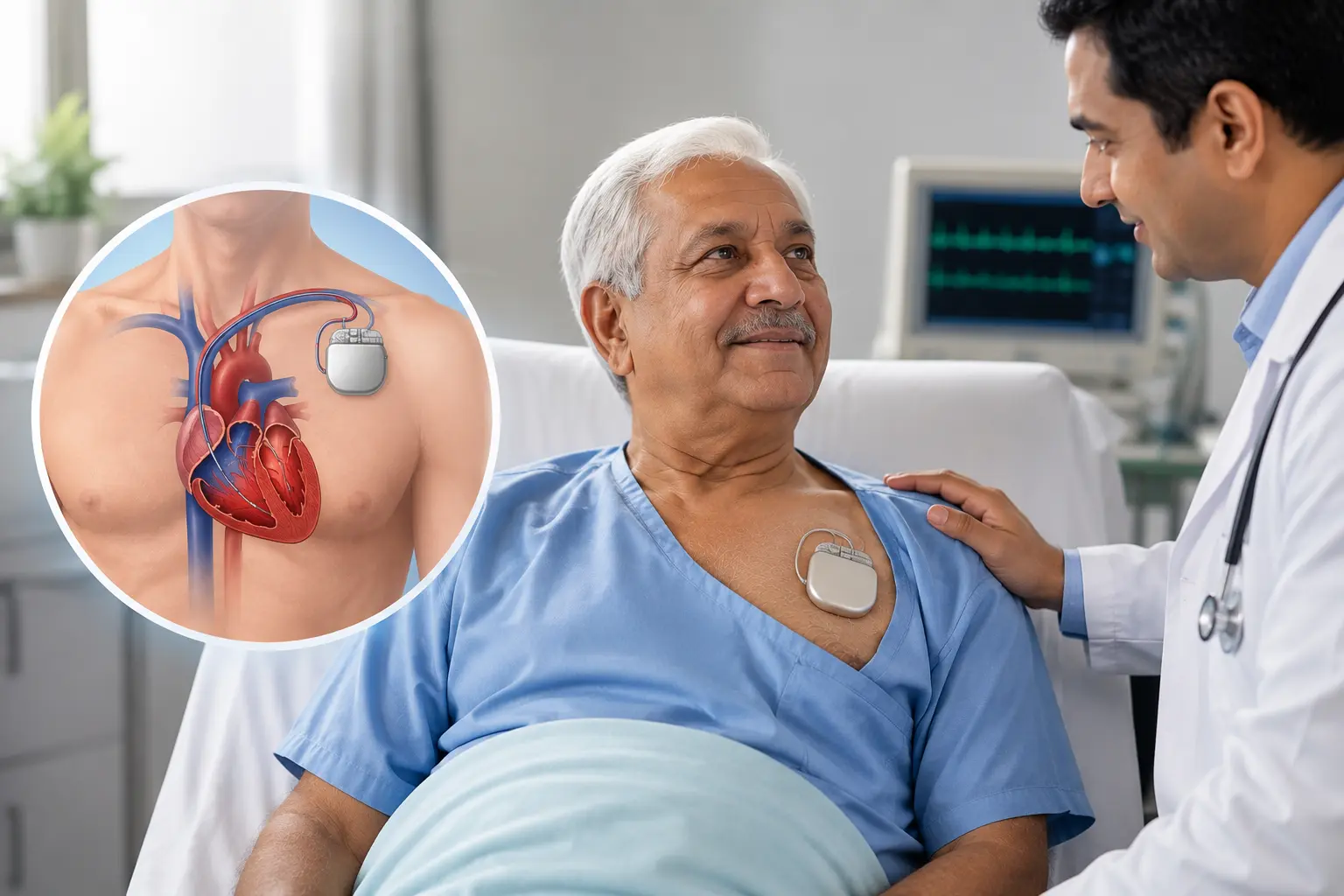
Unlike open-heart surgery, pacemaker implantation is a minimally invasive procedure. The heart is not opened, and the device is usually placed beneath the skin just below the collarbone.
During the procedure:
The procedure generally takes one to two hours, depending on the type of pacemaker and the patient's condition.
Throughout heart pacemaker surgery, the medical team continuously monitors the patient's heart rhythm and confirms that the device is functioning correctly before completing the procedure.
Recovery is usually quicker than many patients expect.
Most people remain in the hospital for observation for a three to five days. Before discharge, the pacemaker is tested to ensure that it is delivering electrical impulses appropriately.
During the first few weeks after pacemaker implantation, patients are usually advised to:
As healing progresses, most people gradually return to their normal routines, including walking, travelling, and other everyday activities.
A pacemaker does not cure the underlying disease that caused the rhythm problem. Instead, it continuously monitors the heart and provides electrical stimulation whenever the heart beats too slowly or misses a beat.
Modern pacemakers are highly sophisticated. Many adjust the heart rate automatically during physical activity and store valuable information that helps doctors evaluate heart rhythm over time.
Most patients eventually stop noticing the device in their daily lives.
Regular follow-up visits remain important because the pacemaker's settings can be adjusted if needed, and the battery, which typically lasts several years, must be monitored.
Every abnormal heartbeat has a cause, and identifying that cause is often just as important as treating it.
This is where cardiac electrophysiology Kozhikode plays a vital role.
Cardiac electrophysiology is the specialised field of cardiology that studies the heart's electrical activity. Electrophysiologists diagnose rhythm disorders using advanced tests and determine whether medication, catheter ablation, or pacemaker implantation is the most appropriate treatment.
Not every patient with an irregular heartbeat needs a pacemaker. Careful evaluation helps ensure that each person receives the treatment best suited to their condition.
People often think of pacemakers whenever they hear the word arrhythmia. In reality, arrhythmia treatment depends entirely on the type of rhythm disorder.
Some patients respond well to medications. Others benefit from catheter ablation, where abnormal electrical pathways are eliminated. For patients whose hearts beat too slowly or whose electrical signals are blocked, pacemaker implantation provides a reliable long-term solution that restores a safe and consistent heart rhythm.
The goal is always the same—to reduce symptoms, improve quality of life, and lower the risk of complications associated with untreated rhythm disorders.
Occasional palpitations are common and are not always a cause for concern. However, persistent dizziness, unexplained fainting, repeated episodes of extreme fatigue, or a consistently slow pulse should never be ignored.
Early evaluation allows doctors to identify rhythm disorders before they lead to serious complications. In many cases, timely diagnosis and appropriate arrhythmia treatment can significantly improve both safety and quality of life.
The heart depends on more than strong muscles. It depends on precise electrical signals that keep every beat in rhythm.
When those signals begin to fail, the effects may appear gradually, but they can have a profound impact on daily life. Fortunately, modern pacemaker implantation has transformed the outlook for people living with slow or abnormal heart rhythms.
At Baby Memorial Hospital, our specialists in cardiac electrophysiology Payyanur/Kannur evaluate each patient carefully, identify the exact rhythm disorder, and recommend the most appropriate treatment—from advanced arrhythmia treatment to heart pacemaker surgery when required. With timely diagnosis and expert care, many patients return to active, independent lives with renewed confidence.
No. Pacemaker implantation is a minimally invasive procedure performed under local anaesthesia. Most patients recover quickly and return home within a day or two.
Most pacemaker batteries last between 10 and 15 years, depending on the type of device and how often it is used. Regular follow-up appointments help monitor battery life.
Yes. After recovery from heart pacemaker surgery, most people can return to their normal daily activities, including walking, travelling, and light exercise, following their cardiologist's advice.
No. Arrhythmia treatment depends on the specific rhythm disorder. Some patients require medication or catheter ablation, while others benefit from pacemaker implantation.
If you experience persistent dizziness, fainting, unexplained fatigue, or are diagnosed with an abnormal heart rhythm, consulting a specialist in cardiac electrophysiology Payyanur/Kannur can help determine the most appropriate treatment plan.