- English
- عربي / Arabic
- മലയാളം / Malayalam

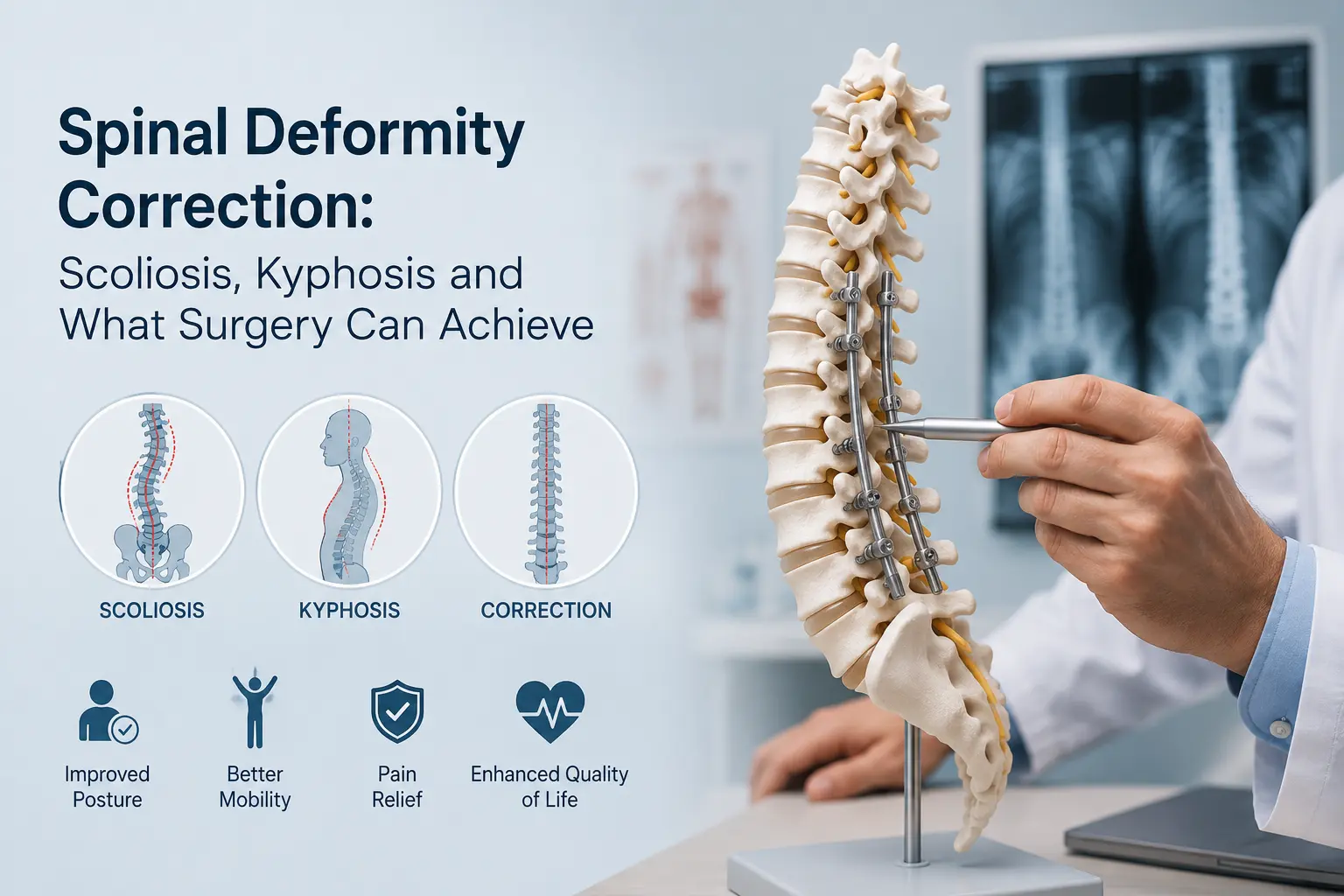
A healthy spine is naturally curved. These curves help maintain balance, support movement and distribute the body's weight evenly. Problems arise when the spine curves too much or in the wrong direction, affecting posture, movement and, in severe cases, even breathing or nerve function.
This is where spinal deformity correction becomes important. While many spinal deformities can be managed without surgery, some patients require surgical treatment to restore spinal balance, relieve symptoms and prevent the condition from worsening.
The two most common spinal deformities are scoliosis and kyphosis.
Scoliosis is a sideways curvature of the spine that often develops during childhood or adolescence, although it can also occur in adults due to age-related spinal changes.
Kyphosis refers to an excessive forward curvature of the upper back, giving the spine a rounded or hunched appearance. It may develop because of poor spinal development, fractures, degenerative conditions or certain medical disorders.
Not every spinal curve requires treatment. The decision depends on the severity of the deformity, symptoms and its effect on daily life.
Mild spinal deformities often require regular observation, especially in growing children.
Treatment is usually recommended when:
The goal of treatment is not simply to straighten the spine but to improve function, reduce symptoms and maintain long-term spinal health.
Not every patient requires surgery.
Depending on the condition, doctors may recommend:
These treatments may slow progression or help manage symptoms. However, if the deformity continues to worsen or significantly affects quality of life, spinal deformity correction through surgery may be considered.
Surgery is usually advised when non-surgical treatment no longer provides adequate control or when the spinal deformity becomes severe.
Doctors may recommend spine alignment surgery if:
The decision is always individualised after evaluating spinal imaging, symptoms, age and overall health.
The objective of spinal deformity correction is to improve spinal alignment while protecting the spinal cord and surrounding nerves.
During surgery, the surgeon carefully realigns the spine and stabilises it using specialised implants such as rods, screws and connectors. Bone grafts are often placed to help the corrected segments fuse into a stable position over time.
Throughout the procedure, advanced neuromonitoring techniques continuously assess spinal cord function, helping the surgical team minimise the risk of neurological injury.
The exact surgical approach varies depending on the type, location and severity of the deformity.
The purpose of surgery is much broader than improving appearance.
Successful spine alignment surgery can help:
The degree of correction differs from patient to patient. The primary goal is achieving a safe, stable and functional spine rather than creating a perfectly straight one.
Like all major spine surgeries, deformity correction carries certain risks.
Possible complications include:
These risks vary depending on the patient's age, general health, the complexity of the deformity and the length of surgery.
Before the procedure, the surgical team discusses these risks in detail and explains the expected benefits and recovery process.
Recovery begins soon after surgery.
Patients are encouraged to start moving under medical supervision as early as it is safe to do so. Pain management, physiotherapy and gradual rehabilitation are important parts of recovery.
Most patients continue improving over several months as the spine heals and strength returns. Regular follow-up appointments and imaging help ensure that the spine remains stable and healing progresses as expected.
Recovery timelines differ depending on the complexity of the surgery and the patient's overall health.
Spinal deformities often progress gradually, making early changes easy to overlook.
Timely evaluation allows doctors to monitor the condition, begin conservative treatment when appropriate and identify patients who may benefit from surgery before the deformity becomes more severe.
Consulting an experienced spine surgeon Kozhikode early can make a significant difference in planning the most appropriate treatment and achieving better long-term outcomes.
Not every spinal deformity requires surgery, but when the curve progresses, causes pain or affects movement and daily life, spinal deformity correction can offer lasting benefits.
Modern scoliosis treatment and spine alignment surgery focus on restoring spinal balance, protecting nerve function and improving quality of life. At Baby Memorial Hospital, our experienced spine surgeon Kozhikode team provides comprehensive evaluation and personalised treatment plans to help patients achieve the best possible outcomes with advanced spinal care.
1. Does every patient with scoliosis need surgery?
No. Many patients with mild curves can be managed with observation, physiotherapy or bracing. Scoliosis treatment depends on the severity of the curve, symptoms and its progression.
2. What is spinal deformity correction?
Spinal deformity correction is a surgical procedure that realigns the spine and stabilises it using specialised implants to improve posture, reduce pain and prevent further progression.
3. What is spine alignment surgery?
Spine alignment surgery refers to procedures that correct abnormal spinal curves while maintaining spinal stability and protecting the spinal cord and nerves.
4. How long does recovery take after spinal deformity surgery?
Initial recovery usually takes a few weeks, but complete healing and rehabilitation may continue for several months depending on the complexity of the procedure.
5. When should I consult a spine surgeon?
If you notice worsening spinal curvature, persistent back pain, posture changes or neurological symptoms, consulting an experienced spine surgeon Kozhikode can help determine the most appropriate treatment.