
- English
- عربي / Arabic
- മലയാളം / Malayalam

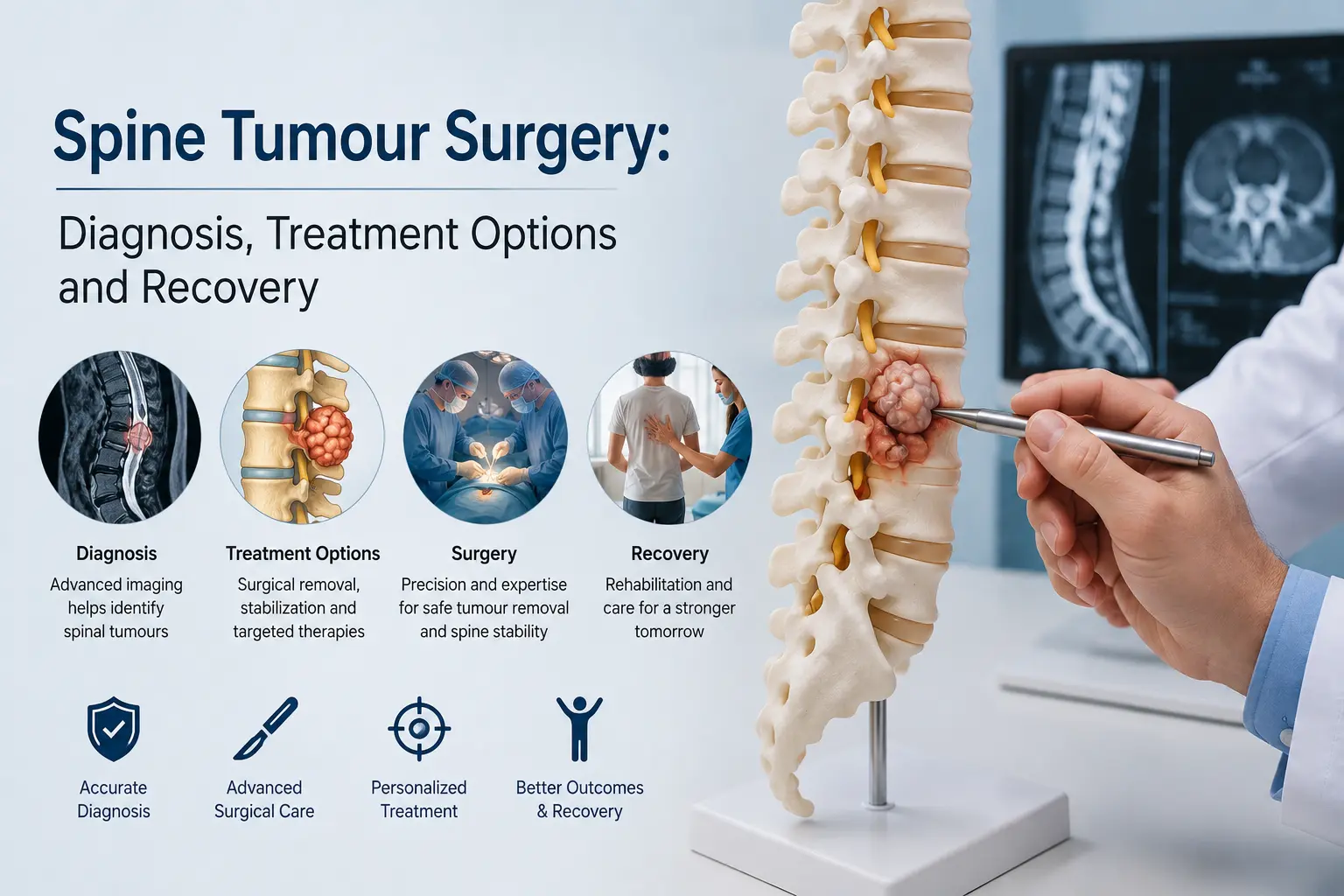
A tumour affecting the spine can do more than cause back pain. As it grows, it may press on the spinal cord or nearby nerves, leading to weakness, numbness, difficulty walking or problems with bladder and bowel control. In some cases, these symptoms develop gradually, while in others they require urgent medical attention.
When a tumour threatens the stability of the spine or compresses the spinal cord, spine tumor surgery often becomes an important part of treatment. The aim is not only to remove the tumour but also to protect nerve function, relieve symptoms and improve the patient's quality of life.
A spine tumour is an abnormal growth that develops within or around the spine.
Some tumours arise from the bones of the spine, while others develop within the spinal cord or spread to the spine from cancers elsewhere in the body. These tumours may be benign (non-cancerous) or malignant (cancerous), and treatment depends on the exact diagnosis.
Doctors generally classify spine tumours based on their location:
Identifying the exact type of tumour is the first step in planning the right treatment.
The symptoms depend on the tumour's size and location, but some warning signs require prompt medical evaluation.
These include:
Because these symptoms can also occur with other spinal conditions, further evaluation is needed before confirming the diagnosis.
The diagnosis begins with a neurological examination to assess muscle strength, sensation, reflexes and balance.
If a spine tumour is suspected, doctors may recommend:
These investigations help determine whether the tumour is benign or malignant, whether it is affecting the spinal cord and which treatment approach is most appropriate.
Not every spine tumour requires immediate surgery.
However, spine tumor surgery is often recommended when:
The decision is always based on the patient's symptoms, tumour location and overall health.
The objective of spine tumour surgery depends on the type of tumour.
Whenever possible, surgeons aim to remove the tumour while protecting the spinal cord and nearby nerves. In some patients, complete removal may not be safe because the tumour is closely attached to critical neurological structures. In such cases, removing as much of the tumour as safely possible can still relieve pressure on the spinal cord and improve symptoms.
If the tumour has weakened the spine, the surgeon may also stabilise it using rods, screws or other specialised implants to restore strength and maintain proper spinal alignment.
Throughout the procedure, advanced neuromonitoring techniques help monitor spinal cord function and improve surgical safety.
Surgery is only one part of spinal cord tumour treatment for many patients.
After surgery, the tumour tissue is examined to determine its exact type and behaviour. Based on these findings, additional treatment may include:
The treatment plan depends on whether the tumour is benign, malignant or has spread from another part of the body.
Recovery depends on the size of the tumour, the complexity of surgery and the patient's neurological condition before the operation.
During the first few days, doctors closely monitor pain control, movement and neurological function. Physiotherapy often begins early to improve strength, balance and mobility.
Some patients recover quickly, while others may require longer rehabilitation, particularly if nerve compression had already affected movement before surgery.
Regular follow-up visits and imaging help monitor healing and detect any signs of tumour recurrence.
The outcome depends on several factors, including:
Early diagnosis generally offers the best opportunity to preserve nerve function and improve long-term recovery.
Even after successful surgery, continued follow-up remains an important part of spinal cord tumour treatment.
Treating spine tumours requires careful coordination between spine surgeons, oncologists, radiologists, pathologists and rehabilitation specialists.
An experienced team providing spine surgery Kerala services can evaluate the tumour, plan the safest surgical approach and coordinate additional treatment when needed.
This multidisciplinary approach helps ensure that patients receive comprehensive care throughout diagnosis, surgery and recovery.
A spine tumour can affect movement, sensation and overall quality of life, but advances in diagnosis and surgical techniques have significantly improved treatment outcomes.
Modern spine tumour surgery focuses on safely removing or reducing the tumour while protecting the spinal cord and maintaining spinal stability. Combined with personalised spinal cord tumour treatment and comprehensive follow-up, many patients experience meaningful symptom relief and improved quality of life.
At Baby Memorial Hospital, our experienced spine surgery Kerala team provides advanced evaluation and treatment for conditions affecting the spine, including vertebral tumour management, helping patients receive expert care at every stage of their recovery.
1. Does every spine tumour require surgery?
No. Some tumours can be monitored or treated with radiation or other therapies. Spine tumor surgery is recommended when the tumour compresses the spinal cord, causes instability or requires removal for diagnosis or treatment.
2. What is a vertebral tumour?
A vertebral tumour is a tumour that develops in or affects the bones of the spine. It may be benign or malignant and often requires detailed imaging to determine the most appropriate treatment.
3. What treatments are available for spinal cord tumours?
Spinal cord tumour treatment may include surgery, radiation therapy, chemotherapy or targeted therapy depending on the tumour type and its location.
4. How long does recovery take after spine tumour surgery?
Recovery varies for each patient. Many patients begin physiotherapy within days of surgery, while full recovery may take several weeks or months depending on the complexity of the procedure.
5. When should I consult a neurosurgeon?
Persistent back pain, weakness, numbness, difficulty walking or changes in bladder or bowel function should be evaluated promptly by a specialist providing neurosurgery Kerala services.