- English
- عربي / Arabic
- മലയാളം / Malayalam

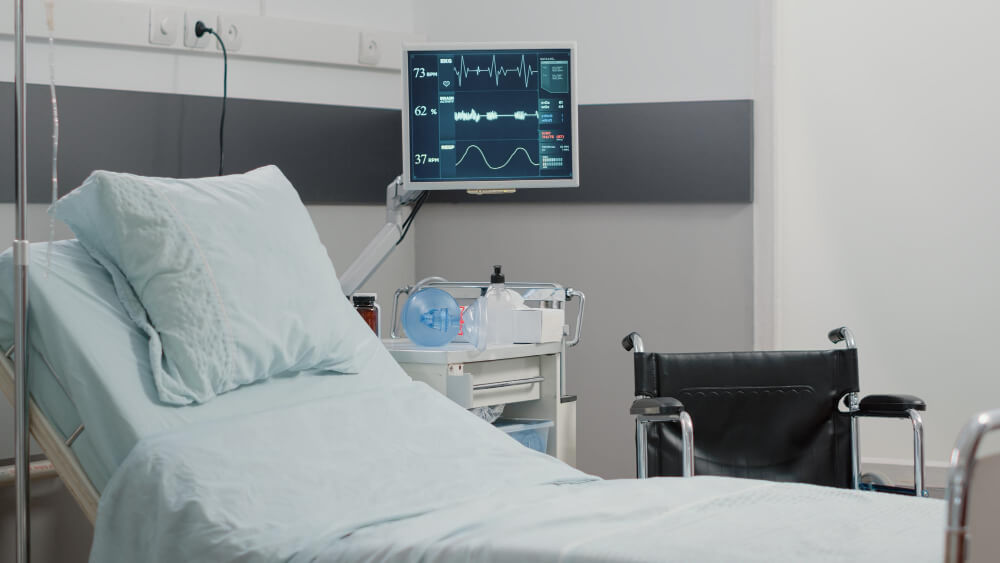
An Intensive Care Unit, often called the ICU, is a specialised area of the hospital designed for patients who need close monitoring and advanced medical support. Some people arrive unexpectedly after a sudden illness. Others are admitted after major surgery, serious injuries, or complex medical conditions that require continuous observation.
For patients and families, the ICU can feel unfamiliar and overwhelming.
The equipment looks different.
There are more monitors.
More alarms.
More healthcare professionals moving around.
What follows explains what ICU care involves, why patients are admitted, what families can expect, and how recovery is supported inside the intensive care unit.
Not every hospital patient requires intensive care.
The ICU is reserved for people who need closer monitoring than a general ward can provide.
Common reasons include:
Some admissions are planned.
Others happen urgently.
The decision is based on the level of monitoring and treatment a patient requires at that moment.
The biggest difference is the level of observation.
In a general hospital ward, nurses monitor several patients and perform regular checks throughout the day.
Inside the intensive care unit, monitoring happens continuously.
These measurements are often displayed on monitors beside the bed so the healthcare team can identify changes quickly.
The goal is early detection of problems and immediate response when needed.
ICU care involves several healthcare professionals working together.
The team may include:
A critical care specialist usually oversees overall treatment while coordinating with other specialists involved in the patient's care.
Because ICU patients often have complex conditions, teamwork becomes especially important.
Families are often concerned when they see medical equipment around the bed.
Most of it is there to monitor or support the patient.
Common equipment may include:
The number of machines does not always reflect how sick a patient is.
Sometimes equipment is used simply because closer monitoring is appropriate.
The ICU team explains the purpose of devices whenever possible.
Some patients can breathe independently.
Others need assistance.
Oxygen may be delivered through a mask or nasal tubes.
More serious breathing problems may require a ventilator.
A ventilator helps move air in and out of the lungs while the body recovers from illness or injury.
Patients receiving ventilator support often receive medication to keep them comfortable during treatment.
The need for a ventilator does not automatically mean recovery is unlikely.
Many patients require temporary breathing support and improve over time.
Hospitals have different visiting policies.
These policies are designed to balance family support with patient safety and medical care.
Family members may notice that visits are shorter or more structured than visits on a regular ward.
This allows staff to perform treatments, examinations, and monitoring without interruption.
Communication remains important.
Families are encouraged to ask questions and discuss concerns with the healthcare team.
Recovery in the ICU can sometimes be unpredictable.
Some patients improve quickly.
Others require longer stays.
Daily updates often focus on:
Progress may happen gradually rather than dramatically.
A small improvement in oxygen levels or blood pressure can be a meaningful step forward.
The healthcare team monitors these changes closely.
Moving out of the ICU is usually a positive sign.
It means the patient no longer requires the same level of intensive monitoring.
Many patients are transferred to a hospital ward before going home.
Recovery often continues after ICU discharge.
Weakness, tiredness, and reduced stamina are common after a serious illness.
Physiotherapy and rehabilitation may be recommended depending on the condition that led to admission.
The intensive care unit is designed for patients who need close monitoring and advanced medical support. While the environment can seem intimidating at first, every monitor, machine, and treatment has a specific purpose.
Modern ICU care combines continuous observation, specialised treatment, and support from experienced healthcare teams. Understanding what happens inside the ICU helps patients and families feel more informed during what is often a challenging time.
An ICU, or Intensive Care Unit, is a specialised hospital area where patients receive close monitoring and advanced medical treatment.
Patients may require ICU care because of severe infections, major surgery, breathing difficulties, heart conditions, organ failure, serious injuries, or other critical illnesses.
A critical care specialist is a doctor trained to manage patients with serious or life-threatening conditions who require intensive monitoring and treatment.
No. Some patients need breathing support, while others are admitted for monitoring and treatment without requiring a ventilator.
Yes, although visiting policies vary between hospitals. ICU visits are often structured to allow medical care to continue safely.
The length of stay depends on the illness, response to treatment, and overall recovery. Some stays last a few days, while others may be longer.
Most patients are transferred to a hospital ward for continued recovery before discharge. Some may also need rehabilitation or physiotherapy after serious illness.