- English
- عربي / Arabic
- മലയാളം / Malayalam

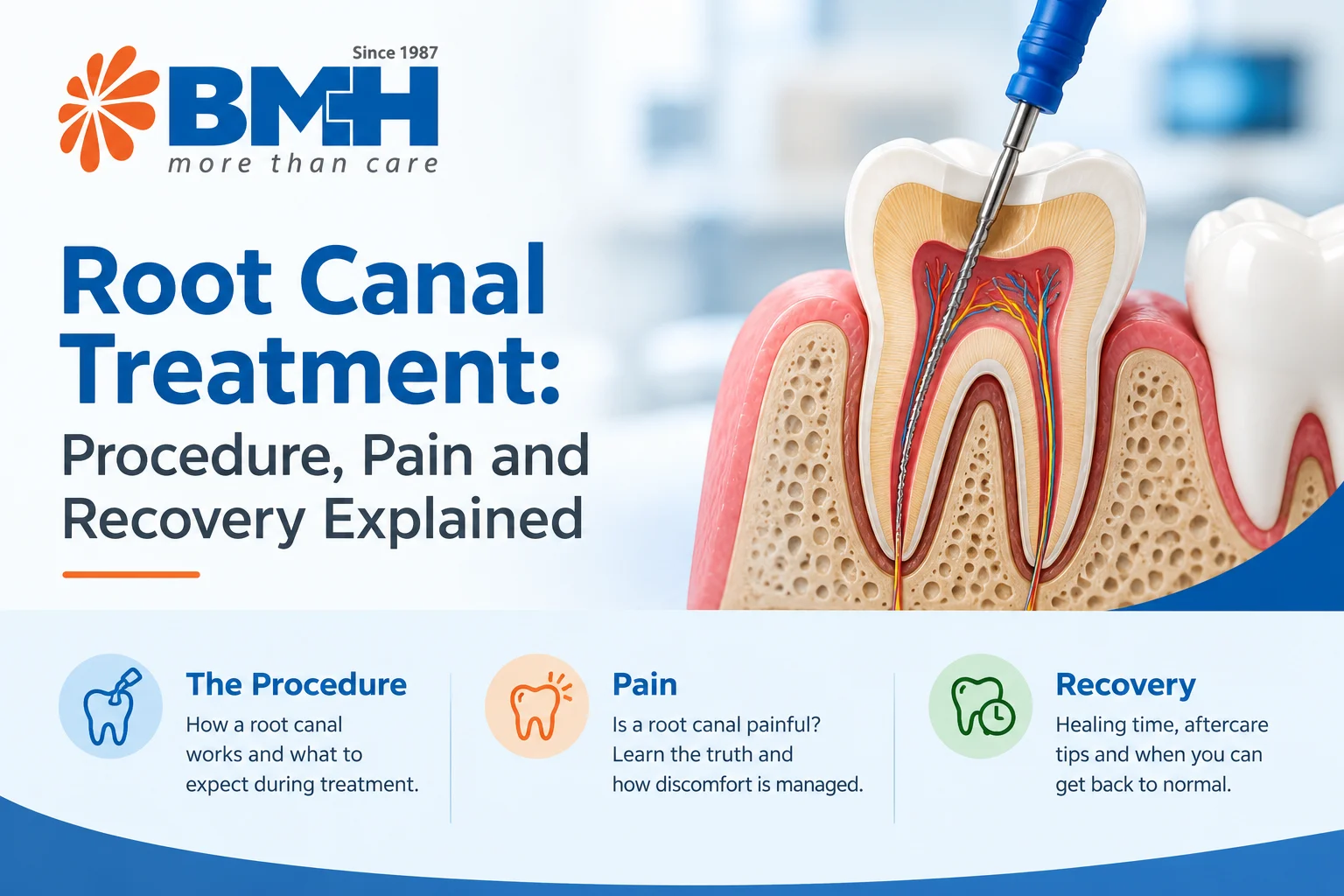
A root canal treatment is performed when the soft tissue inside a tooth, known as the pulp, becomes infected or severely damaged. The pulp contains nerves and blood vessels that help the tooth develop. Once a tooth is fully formed, it can continue functioning even if this tissue is removed.
Many people hear the words "root canal" and immediately think of pain.
In reality, the treatment is usually performed to relieve pain rather than cause it.
What follows explains why a root canal becomes necessary, what happens during the procedure, how discomfort is managed, and what recovery usually looks like afterward.
The inner part of the tooth (pulp) is protected by enamel dentin and radicular cementum.
In case of decay, secondary caries, wear facets, cracks, or trauma allow bacteria to reach the pulp, infection can develop inside the tooth.
At first, the symptoms may be mild.
Over time, the infection can worsen.
Common warning signs include:
Sometimes an infection progresses quietly and is discovered during a dental examination or X-ray.
The goal of treatment is to remove the infection while preserving the natural tooth whenever possible.
When a tooth becomes infected, patients often wonder whether it should simply be removed.
Extraction is sometimes necessary.
Many infected teeth can be saved.
A root canal allows the dentist to remove the diseased tissue while keeping the outer structure of the tooth intact. Preserving the natural tooth helps maintain chewing function and avoids some of the challenges associated with missing teeth.
The decision depends on the condition of the tooth, surrounding bone, and overall oral health.
Benefits. Relief from infection-related pain; preservation of the natural tooth; restoration of normal chewing function; prevention of infection spreading to surrounding tissues; avoidance of extraction in many cases.
Risks. Temporary soreness after treatment; infection that may persist or recur; fracture of a weakened tooth if not properly restored; rarely, additional procedures may be required if healing does not progress as expected.
Most root canal procedures are completed successfully and allow the tooth to remain functional for many years.
Before treatment begins, the dentist performs an examination and reviews dental X-rays.
The images help identify:
The dentist then explains the procedure, expected outcomes, risks, and available alternatives.
These steps help create a clear treatment plan before the procedure starts.
Modern endodontics, the dental specialty focused on the inside of the tooth, places significant emphasis on patient comfort.
Local anaesthesia is used to numb the area.
You remain awake but should not feel sharp pain during treatment.
A small protective sheet called a dental dam is often placed around the tooth to keep the area clean and dry.
Most patients feel pressure.
Not pain.
The experience is often similar to receiving a filling, although the appointment may take longer.
Once the tooth is numb, a small opening is created to access the pulp chamber.
Tiny instruments are used to remove infected or damaged tissue from inside the tooth and root canals.
The canals are then cleaned, shaped, and disinfected.
This step is important because bacteria can remain deep inside the root system if cleaning is incomplete.
After cleaning, the canals are filled with a specialised material that seals the space and helps prevent reinfection.
After the root canal is completed, the tooth often requires additional restoration.
Some teeth receive a filling.
Others require a crown.
A crown is frequently recommended for back teeth because they experience significant chewing forces and may be more prone to fracture after treatment.
The type of restoration depends on how much healthy tooth structure remains.
Many patients expect immediate discomfort after treatment.
Some soreness is common.
This usually relates to the inflammation that existed before treatment rather than the procedure itself.
Mild tenderness while chewing may persist for several days.
Most patients manage this period with routine pain-relief medication recommended by their dentist.
The discomfort generally improves steadily rather than worsening.
Most people return to normal activities the same day or the following day.
It is usually advisable to avoid chewing hard foods on the treated tooth until the final restoration is completed.
Good oral hygiene remains important.
This includes:
Once healing is complete and the tooth is properly restored, normal function often returns.
Some symptoms deserve prompt review.
Contact your dentist if you notice:
These situations do not necessarily indicate a serious problem, but they should be assessed.
How badly is the tooth infected?
Can the tooth be saved with root canal treatment?
Will I need a crown afterward?
How many appointments will treatment require?
What level of discomfort should I expect?
How long will recovery take?
What signs should prompt me to contact the clinic?
A root canal treatment removes infection from inside a tooth while preserving the natural tooth structure. Although many people associate the procedure with pain, modern techniques focus heavily on comfort and dental pain relief.
Advances in endodontics have made root canal therapy a routine and highly successful procedure. Understanding what happens during treatment, what recovery involves, and why the procedure is recommended helps patients approach care with greater confidence.
Modern root canal treatment is usually performed under local anaesthesia, so most patients feel pressure rather than pain during the procedure.
A root canal is often recommended when infection or damage reaches the pulp inside the tooth and cannot be treated with a simple filling.
The duration depends on the tooth and complexity of the infection. Some treatments are completed in one visit, while others require multiple appointments.
Tooth nerve treatment is another way of describing root canal therapy, where infected or damaged pulp tissue is removed from inside the tooth.
Many teeth, especially molars, benefit from a crown after treatment because it helps protect and strengthen the tooth.
Most patients return to normal activities within a day. Mild soreness may persist for a few days before gradually improving.
Yes. With proper restoration and regular dental care, a successfully treated tooth can often remain functional for many years.