- English
- عربي / Arabic
- മലയാളം / Malayalam

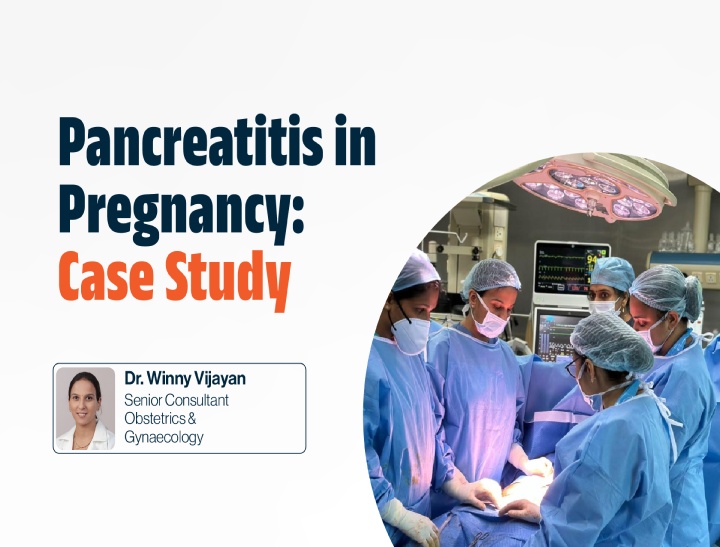
A Rare Case of Acute Pancreatitis in Pregnancy Due to Hypertriglyceridemia
14 October 2026Introduction
Acute pancreatitis in pregnancy is a rare but serious condition occasionally causing maternal mortality. It affects approximately 1 in 1000 to 1 in 12,000 pregnancies. The spectrum of Acute pancreatitis in pregnancy varies from mild to severe pancreatitis. Severe pancreatitis might be associated with multiorgan dysfunction, pancreatic abscess, pseudocyst formation and necrosis.
Diagnostic criteria in pregnancy is not defined definitively and maternal fatality is about 40% and fetal 60-70%. Most common cause is secondary to Gall bladder stones(70%),alcohol abuse, drugs and recently Covid related pancreatitis. A very rare cause barely reported worldwide is Hypertriglyceridemia causing acute pancreatitis in pregnancy. It appears that HTG aggravates the severity score and prognosis of disease.
This case refers to a 22 year old primigravida, with a history of familial hypertriglyceridemia, at 33 weeks gestation who presented with acute pancreatitis.
Keywords- Acute Pancreatitis, antenatal, hypertriglyceridemia
Case Report
A 22 year old primigravida at 33 weeks gestation, presented with complaints of severe epigastric pain and vomiting since 2 days. She is a known case of hypothyroidism on thyroid supplementation and pregnancy induced hypertension on single antihypertensive drug(combined alpha -beta blocker) since 2 weeks prior to admission. She has a history of familial hypertriglyceridemia with death due to CAD in elder brother and acute pancreatitis secondary to hypertriglyceridemia in sister.
Clinical examination revealed mild hypertension and moderate tachycardia . BMI was 20. She was conscious , oriented and afebrile ,abdomen was tense and tender at epigastric area,uterus enlarged to about 36 weeks and fetal heart had severe tachycardia of about 220 beats per minute. Other systems were within normal limits.
Lab investigations were difficult as serum was lipemic. Blood count revealed neutrophilic leucocytosis,thrombocytosis and hyponatremia.CRP ,serum amylase and lipase were elevated and triglycerides were >5000. Ultrasound was suggestive of acute pancreatitis and fetal heart dipping from 220 to 120 beats per minute.
Ryles tube aspirate was copious and bilious and urine output grossly reduced . Dehydration was corrected with IV fluids and in view of fetal distress she was taken up for emergency preterm caesarean section under spinal anaesthesia after antenatal steroids and antibiotic cover as she had an unfavourable cervix. Intraoperatively there was about 1 litre of milky,chylous ascites and blood was thick and murky. There was polyhydramnios and delivered an active male baby of birthweight 2.6 kg (probably due to undetected diabetes).
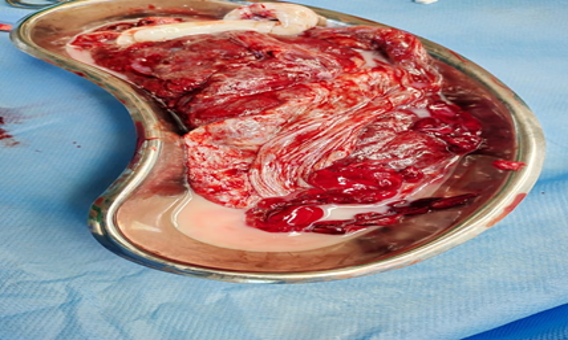
Fig 1:Placenta with highly lipemic plasma immediately after delivery by lower segment caesarean section.
Post operatively she was kept NPO with RTA and CT on day 3 showed gross ascites, bilateral moderate pleural effusion and moderate splenomegaly with dilated large bowel loops possibly due to paralytic ileus. In view of severe hypertrigyleridemia, plasmapheresis was done and Ca gluconate infused. Echo revealed normal biventricular fuction and EF of 60%. Therapeutic paracentesis was done on Post op day 4 and ascitic fluid showed high protein and low SAAG ascites.
She improved symptomatically and WBC counts,CRP ,transaminase and triglyceride values were near normal.10 days later USG showed mildly bulky pancreas with loculated thick peripancreatic collection of 11x8x2 cm ,fatty hepatosleneomegaly, moderate ascites and pleural effusion. After 12 days, soft diet started and she was discharged when symptom free and haemodynamically stable and advised close follow up. 2 weeks later, peripancreatic collection reduced slightly but loculated( possibility of pseudocyst formation explained). She was given Fenofibrate and Saroglitazar.
Follow Up and Subsequent Events
After 3 months into the post partum period her organ functions were normal and lipid profile well under control. Subsequently, she presented with a second pregnancy within 1 year. She had an asymptomatic antenatal period with regular gastro medicine and cardiac evaluation. She continued on antilipidemic medication throughout. At 28 weeks ,severe lipid derangements occurred and she was started on plasmapheresis when serum Triglyceride value went above 4500mg/dl. She had lipemic skin changes like eruptions and xanthomas and mild anemia. Plasmapheresis was required once in 3 weeks and after the third pheresis and after antenatal steroids, pregnancy was terminated by elective caesarean at 34 weeks gestation and permanent sterilisation done. Both mother and neonate were stable.
The genetic analysis of the family was completed and suggestive of Type IV familial Hypertriglyceridemia with an autosomal dominant pattern with polygenic inheritance. The heterozygous mutation inactivating the LPL gene creates an inability to hydrolyse the triglycerides within the VLDL core. The firstborn infant also tested positive for the gene.
Her younger sister later presented as an antenatal after a prolonged period of infertility and also had a similar clinical course with derangement of lipid profile by the early third trimester and required plasmapheresis. That pregnancy was complicated by severe preeclamplsia and was terminated at 36 weeks.
Discussion
Acute abdomen in pregnancy especially in the third trimeaster can be due to obstetric and non obstetric causes ranging from minor conditions like urinary tract infections and gastriris to life threatening conditions like HELLP, placental abruption, rupture uterus etc. Acute pancreatitis requires a high index of suspicion and if undiagnosed early enough can lead to maternal septicemia, multiorgan failure, fetal distress and demise and severe maternal morbidity and mortality. The absence of specific clinical symptoms makes it difficult to diagnose in an acute setting.
In an acute setting Hypertriglyceridemia-induced pancreatitis in pregnancy requires prompt management. Supportive measures and close monitoring for complications (pancreatic necrosis, adult respiratory distress syndrome, acute kidney injury, and systemic inflammatory response syndrome) should be conducted. Specifically, rapid lowering of triglyceride levels is crucial . Evidence for implementing this is currently limited to retrospective case reports with no clear guidelines available.
Therapeutic plasma exchange (TPE) TPE lowers triglyceride levels by rapidly removing triglycerides and chylomicrons and may improve outcomes by removing inflammatory markers and cytokines . Replacement with FFP has been postulated to replace deficient LPL or apolipoproteins, facilitating the degradation of triglycerides . However, due to a lack of randomized controlled trials, TPE is considered as category III therapeutic measure for hypertriglyceridemia-induced pancreatitis .
Intravenous insulin Intravenous insulin therapy lowers triglyceride levels by activating LPL and increasing chylomicron degradation with an expected fall of 50–75% over 2–3 day. This is associated with shorter hospitalization stays and lower APACHE scores after 72 h of treatment . Its utility extends to non-diabetics, with frequent monitoring of electrolytes and a dextrose infusion to maintain euglycemia .
Heparin Continuous heparin infusions could lower triglyceride levels by releasing stored LPL from endothelial cells (2). This potential benefit must be weighed against the risk of bleeding and hemorrhagic pancreatitis. Continuous heparin infusion may also deplete LPL, with rebound hypertriglyceridemia upon cessation (17). We refrained from using i.v. heparin infusion due to the potential bleeding risk during insertion of vascular catheters, and potential impending preterm labor.
Non-acute setting
Diet and pharmacotherapy Dietary modification remains the cornerstone of successful management. Total fat should be restricted to <20% of daily caloric intake. High glycemic index foods should be avoided since they enhance the hepatic synthesis of fatty acids. Low-fat diets pose a risk for essential fatty acid deficiency, and supplementation with oral omega-3 fatty acid should be prescribed as they are safe in pregnancy (2). At higher doses, these could reduce hepatic triglyceride synthesis and increase lipoprotein lipase activity, lowering serum triglyceride levels by 25–30%.
There are limited data on the use of fibrates and niacin after the first trimester (category C). Gemfibrozil may be considered in very severe hypertriglyceridemia from the second trimester. However, the onset of action is gradual, limiting its efficacy in the acute setting.
Conclusion
Hypertriglyceridemia-induced pancreatitis in pregnancy is a rare but potentially devastating condition associated with high maternal and fetal morbidity and mortality. A multidisciplinary approach is needed in supportive management and measures to reduce triglyceride levels rapidly. TPE is the quickest method and should be considered as first-line therapy. Maintaining a very low-fat diet to prevent recurrence of pancreatitis must be weighed against the need to achieve adequate maternal and fetal nutrition. Timing of delivery is individualized according to the risk of further episodes of pancreatitis vs fetal maturity.
References
1. Ducarme G, Maire F, Chatel P, Luton D, Hammel P. Acute pancreatitis during pregnancy: a review. J Perinatol. 2014;34:87–94
2. Choi HS, Park JH, Kim JY, Im MW, Lee BI, Lee WY. Hypertriglyceridemia induced acute pancreatitis in pregnancy. Korean J Obstet Gynecol. 2008;51:1514–1518.
3. Banks PA, Bollen TL, Dervenis C, Gooszen HG, Johnson CD, Sarr MG, et al. Classification of acute pancreatitis: 2012. Revision of the Atlanta classification and definitions by international consensus. Gut. 2013;62:102–111.
4. Olesen SS, Harakow A, Krogh K, et al. Hypertriglyceridemia is often under recognized as an aetiologic risk factor for acute pancreatitis: A population-based cohort study. Pancreatology 2021; 21:334.