- English
- عربي / Arabic
- മലയാളം / Malayalam

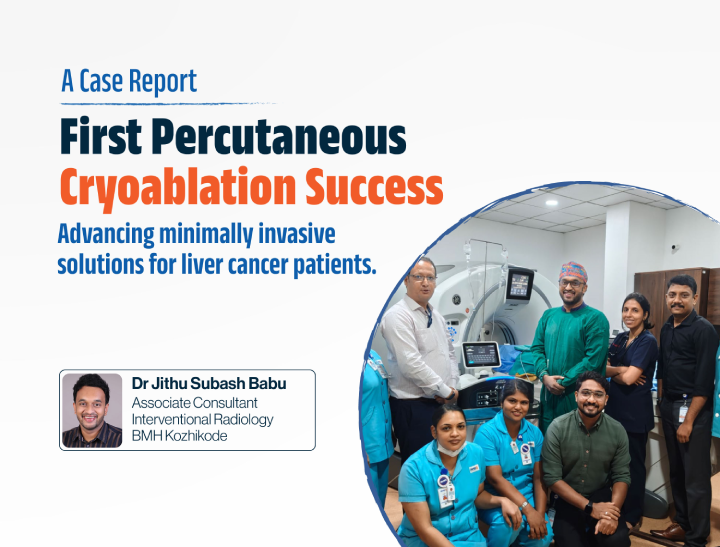
A New Milestone in Liver Cancer Treatment with Percutaneous Cryoablation
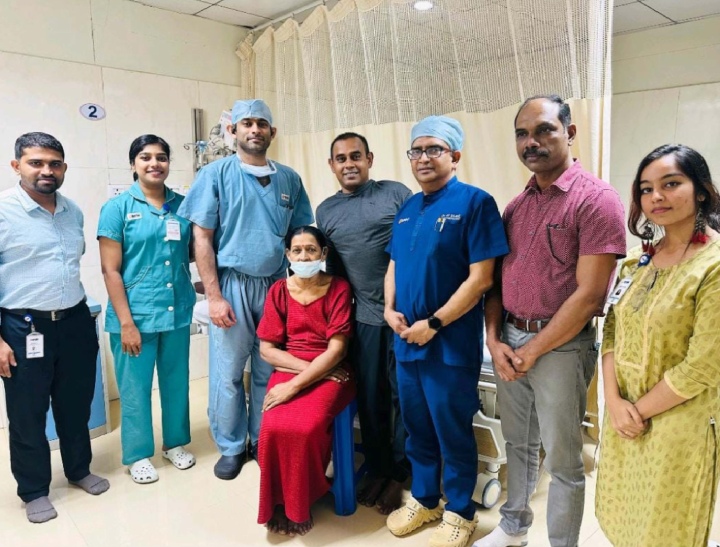
07 August 2026A Major Milestone with Its First Percutaneous Liver Cryoablation for Liver Cancer - BMH NAVA Cancer Institute -Interventional Radiology (IR ) Division Baby Memorial Hospitals (BMH), Kozhikode, has successfully performed its first Percutaneous Cryoablation for Liver Cancer, marking a significant milestone in the hospital's journey towards advanced minimally invasive cancer care. The procedure was successfully performed by Interventional Radiologist (IR ) Dr. Jithu Subash Babu, further strengthening BMH - Nava commitment to providing state-of-the-art oncological interventions.
The patient was a 63-year-old gentleman from Thrissur with chronic liver disease and portal hypertension, who was under regular follow-up. Imaging demonstrated a LI-RADS 5 lesion in the left lobe of the liver, highly suggestive of hepatocellular carcinoma (HCC), with no evidence of extrahepatic disease. Laboratory investigations revealed an elevated serum alpha-fetoprotein (AFP) level with preserved liver function tests. Patient is been discharged on next day , and he is advised to come for follow up-review after 4 weeks with CECT abdomen and plevis (Triple phase study / MRI Hepatic protocol and few blood tests like - Serum AFP, Serum PIVKA II, Serum LFT , Renal function test )
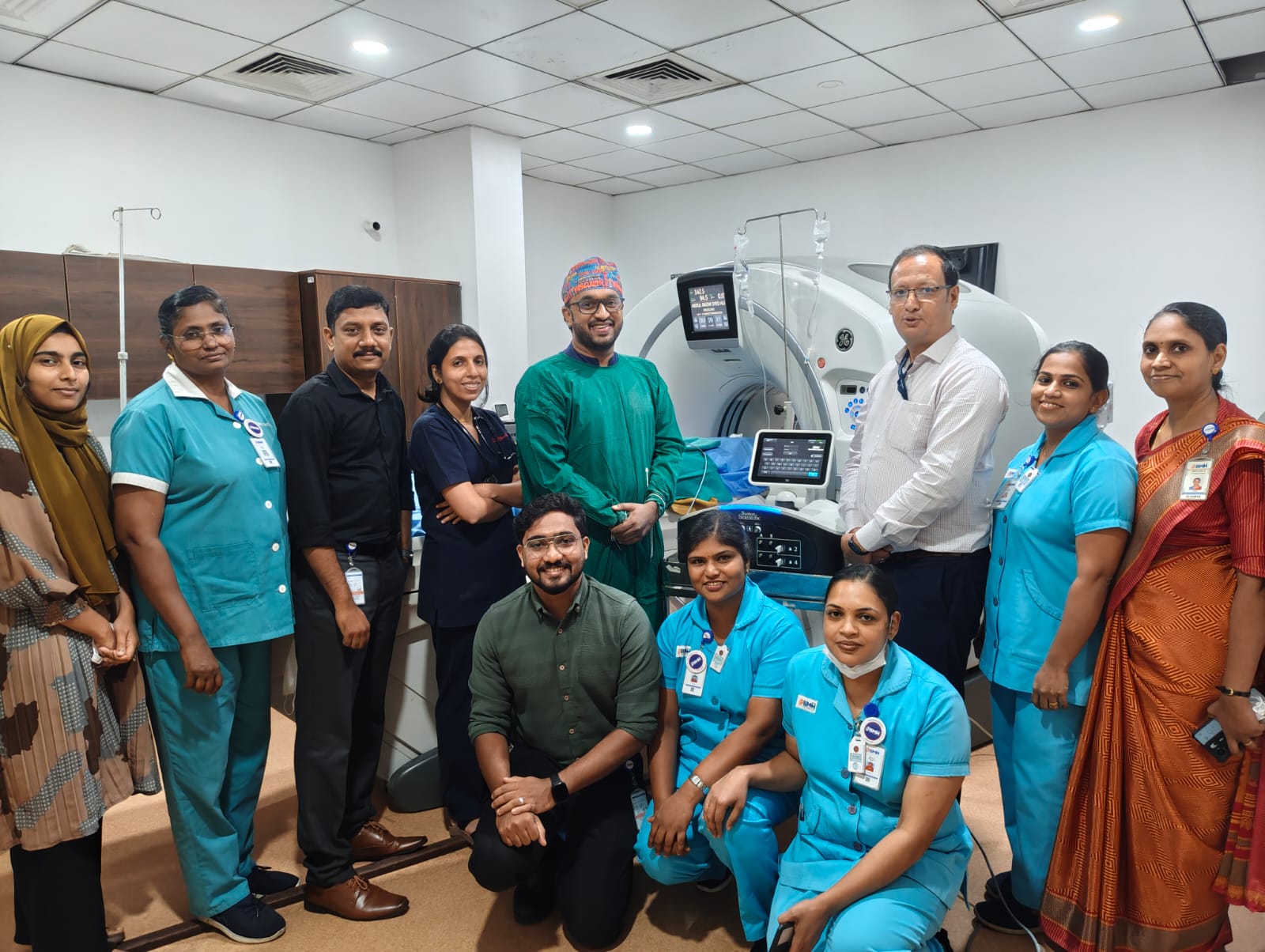
After multidisciplinary evaluation with hepatology and Medical Gastro team , the patient was considered an ideal candidate for image-guided local tumour ablation. Owing to the presence of cirrhosis and the tumour characteristics, percutaneous Cryoablation was planned and successfully performed by the Department of Interventional Radiology.
What Is Cryoablation ? Cryoablation is an advanced, minimally invasive image-guided treatment in which extreme cold is delivered through specially designed cryoprobes (thin needles) to freeze and destroy cancer cells. The procedure is performed under imaging guidance using ultrasound, CT, and fluoroscopy, allowing precise probe placement and accurate monitoring of treatment. One of the unique advantages of cryoablation is the formation of a clearly visible ice ball, enabling the treating physician to accurately assess the ablation zone in real time. The technique causes tumour cell destruction while producing minimal injury to surrounding healthy liver tissue and preserving adjacent major blood vessels. In addition, cryoablation has been shown to stimulate a cryo-immunological response, which may enhance anti-tumour immune activity.
Cryoablation can be performed percutaneously or during surgery and can also be effectively combined with other cancer therapies such as transarterial chemoembolization (TACE), radiation therapy, immunotherapy, and systemic targeted therapies, offering a comprehensive treatment strategy for selected patients.
Although surgical resection remains the gold standard treatment for hepatocellular carcinoma, only 25–30% of patients are suitable candidates at the time of diagnosis. Many patients have underlying cirrhosis, multifocal disease, or medical comorbidities that preclude surgery. For such patients, image-guided ablative therapies have emerged as highly effective treatment options. Cryoablation is also increasingly being used for selected metastatic liver tumours, including metastases from colorectal cancer, breast cancer, pancreatic neuroendocrine tumours, renal cell carcinoma, melanoma, and other malignancies.
Compared with conventional thermal ablation techniques ( MWA ), cryoablation offers several important advantages:
With the advent of modern argon–helium cryoablation technology, percutaneous cryoablation is rapidly becoming a mainstream treatment option in Interventional Oncology (IO). It offers patients a safe, effective, and organ-preserving alternative for managing primary and metastatic liver tumours while minimizing hospital stay and promoting faster recovery.
This landmark procedure represents another important step in the expansion of advanced Interventional Oncology services at Baby Memorial Hospital- Nava Cancer Institute, reinforcing its commitment to bringing world-class, minimally invasive cancer therapies to patients across Kerala.
When high-pressure argon gas is circulated through the lumen of a cryoprobe, the temperature drops to −160 °C and an iceball forms at the tip of the probe. The iceball is thawed when helium gas is circulated through the probe lumen. This freezing and thawing process induces direct and indirect cell damage, causing tumor cell death. When the temperature drops during the freezing process, ice crystals form inside and outside the cell, osmotic pressure increases inside the cell, cell dehydration occurs, and the cell membrane is damaged.
Closing quote by Dr. Jithu Subash Babu,; "Cryoablation represents the next generation of image-guided cancer therapy. It allows us to precisely target liver tumours while preserving healthy liver tissue, reducing patient discomfort, and expanding treatment options for patients who are not suitable for surgery. We are proud to introduce this advanced technology at Baby Memorial Hospital, making world-class cancer care more accessible to patients in Kerala."