- English
- عربي / Arabic
- മലയാളം / Malayalam

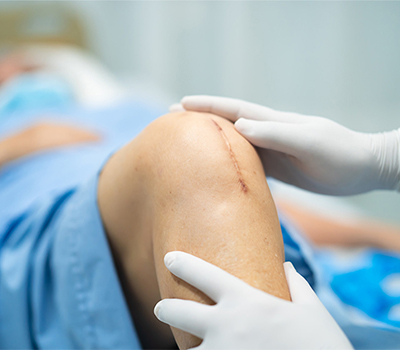
Arthroscopic knee surgery is not “small surgery.” It is targeted surgery done through small portals. The point is access: seeing inside the knee clearly enough to treat a specific mechanical problem without opening the joint widely. That difference changes three practical things patients care about—how much tissue is disrupted, how quickly the knee can be moved again, and how precisely the surgeon can work in tight spaces.
In a good arthroscopy plan, the decision is not “scope or no scope.” The decision is whether the symptoms match a fixable intra-articular problem, and whether the fix is predictable. A locked knee from a displaced meniscal tear is a different case than long-standing aching from osteoarthritis. A loose body that catches is a different case than generalized cartilage wear. Arthroscopy works when the pathology is specific and the target is clear.
The surgeon creates small incisions (ports) around the knee, inserts a camera (arthroscope), and distends the joint with fluid to open the working space. Through other ports, instruments are introduced to treat the problem—trim or repair a meniscus, remove loose fragments, smooth unstable cartilage flaps, address synovial inflammation, or reconstruct a ligament depending on indication.
What makes arthroscopy valuable is not the size of the cuts. It is the ability to inspect the joint compartments systematically—patellofemoral, medial, lateral, and intercondylar notch—while working with controlled visualization.
Early arthroscopy existed, but it was not yet dependable. The modern field accelerated when the tools made visualization consistent. A major step was arthroscopes that made the technique practical and scalable, followed by improvements in light sources and video systems that made longer and more complex procedures feasible. Evidence later clarified where arthroscopy adds little—especially in degenerative knee disease—pushing practice back toward stricter selection.
Arthroscopy is strongest when symptoms are mechanical and the pathology is localized.
Degenerative knee pain is where arthroscopy demands discipline. If the primary problem is osteoarthritis with diffuse wear, arthroscopy rarely changes the biology and typically offers limited average benefit. Meniscal tears in older adults with osteoarthritis require careful selection and usually a structured conservative plan first, because outcomes can be similar with physiotherapy in many cases.
Repairs are considered when tear pattern and blood supply make healing plausible, particularly in more vascular regions and when stability is being restored. Trimming is considered when the tear is in a low-healing zone, degenerative and frayed, or mechanically unstable in a way that cannot be secured reliably. Rehab differs substantially between repair and trimming, which is why a good pre-op discussion explains what the surgeon is likely to do based on the findings.
Recovery depends less on the portals and more on what was done inside. Loose body removal is often quicker. Partial meniscectomy typically improves gradually as swelling settles. Meniscus repair is slower because healing must be protected. ACL reconstruction requires longer staged rehab with strength, control, and return-to-sport testing. Early issues include swelling, stiffness if motion is delayed, and pain spikes if activity is increased too quickly.
Arthroscopy is generally safe but remains surgery, with risks such as infection, clots, persistent swelling, stiffness, rare neurovascular injury, and failure to improve if the true pain generator was not addressed. The most preventable risk is incorrect indication—operating on diffuse degenerative pain rather than a treatable mechanical target.
See a specialist for true locking, recurrent swelling after activity, instability after a twist injury, persistent pain after a defined injury despite structured rehab, or imaging that matches symptoms and suggests a repairable tear or ligament injury. For gradual degenerative aching without mechanical symptoms, the first step is usually conservative care, not fast-tracking to arthroscopy.
Arthroscopy is most valuable for defined mechanical problems—repairable meniscus tears, loose bodies, focal lesions, and ligament reconstructions—where the target matches the symptoms. For primary osteoarthritis and broad degenerative knee disease, modern evidence supports stricter selection because the average benefit from arthroscopy is limited when the pain generator is diffuse degeneration.
Arthroscopy uses small portals, but it is still real surgery inside a joint. The benefit is not tiny cuts—it is precision access to diagnose and treat a specific intra-articular problem with less disruption than open surgery. The outcome depends more on whether the correct problem was targeted than on how small the incisions look.
Arthroscopy helps most when symptoms are mechanical and localized—true locking, catching, recurrent swelling after activity, instability after a twist injury, or pain that clearly matches a meniscus tear or loose fragment. These patterns suggest something inside the joint is physically interfering with movement or stability, which is where arthroscopy can be decisive.
Because diffuse osteoarthritis is a biology problem, not a single mechanical blockage. Washing the joint or smoothing surfaces rarely changes the underlying wear pattern, so average improvement is limited and may not justify the recovery and risks. In degenerative cases, a structured conservative plan often delivers similar functional outcomes without surgery.
Repair tries to preserve and heal the meniscus, while trimming removes the torn part that is unstable or irreparable. Repair is preferred when the tear has healing potential, but it usually requires stricter rehab protection and longer recovery. Trimming often allows faster progression, but more tissue loss can increase long-term joint stress, which is why surgeons try to preserve meniscus when feasible.
Recovery time is procedure-specific. Removing a loose body can allow quicker return to motion and walking, while partial meniscectomy improves over weeks as swelling settles. Meniscus repair typically requires a slower, protected rehab plan, and ACL reconstruction is a longer multi-month rehabilitation process with strength and return-to-sport testing before clearance.