
- English
- عربي / Arabic
- മലയാളം / Malayalam

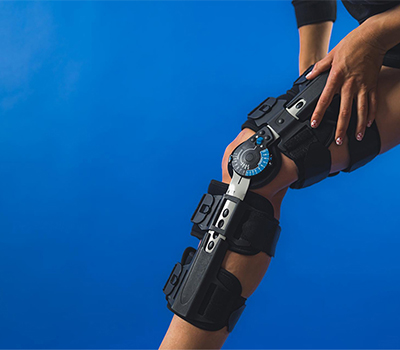
When total knee replacement is discussed, the decision is concrete. It is about walking without calculating every step. It is about climbing stairs without leading with the “good” leg. It is about getting up from a chair without using the arms as a substitute for the knee. It is about sleeping without pain waking you up.
In the operating room, the outcome is set by decisions the patient does not see. How much bone is removed. The exact position of each implant component. The rotation of the femoral and tibial components. The limb alignment after fixation. The soft-tissue balance in extension and in flexion. These are not cosmetic details. Errors here produce specific problems later: stiffness, persistent pain, instability, limited range of motion, uneven loading, and earlier wear.
Robotic knee replacement was introduced to control these steps more tightly. It provides a planned target and constrains bone preparation to that plan. It reduces the chance of out-of-plan cuts. It gives the surgeon measurable data on alignment and gaps during the procedure. The surgeon still decides the plan and the final implant position, but the execution becomes more consistent.
Early knee implants existed before this, but the modern era accelerated when designs moved away from rigid hinge concepts toward more anatomical resurfacing and stability solutions.
One early landmark was Frank Gunston’s polycentric knee work (reported in 1971), often cited as an important step toward non-hinged, more biomechanical designs.
Another landmark came from John Insall’s work at Hospital for Special Surgery, including the Total Condylar Prosthesis (first implanted in 1974) and later posterior-stabilized concepts that shaped mainstream TKA design.
The constraint of that era was not intent. It was variability: bone cuts, alignment, and soft-tissue balance depended heavily on manual guides and surgeon feel.
Computer navigation and patient-specific planning were developed to reduce outliers in component placement. The goal stayed the same: alignment, balance, and fit. The method shifted from “guide-based” to “plan-based.”
Robotics was the next logical step: not just planning the cut, but controlling the cut.
One of the earliest active systems was ROBODOC, developed through work associated with UC Davis and collaborators, and it is widely described as one of the first surgical robots used on humans in the U.S. (1992 is commonly cited).
The point was not “automation for its own sake.” The point was repeatable bone preparation based on a plan.
Robotic-arm platforms expanded indications and adoption as approvals broadened and workflows improved. For example, FDA clearance for Stryker’s Mako platform for total knee applications was reported in 2015.
“Robotic” does not mean the robot decides. It means the system helps execute a plan with constraints.
Typical workflow:
The robot is a precision tool. The surgeon still owns the decisions.
Robotics exists to reduce variability. That is the core benefit category.
The clinical claim is not “perfect alignment.” The claim is fewer outliers compared with manual instruments. That is why these systems were built.
Balancing is where outcomes often succeed or fail. Robotics can support this by providing measurable gap and alignment data across motion, rather than relying only on feel.
Some studies reported improvements in early recovery metrics and discharge timing with robotic-arm assisted TKA compared with conventional techniques, though long-term superiority is still an active evidence question.
A practical way to state it: robotics can improve process precision; patient outcomes still depend on multiple variables (rehab, baseline function, comorbidities, pain processing, and expectations).
Robotic assistance can change intraoperative precision. It does not eliminate normal recovery biology.
A realistic recovery structure for many patients looks like this:
Robotic technique may reduce some early barriers in select patients, but rehabilitation quality is still a major determinant of outcome.
Robotic knee replacement is still total knee replacement. The indications are broadly the same.
Common candidates:
Not every patient needs robotics. Not every center offers it. The most important variable is still the surgeon + team + protocol quality.
It changed what surgeons can control consistently.
Traditional TKA worked, but it had known variability. Robotics aimed at the predictable failure points: alignment outliers, bone cut precision, balancing repeatability, and plan execution. It did not change the purpose of the operation. It changed the engineering of the workflow.
Total knee replacement became reliable when implant design and surgical technique stabilized in the 1970s. Robotics entered later, when the field focused on reducing variability in planning, cutting, and balancing. Early systems like ROBODOC demonstrated feasibility; later robotic-arm platforms expanded into routine practice, including FDA-cleared total knee applications by the mid-2010s.
Robotic knee replacement is not magic. It is a precision method layered onto a proven operation. The value proposition is control. The outcome still depends on the whole system: selection, surgery, pain management, rehabilitation, and follow-up.
Robotic knee replacement means the surgeon uses a robotic-assisted system to execute a pre-planned approach with higher precision and tighter control over bone preparation and alignment checks. The robot does not “decide” or operate independently; the surgeon creates the plan, validates it during surgery, and remains responsible for every critical decision, while the system helps deliver more consistent execution within defined boundaries.
The core difference is how consistently the plan is translated into bone cuts, implant positioning, and soft-tissue balance. Conventional surgery relies more on manual instruments and the surgeon’s judgment for alignment and gaps, while robotic assistance adds real-time measurement and constraint-based cutting that reduces the chance of out-of-plan bone removal. The goal is not perfection in every case, but fewer alignment and balancing “outliers” that can contribute to stiffness, instability, or persistent pain.
Robotics can improve process precision, and many patients experience smoother early function, but it is not a guarantee of superior long-term outcomes for everyone. Recovery and satisfaction still depend heavily on rehab quality, baseline strength, weight, pain sensitivity, medical conditions, and expectations. In other words, robotics can reduce surgical variability, but it does not replace the fundamentals that drive a good result before and after the operation.
It can, particularly in the early phase for some patients, because more consistent alignment and balancing may reduce certain mechanical irritations that slow progress. However, the normal biology of healing still applies: swelling, muscle inhibition, and stiffness can occur regardless of technique. Patients should plan for a structured recovery measured in months, not days, and treat robotic assistance as a potential advantage rather than a shortcut.
Candidates are generally the same as for total knee replacement—people with significant arthritis pain and functional limitation despite conservative care—but robotics can be especially useful when alignment is challenging, deformity is present, or the surgeon wants tighter planning control to optimize fit and balance. Some straightforward cases do very well with conventional surgery, so the better question is not “Do I need a robot?” but “Which approach will be executed most reliably by this team for my knee?”