- English
- عربي / Arabic
- മലയാളം / Malayalam

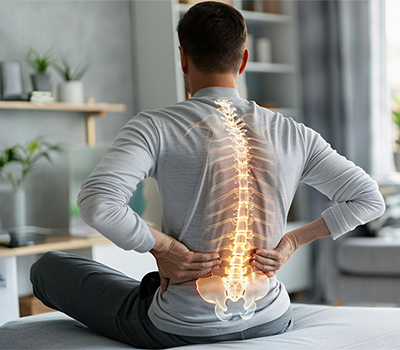
Back and neck pain are not abstract problems. They are about sitting without bracing. They are about driving without the shoulder tightening. They are about sleep that breaks at 3 a.m. It is about a leg that starts to tingle, then starts to feel weak. It is about a hand that loses grip. It is about work, stairs, and daily movement shrinking to whatever your spine will tolerate.
“Spine specialist” is not a single job title. It usually refers to one of these roles:
The right “spine specialist” depends on whether your problem is primarily mechanical, neurologic, or urgent.
A major modern shift is this: most uncomplicated low back pain does not require early imaging. Multiple Choosing Wisely recommendations advise avoiding routine imaging in the first weeks unless red flags exist, because early imaging does not improve outcomes and increases downstream over-treatment.
Guidelines moved routine management away from prolonged rest and toward structured noninvasive care (activity, physical approaches, and targeted medications where appropriate), with escalation when symptoms persist or neurological issues appear.
Surgery did not “replace” conservative care. It became more precisely indicated: severe or progressive deficits, instability, cord compression (myelopathy), and persistent radicular pain with correlating imaging after appropriate nonoperative management.
See a spine specialist soon if any of these are true:
Seek emergency evaluation if you have signs consistent with cauda equina syndrome, such as new urinary retention/incontinence, loss of sensation around the saddle area, or significant/progressive leg weakness. Red-flag pathways also include severe or progressive neurological deficits and suspicion of serious underlying pathology.
A high-quality consult is structured. It does not start with MRI.
Strength testing, reflexes, sensation, gait, and root-level mapping. This determines urgency and whether imaging is actionable.
Guidance discourages routine early imaging in uncomplicated low back pain without red flags.
Imaging becomes appropriate when:
The goal is not a label. The goal is matching symptoms to anatomy and choosing the least risky path that restores function.
Orthopaedic surgery enters the conversation when there is a structural reason to operate and a functional reason to accept surgical risk.
Common surgical triggers include:
| Situation | Best first step |
|---|---|
| New back/neck pain without red flags; function mostly intact | Conservative care + monitored follow-up |
| Pain radiating down arm/leg with numbness/tingling | Spine specialist evaluation |
| Objective weakness (foot drop, grip weakness), worsening over days/weeks | Spine specialist urgently; imaging likely |
| New urinary retention/incontinence or saddle numbness | Emergency evaluation (possible cauda equina) |
| Persistent pain >4–12 weeks affecting life despite structured care | Spine specialist for escalation options |
Back and neck pain become easier to manage when the route is disciplined: identify the pattern, rule out emergencies, avoid low-value early imaging, and escalate only when symptoms, deficits, and anatomy line up.
Most new back or neck pain is mechanical and improves over days to a few weeks with activity modification and structured physiotherapy. It becomes specialist-level when pain persists beyond a few weeks, keeps recurring, limits daily function, or starts showing a nerve pattern—such as pain traveling into an arm or leg, numbness/tingling, or weakness—because those features suggest compression or irritation that may need targeted evaluation.
Mechanical pain is typically localized and linked to movement or posture, while radicular pain follows a nerve path and often shoots down an arm or leg with tingling or numbness. Cord-related symptoms can include hand clumsiness, balance changes, gait disturbance, and coordination issues, especially in the neck, because they can indicate spinal cord compression and require prompt assessment.
Because early imaging in uncomplicated back pain often does not change outcomes and can create anxiety and unnecessary procedures by highlighting age-related changes that are common even in people without pain. Imaging becomes valuable when red flags exist, neurological deficits are present, or symptoms persist long enough that escalation is being considered.
New bladder or bowel control issues, urinary retention, saddle-area numbness, rapidly progressive leg weakness, or severe neurologic deficits should be treated as emergencies because they can represent serious compressive syndromes where timing affects recovery.